
By James Nolan, Gymnase Tips senior trainer · Reviewed against ISSN, FDA, and ACOG guidance
How we evaluated · Last updated June 2026. We screened formulas on four things: clinically meaningful doses of the actives that actually do something (citrulline, beta-alanine, caffeine), transparent caffeine labeling so you can dial in your own dose, third-party testing where it exists (Informed Sport, NSF Certified for Sport), and real price per serving. This is an evidence-based review built on published sources, not a sponsored placement. Every dose and price below is checked against current labels and retail listings as of June 2026, and every safety claim is tied to a named study or guideline. Reviewed against ISSN/FDA/ACOG guidance.
TL;DR — What’s the best pre-workout for women without jitters?
The best pre-workout for women without jitters is one with a moderate, transparent caffeine dose you can split — not a “women’s” formula. There’s no female-specific chemistry; women just average a lower bodyweight, so the same scoop hits harder. Aim for 3–6 mg of caffeine per kg of bodyweight (Source: ISSN / JISSN, 2021), and start at half a scoop. Our top overall pick is Optimum Nutrition Gold Standard Pre-Workout (175 mg caffeine, ~$0.83/serving). For zero stimulants, the cleanest option is Garden of Life SPORT at just 85 mg of natural caffeine, or a true stim-free formula if you want none at all.
If you read nothing else: pick a tub where the caffeine number is printed on the label, then control the dose with the scoop. That single habit prevents almost every jitter complaint I hear from new lifters.
Table of contents
How to choose: quick decision block
Match your goal to a pick and skip the rest of the article if you’re in a hurry.
- If you want energy without the shakes → Optimum Nutrition Gold Standard (175 mg caffeine, split the scoop to start).
- If you want zero or near-zero stimulants → a true stim-free formula for evenings, or Garden of Life SPORT at 85 mg if you’ll take a little.
- If you’re chasing lean muscle and body recomposition → Transparent Labs LEAN (6 g citrulline, acetyl-L-carnitine, 180 mg caffeine).
- If you’re brand new to training → Kaged Pre-Kaged Sport (188 mg, electrolytes, third-party tested) or a half-scoop of any pick below.
- If price per scoop is the deciding factor → Optimum Nutrition Gold Standard at roughly $0.83 a serving is the cheapest solid option here.
The 7 best pre-workouts for women at a glance
Here’s the whole field on one screen. Caffeine numbers are off current labels; prices are full-tub retail as of June 2026 and move around, so treat cost-per-scoop as a guide, not a quote.
| Pick | Best for | Caffeine mg | Stim level | Key actives (per serving) | Sweetener | Price/tub | Cost/scoop |
|---|---|---|---|---|---|---|---|
| Optimum Nutrition Gold Standard | Overall / budget | 175 mg | Moderate | 3 g creatine, 1.6 g beta-alanine, 1.5 g citrulline | Artificial | ~$24.99 (30) | ~$0.83 |
| Garden of Life SPORT | Natural / clean | 85 mg | Low | Organic coffeeberry caffeine, B12, plant NO blend | None (stevia) | ~$39.60 (40) | ~$0.99 |
| Transparent Labs LEAN | Lean muscle / recomp | 180 mg | Moderate | 6 g citrulline, 2 g beta-alanine, 1 g acetyl-L-carnitine | Stevia | ~$49.99 (30) | ~$1.67 |
| Kaged Pre-Kaged Sport | Beginners | 188 mg | Moderate | Fermented citrulline, beta-alanine, 4 electrolytes | Stevia | ~$19.97 (20) | ~$1.00 |
| Alani Nu Pre-Workout | Flavor / everyday | 200 mg | Moderate-high | 6 g citrulline, 1.6 g beta-alanine, L-theanine | Sucralose | ~$36 (30) | ~$1.19 |
| Ghost Legend V3 | Focus / pump | 250 mg | High | Citrulline, beta-alanine, L-tyrosine, NO3-T | Sucralose | ~$44.99 (30) | ~$1.50 |
| Legion Pulse | Strong stim, naturally sweetened | 350 mg | High | 8 g citrulline, 3.6 g beta-alanine, L-theanine | Stevia/erythritol | ~$45.99 (21) | ~$2.19 |
A note on the high-stim three. Alani Nu, Ghost Legend V3, and Legion Pulse all clear 200 mg, and Legion’s 350 mg is genuinely a lot for a lighter person. They’re in the lineup because they’re well-formulated and popular, but for a no-jitters goal you run them at half a scoop or you skip them. The four picks that don’t lead the picks-by-goal sections get a full review below, with the half-scoop verdict spelled out for each.
Safe caffeine dose by bodyweight
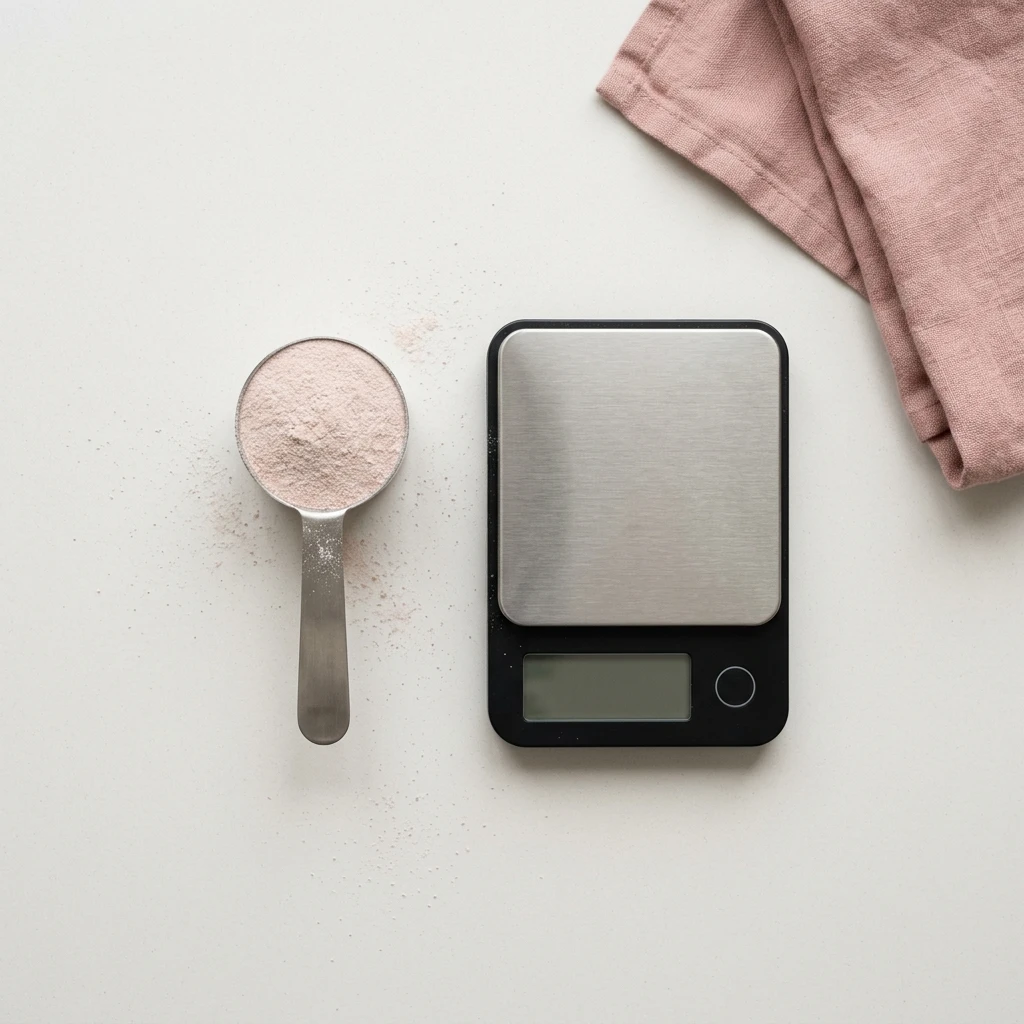
A safe, effective caffeine dose is 3–6 mg per kilogram of bodyweight, taken about 60 minutes before training (Source: ISSN / JISSN, 2021). For a 60 kg woman that’s roughly 180–360 mg, and the low end of that range is where most people get the performance bump without the racing heart. The FDA puts the daily ceiling for healthy adults at 400 mg total, across coffee and everything else (Source: FDA, 2024). Higher pre-workout doses like 9 mg/kg don’t add performance; they only add side effects (Source: ISSN / JISSN, 2021).
Find your row, then read it against the caffeine column in the table above.
| Bodyweight | Low dose (3 mg/kg) | High dose (6 mg/kg) |
|---|---|---|
| 50 kg (110 lb) | 150 mg | 300 mg |
| 60 kg (132 lb) | 180 mg | 360 mg |
| 70 kg (154 lb) | 210 mg | 420 mg* |
| 80 kg (176 lb) | 240 mg | 480 mg* |
This is why the half-scoop rule exists. A 55 kg woman taking a full scoop of Ghost Legend V3 is getting 250 mg in one go, comfortably above her low-dose target before she’s had her morning coffee. Split that scoop and she’s at 125 mg, right in the sweet spot. The math is the entire reason a “women’s” label is marketing rather than science: a lighter person needs less of the same caffeine, and the scoop is how you give them less.
A 28-day study in recreationally active women found a dose-escalated pre-workout (caffeine included) was well tolerated, with no clinically meaningful changes in blood markers or vitals (Source: PMC4355142, 2015). That’s reassuring, but it’s a group average. Caffeine sensitivity is partly genetic (the CYP1A2 gene), so a dose that’s fine for your training partner can leave you wired and battling jitters and tingles. Start low, see how you respond, then move up.
Best pre-workout for women without jitters (overall pick)
Top pick: Optimum Nutrition Gold Standard. The best pre-workout for women without jitters is Optimum Nutrition Gold Standard: 175 mg of caffeine, a clean label you can read, and roughly $0.83 a serving as of June 2026. It sits in the moderate band, so a half scoop lands near 90 mg for a lighter lifter and a full scoop tops out below the level that triggers most jitters and tingles. No 300 mg mega-stim, no proprietary fairy dust.
What’s actually in it does the job. You get 3 g of creatine monohydrate, 1.6 g of beta-alanine, and 1.5 g of citrulline per serving (Source: Optimum Nutrition, 2026). The creatine dose sits at the low end of the 3–5 g daily maintenance most research uses (Source: ISSN creatine position stand / PMC5469049, 2017), so treat it as a top-up rather than your whole creatine strategy. Beta-alanine is the ingredient behind the skin-tingle (paresthesia) that some people mistake for jitters. It’s harmless, and it fades as you adapt.
The trade-off is the sweetener: it’s artificial, and the flavor lineup is sweeter than the stevia brands. If artificial sweeteners bother your stomach, jump to Garden of Life or Transparent Labs below. For everyone else, this is the one I’d hand a friend who wants energy, a real pump, and no drama, without overpaying. At under a dollar a serving it also undercuts every other pick here on price, which is rare for something this well-dosed.
Best caffeine-free pre-workout for women (no jitters)
If you want a workout boost with no caffeine at all, go stim-free: a dedicated caffeine-free formula gives you pump and endurance ingredients without a single milligram of stimulant. Several brands here make one. Transparent Labs Stim-Free is the cleanest, built around citrulline, beta-alanine, and betaine with zero caffeine (Source: Transparent Labs / Amazon, 2026). You get the blood-flow “pump” and the endurance support, and you can take it at 7 p.m. without wrecking your sleep.
The honest caveat: without caffeine you lose the biggest, best-studied performance ingredient in the category. Caffeine is the one with the most consistent ergogenic evidence (Source: ISSN / JISSN, 2021). A stim-free formula won’t make you feel “switched on.” It works quietly through pump and buffering, not alertness. That’s exactly what you want late in the day, for a sensitive stomach, or on a second session.
If you’ll tolerate a little caffeine but want the floor as low as possible, skip ahead to Garden of Life SPORT at 85 mg. True zero, though, means a stim-free tub.
Best natural / clean pre-workout for women (no artificial sweeteners)
Garden of Life SPORT is the best clean pick: 85 mg of caffeine from organic coffeeberry, no artificial sweeteners, and both NSF Certified for Sport and Informed Choice certified (Source: Garden of Life, 2026). That 85 mg is the lowest stimulant dose in this roundup by a wide margin, which makes it a natural fit if jitters are your whole concern. At around $0.99 a serving for the 40-serving tub, it’s also one of the cheapest per scoop.
It’s USDA Organic, vegan, and Non-GMO Project Verified, with B12 and a nitric-oxide blend from organic vegetables and beets instead of synthetic actives (Source: Garden of Life, 2026). The two certifications matter more than the organic badge. NSF Certified for Sport and Informed Choice both mean an independent lab checked the tub for banned substances and label accuracy. That’s the gold standard if you compete, get drug-tested, or just don’t want surprises.
Where it loses ground: the active doses are lighter than a performance tub like Transparent Labs LEAN. You won’t get a clinical 6 g hit of citrulline here. Treat Garden of Life SPORT as a gentle, clean energy-and-focus product rather than a maximal pump formula. For the jitter-prone, that gentleness is the point.
Best pre-workout for women for lean muscle & weight loss
For lean muscle and body recomposition, Transparent Labs LEAN is the strongest pick, built on 6 g of citrulline, 2 g of beta-alanine, and acetyl-L-carnitine rather than fat-burner gimmicks (Source: Transparent Labs, 2026). A pre-workout doesn’t burn fat. What it does is let you train harder and hold more volume, and over months that’s what changes your body composition. The ingredients that matter for that are the ones that improve blood flow and delay fatigue, which is exactly what LEAN doses at clinical levels.
The 6 g citrulline dose is the headline. Citrulline raises nitric oxide and improves blood flow, which supports endurance and reduces soreness, and 6 g sits right in the researched 6–8 g range (Source: PMC8571142, 2021) where many cheaper tubs hide a token 1 g. Beta-alanine at 2 g buffers the acid build-up that ends a hard set early. The caffeine sits at 180 mg from organic green-coffee caffeine, moderate enough to split. The creatine and protein for women basics still do most of the heavy lifting around it.
Skip the “thermogenic” and “fat-burner” framing on any pre-workout, including this one. The pre-workout for fat loss weight you lose comes from your overall energy balance and the training the product supports, not from a sprinkle of L-carnitine. Pair it with the basics, meaning progressive overload, enough protein, and a small calorie deficit, and it earns its place.
Best stim-free pre-workout for women (evening & sensitive)
For evening sessions or a sensitive system, a stim-free pump formula is the move: all the blood-flow and endurance ingredients, none of the caffeine that keeps you up. Transparent Labs Stim-Free leads here again, but any caffeine-free tub built around citrulline and beta-alanine fits the brief. You train at 8 p.m., feel the pump, and still fall asleep at 11.
This is the right category for three people: anyone who trains late, anyone whose heart races or stomach turns on stimulants, and anyone running a second daily session who’s already had their caffeine. The performance you give up is real but smaller than you’d think. For hypertrophy work in the 8–15 rep range, the pump-and-buffer combo carries most of the load. Caffeine matters most for max-effort and endurance pieces.
One practical tip: if you only want stim-free in the evening, you don’t need a second tub. Take your normal pre-workout in the morning and just use citrulline (6–8 g) and a pinch of salt for the late session. Cheaper, and it covers most of the benefit.
Best pre-workout for women for beginners (low-caffeine)
If you’re new to training, start with the lowest stimulant load you can: Garden of Life SPORT at 85 mg, or a half-scoop of Kaged Pre-Kaged Sport (188 mg, so ~94 mg split). Beginners haven’t built any caffeine tolerance from the gym, and the goal is to learn whether you even like the feeling before you chase a big hit. Low and split is the entire beginner strategy.
Pre-Kaged Sport is a smart on-ramp because it’s Informed Sport certified, meaning it’s third-party tested batch by batch, and it includes electrolytes, which matters if you sweat a lot or train fasted (Source: Kaged / Amazon, 2026). At a half scoop you’re at roughly 94 mg of caffeine, gentle enough to gauge your response without a pounding chest. Move to a full scoop only once a half feels like nothing.
The bigger point for beginners: the pre-workout is the least important variable in your first three months. Sleep, protein, and showing up consistently move the needle far more — if you’re new to working out, build that habit first. A tub helps you look forward to the session, and that’s its real job early on.
The three high-stim picks reviewed (run at half a scoop or skip)
The picks above lead their categories. These last three are strong formulas that cross 200 mg of caffeine, so they need a verdict of their own for a no-jitters reader. Short version: each is well-made, each is too much at a full scoop for most lighter women, and each becomes perfectly usable at half. Here’s where each one fits.
Alani Nu Pre-Workout (200 mg) — best for flavor and everyday use, at half a scoop
Alani Nu carries 200 mg of caffeine, 6 g of citrulline, 1.6 g of beta-alanine, and L-theanine, at about $1.19 a serving for the 30-serving tub (Source: Alani Nu / Amazon, 2026). It’s the social-media favorite for a reason: the flavors are genuinely good and the citrulline dose is clinical, not a token sprinkle. The L-theanine is a nice touch too, since it smooths the edge off caffeine and can take the jitter down a notch.
The catch is that 200 mg in one scoop. For a 55 kg woman that lands above the low-dose target before any coffee, so a full scoop is where the shakes start. Run it at half (100 mg) and it’s a clean, tasty everyday option. I’d skip it only if you’re caffeine-sensitive enough that even 100 mg feels like too much, in which case Garden of Life’s 85 mg is the safer floor. Sweetened with sucralose, so it’s a pass if artificial sweeteners upset your stomach.
Ghost Legend V3 (250 mg) — best for focus and pump, but split the scoop
Ghost Legend V3 runs 250 mg of caffeine alongside citrulline, beta-alanine, L-tyrosine, and NO3-T nitrates, at roughly $1.50 a serving for 30 servings (Source: Ghost / Amazon, 2026). This is a focus-and-pump formula. The L-tyrosine supports mental drive and the nitrates push the pump, which makes it a favorite for people who want to feel locked in for a hard session. The flavoring (Ghost licenses candy and drink brands) is the best in the category if you care about that.
At 250 mg per scoop, this is firmly a high-stim tub. For most women chasing a no-jitters experience, a full scoop is too much: that’s already at or above the upper dose for a 40–55 kg lifter. Split it to 125 mg and it’s excellent. Take the full scoop only if you’re heavier, caffeine-adapted, and training before noon. After a 2 p.m. dose, 250 mg can sit on your sleep. Sucralose-sweetened.
Legion Pulse (350 mg) — best fully-dosed naturally-sweetened tub, but the jitter-prone should skip the full scoop
Legion Pulse is the most loaded formula here: 350 mg of caffeine, 8 g of citrulline, 3.6 g of beta-alanine, plus L-theanine and alpha-GPC, naturally sweetened, at about $2.19 a serving for 21 servings (Source: Legion Athletics, 2026). On paper it’s the best-dosed pre-workout in the lineup. The citrulline and beta-alanine are at the very top of their researched ranges, and there are no artificial sweeteners or dyes, which is why it earns a place despite the price.
But 350 mg is a lot. For a 50 kg woman that’s 7 mg/kg, past the 3–6 mg/kg window where the benefit lives and into the zone where side effects climb (Source: ISSN / JISSN, 2021). The single-scoop dose leaves you almost no room to go lower without crude guesswork, since the actives and the caffeine are bound to the same scoop. My honest verdict for a no-jitters reader: take half a scoop and accept you’re also halving the citrulline, or skip Pulse for one of the moderate picks above and dose citrulline separately. It’s a brilliant tub for a caffeine-adapted lifter and the wrong first choice for a sensitive one.
Legion Pulse isn’t sold through a verified Amazon listing, so buy it directly from Legion’s official store rather than a third-party reseller.
Ingredients that actually matter in a women’s pre-workout
The label is long; the list that does anything is short. Four ingredients carry almost all of a pre-workout’s real effect, and everything else is flavor, fairy dust, or a token dose too small to count. Here’s each one with the dose the research actually uses, so you can read a label and know in ten seconds whether a tub is serious.
Caffeine is the proven one, with small-to-moderate gains in strength, power, and endurance at 3–6 mg/kg of bodyweight taken about 60 minutes pre-workout (Source: ISSN / JISSN, 2021). It’s the single ingredient with the most consistent evidence in the whole category, and also the one most likely to cause jitters, which is the entire tension this article is about.
Citrulline raises nitric oxide for better blood flow and the “pump.” Acute studies use 6–8 g of citrulline malate (or about 6 g of pure L-citrulline) to move the needle (Source: PMC8571142, 2021), so anything under roughly 4 g is underdosed. This is the ingredient most often present in name only on a cheap label, listed at 1 g so the brand can put it on the front.
Beta-alanine buffers the acid build-up that ends a hard set early. It works by raising muscle carnosine, which takes daily doses around 4–6 g over several weeks to load, with studies showing 20–80% carnosine increases at 2–6 g/day (Source: PMC3257613, 2012). A single pre-workout serving (often ~1.6–2 g) contributes to that load rather than acting acutely, and the harmless skin tingle it causes is not a sign it’s “working” faster.
Creatine, when a pre-workout includes it, supports strength, power, and training volume. The maintenance dose in the research is 3–5 g per day, every day, not just on training days (Source: ISSN creatine position stand / PMC5469049, 2017). Most pre-workouts carry only part of that (Gold Standard’s 3 g is at the low edge), so treat any creatine in your scoop as a bonus and take the rest separately.
What to ignore: proprietary blends that hide individual doses, “fat-burner” thermogenics, and anything promising a female-specific hormonal effect. The evidence for timing a pre-workout to your menstrual cycle is thin, with a few small studies and no firm consensus, so I wouldn’t reorganize your training around it. If you feel flatter in the late-luteal phase, a normal dose is fine; you don’t need a special formula for it.
A quick word on sweeteners and tolerance
Sweetener type is the most common cause of “this pre-workout upsets my stomach,” and it has nothing to do with the caffeine. Three families show up across the seven picks: sucralose (Alani Nu, Ghost), stevia and erythritol (Legion, Transparent Labs, Kaged), and no added sweetener at all (Garden of Life leans on natural flavor). Each suits a different gut.
Sucralose is fine for most people but can cause loose stools or bloating in those sensitive to it. Erythritol, the sugar alcohol paired with stevia in several “natural” tubs, is the more frequent culprit for gas and bloating, especially at higher doses or on an empty stomach. If a stevia-sweetened pre-workout leaves you puffy, the erythritol is the likely cause, not the citrulline. The practical move is simple: if one tub disagrees with you, switch sweetener family rather than abandoning pre-workout entirely. A sucralose-sensitive lifter often does fine on stevia, and vice versa.
Tolerance is the other variable worth planning for. Caffeine builds tolerance fast, so a scoop that buzzed you in week one feels flat by week six if you take it daily. The fix isn’t a bigger scoop, which only resets the cycle higher. Use pre-workout on hard days only, keep your total under the FDA’s 400 mg daily caffeine ceiling (Source: FDA, 2024), and consider a week off the stimulant every couple of months to bring the sensitivity back. Beta-alanine and citrulline don’t build tolerance the same way, so a stim-free or low-stim tub on your off days keeps the pump without resetting your caffeine clock.
Does pre-workout make women gain weight or feel bloated?
No, pre-workout doesn’t make you gain fat, and the small scale bump some women see is creatine water weight, not body fat. Creatine pulls water into the muscle cell, which can add roughly 2–6 lb on the scale in the first week or two of use (Source: JISSN creatine position stand / PMC, 2021). That water sits inside the muscle (intracellular), so it makes muscles look fuller, not softer, and it resolves when you stop. It is not fat, and it is not bloat in the gut sense.
True bloating, the puffy-gut kind, usually traces to something else: sugar alcohols like erythritol in stevia-sweetened tubs, too little water with a high beta-alanine or citrulline dose, or sensitivity to artificial sweeteners. The fix is mechanical. Drink more water with your scoop, try a half dose, or switch sweetener type (sucralose versus stevia versus none) until your stomach settles.
If you’re avoiding creatine specifically to dodge the water weight, reconsider. That intracellular water is part of how creatine works, it’s harmless, and it goes away. Chasing a dry scale number isn’t a good reason to skip one of the most well-supported supplements in sport.
Pre-workouts to skip
Skip any tub that won’t tell you how much caffeine is in a scoop, or that buries its actives in a proprietary blend. If the label says “energy blend 6,200 mg” instead of listing caffeine and citrulline separately, you can’t dose it safely and you can’t compare it. For a no-jitters goal that’s an automatic pass.
Also skip the mega-stim tubs at 350–400 mg per scoop if jitters are your concern. Not because they’re dangerous at the label dose for most people, but because they leave you no room to under-dose. Legion Pulse at 350 mg is a good formula that I’d still run at half a scoop for a lighter lifter. And ignore anything sold specifically as a “women’s fat-burning pre-workout” with a pink label and a proprietary thermogenic blend. That’s a marketing tax on the same actives you can buy, transparently dosed, for less.
How to take pre-workout (timing & half-scoop start)
Take pre-workout about 30–60 minutes before you train, and start every new tub at half a scoop. Caffeine peaks in the blood around 45–60 minutes, so that timing window puts the effect right when you’re loading your working sets (Source: ISSN / JISSN, 2021). The half-scoop start lets you find your dose without overshooting on day one, and you can always add the second half next session.
On the everyday question: you don’t need it daily, and daily caffeine builds tolerance so the same scoop does less over time. Save it for your hard sessions, the heavy lifts and intervals where the extra output matters, and train your easy days without it. That keeps the effect strong and your total caffeine under the FDA’s 400 mg daily ceiling (Source: FDA, 2024). For more on when to take it around different sessions, the rule stays the same. If you’re pregnant or trying to conceive, ACOG advises keeping total caffeine under 200 mg a day, which most pre-workouts blow past in a single scoop (Source: ACOG, 2010), so talk to your doctor first.
Cycling off for a week every couple of months resets your caffeine tolerance and brings the punch back. It’s optional, not mandatory.
Frequently asked questions
The bottom line
The winning formula for a no-jitters reader is a moderate, clearly labeled caffeine dose you can split by bodyweight; the “women’s” label adds nothing. Optimum Nutrition Gold Standard wins overall on dose, transparency, and price (~$0.83/serving). Garden of Life SPORT is the cleanest low-stim pick at 85 mg, and a stim-free formula covers evenings and sensitive systems. Dose by the chart, start at half a scoop, and you’ll get the energy without the shakes. That’s the whole pre-workout for women without jitters playbook.
Disclosure: As an Amazon Associate, Gymnase Tips earns from qualifying purchases. The “Check price on Amazon” links above are affiliate links — if you buy through them we may earn a small commission at no extra cost to you. This never affects our picks, which are chosen on dose, transparency, testing, and price alone.
Source list (per-claim)
| Claim | Source |
|---|---|
| Caffeine 3–6 mg/kg ergogenic; 60-min timing; 9 mg/kg adds side effects not performance; caffeine = most consistent ergogenic | ISSN position stand, JISSN 2021 — jissn.biomedcentral.com (PMC7777221) |
| 400 mg/day caffeine ceiling for healthy adults | FDA, “Spilling the Beans,” 2024 — fda.gov |
| Pregnancy caffeine <200 mg/day | ACOG Committee Opinion No. 462, 2010 — acog.org |
| 28-day pre-workout safety in active women | PMC4355142, 2015 — pmc.ncbi.nlm.nih.gov |
| Creatine 2–6 lb is intracellular water, not fat | JISSN creatine common-questions review, 2021 — link.springer.com |
| Creatine maintenance dose 3–5 g/day | ISSN creatine position stand, PMC5469049, 2017 — pmc.ncbi.nlm.nih.gov |
| Citrulline researched dose ~6–8 g; raises NO / blood flow | PMC8571142 (citrulline malate critical review), 2021 — ncbi.nlm.nih.gov |
| Beta-alanine raises carnosine 20–80% at 2–6 g/day; buffering | PMC3257613 (beta-alanine review), 2012 — pmc.ncbi.nlm.nih.gov |
| Caffeine sensitivity / CYP1A2 genetics in trained women | PMC11356906 — ncbi.nlm.nih.gov |
| ON Gold Standard: 175 mg caffeine, 3 g creatine, 1.6 g beta-alanine, ~$24.99/30 (~$0.83); ASIN B00PYB2X8C | Optimum Nutrition; Amazon B00PYB2X8C — optimumnutrition.com |
| Garden of Life SPORT: 85 mg coffeeberry caffeine, NSF/Informed Choice, ~$0.99/serving (40), ASIN B01N5AZ70H | Garden of Life; Amazon — gardenoflife.com |
| Transparent Labs LEAN: 180 mg, 6 g citrulline, ALCAR, ~$49.99/30 (~$1.67); ASIN B0CS3TB95J; Stim-Free B0CS3WZTJ2 | Transparent Labs; Amazon — transparentlabs.com |
| Kaged Pre-Kaged Sport: 188 mg organic caffeine, Informed Sport, electrolytes, ~$19.97/20 (~$1.00); ASIN B099LMHRN3 | Kaged; Amazon — kaged.com |
| Alani Nu: 200 mg, 6 g citrulline, 1.6 g beta-alanine, L-theanine, ~$36/30 (~$1.19); ASIN B07DRR68F8 | Alani Nu; Amazon — alaninu.com |
| Ghost Legend V3: 250 mg, citrulline, beta-alanine, L-tyrosine, NO3-T, ~$44.99/30 (~$1.50); ASIN B0D9NFTNQL | Ghost; Amazon — nutritionfaktory.com |
| Legion Pulse: 350 mg, 8 g citrulline, 3.6 g beta-alanine, L-theanine, alpha-GPC, ~$45.99/21 (~$2.19) | Legion Athletics — legionathletics.com |
| Budget band ~$0.83–$2.19/serving across field; norm ~$1–2 | Aggregated from retailer listings above, June 2026 |

Pingback: Pre-Workout vs Energy Drink: Which Wins?
Pingback: Bucked Up Pre-Workout Review: Worth It in 2026?
Pingback: Pre-Workout Alternatives: 7 Cheaper Options That Work
Pingback: Pump Supplement: 5 Best Stim-Free Picks for 2026