TL;DR
The Border Patrol PT test is actually two separate tests. PFT-1 happens during hiring and includes 25 sit-ups in 60 seconds, 20 push-ups in 60 seconds, and a 5-minute step test on a 14-inch platform. PFT-2 happens roughly 30 days before you report to the academy in Artesia, New Mexico, and adds a 220-yard run in 46 seconds or less plus a 1.5-mile run in 15 minutes or less, on top of repeating the sit-up and push-up standards. Fail PFT-1 and you get one retest using CBP’s six-week readiness program. Fail PFT-2 and your job offer is withdrawn on the spot, so most of your training time should target PFT-2, not PFT-1.
Table of contents
What Is the Border Patrol PT Test?
“The Border Patrol PT test” is shorthand for two separate physical fitness tests U.S. Customs and Border Protection uses to screen Border Patrol Agent (BPA) candidates: the Pre-Employment Fitness Test-1 (PFT-1) and the Pre-Employment Fitness Test-2 (PFT-2). Both are pass/fail. Neither is scored on a curve for age or sex — CBP states the standards are identical for every candidate because the job’s physical demands don’t change based on who is doing it, per the agency’s official BPA Physical Fitness Test page.
PFT-1 comes first, during the general hiring process, before you have a conditional offer locked in. PFT-2 comes second, close to your report date for the Border Patrol Academy at the Federal Law Enforcement Training Center (FLETC) campus in Artesia, New Mexico. Confusing the two is the single most common mistake candidates make when they search for “border patrol fitness test standards” — most of what circulates online blends the two lists into one, which is why the numbers you see quoted vary so much.
PFT-1 vs PFT-2: What Is the Difference
PFT-1 is a gate you clear early, before background investigation wraps up. It has three events: sit-ups, push-ups, and a step test that measures cardiovascular recovery on a 14-inch platform. There is no run in PFT-1. If you fail, CBP gives you one retest opportunity and points you to its own six-week Physical Readiness Program to prepare.
PFT-2 is administered close to entrance on duty, roughly 30 days before you report to the academy, according to CBP’s BPA PFT-2 guidance referenced on the careers site. It has four events: sit-ups, push-ups, a 220-yard run, and a 1.5-mile run. There is no step test in PFT-2. The stakes are higher here — CBP states plainly that failing PFT-2 withdraws your conditional offer of employment and ends your candidacy, with no retest built into the process.
Practically, that means your training priority should flip over time. Early on, sit-ups, push-ups, and step-test conditioning get you through PFT-1. In the weeks before academy report date, running becomes the deciding factor, because the 220-yard sprint and 1.5-mile run are the two events with zero margin for a do-over.
PFT-1 Standards: Pre-Employment Fitness Test
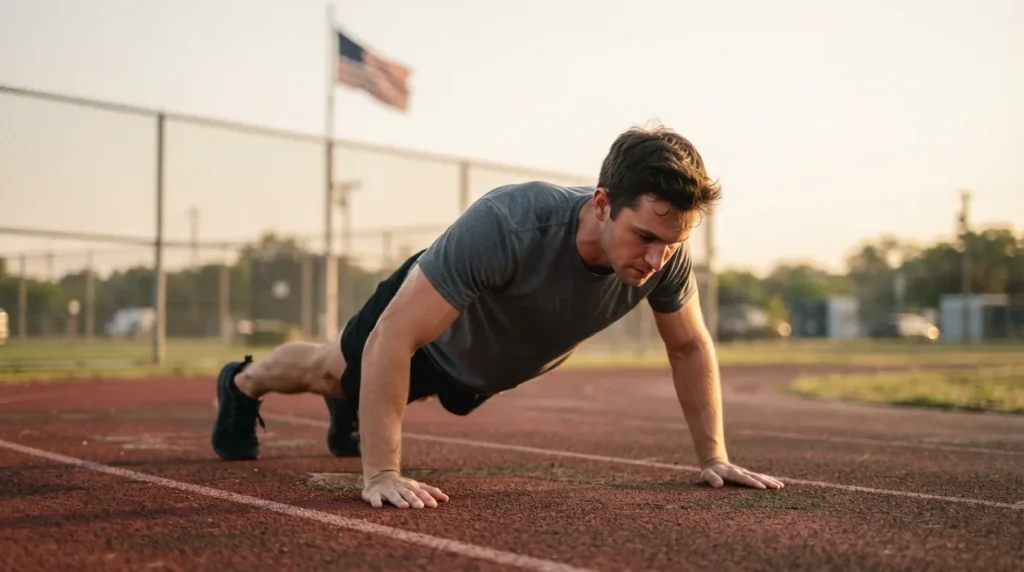
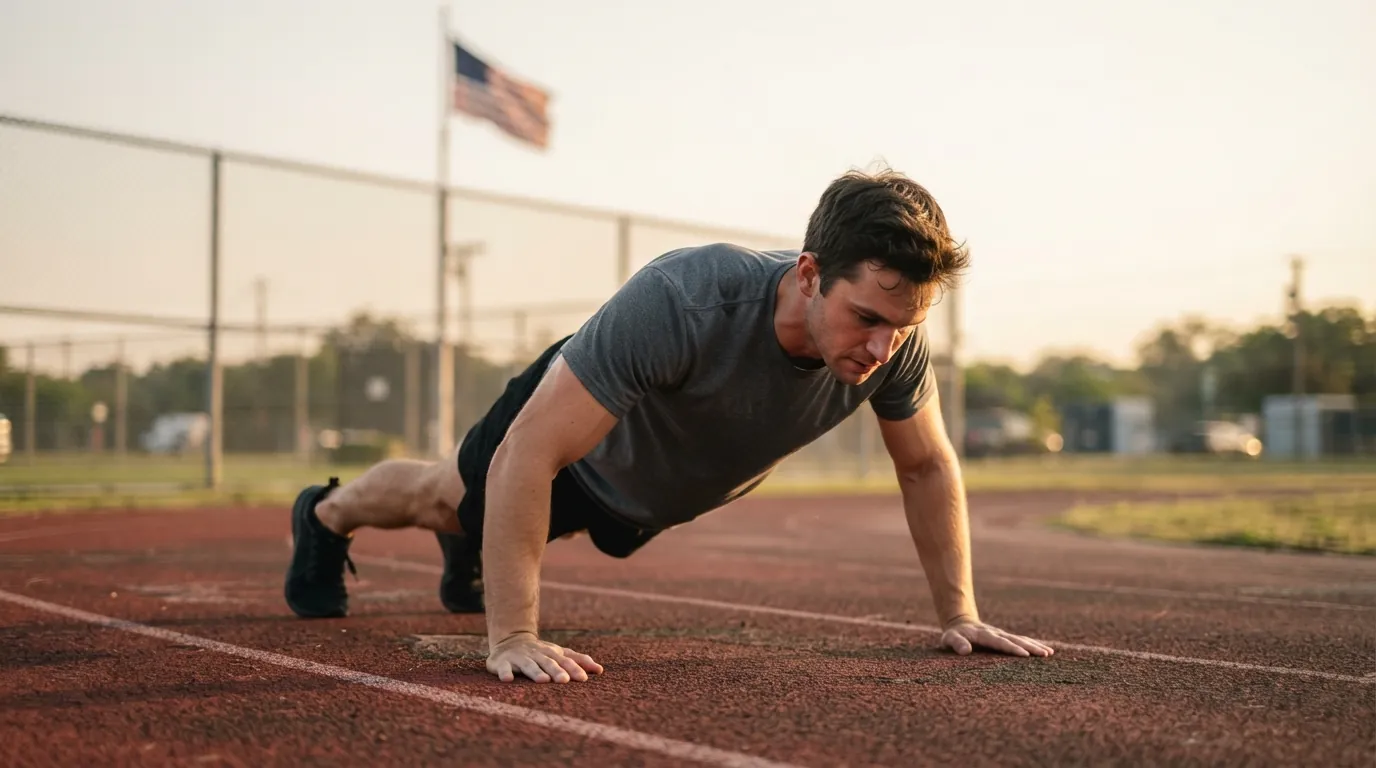
PFT-1 is the screen you take earliest in the process. It measures muscular endurance (sit-ups, push-ups) and cardiovascular capacity (step test), not running speed. Every rep has to be full range of motion — a sit-up that doesn’t bring your shoulders past your knees, or a push-up that doesn’t hit a 90-degree elbow bend, doesn’t count toward your total.
| Event | Standard | Notes |
|---|---|---|
| Sit-ups | 25 in 60 seconds | Proper form required; hands behind head or crossed on chest per CBP protocol |
| Push-ups | 20 in 60 seconds | Full range of motion, straight back, no sagging hips |
| Step test | 14-inch step, 120 steps per minute for 5 minutes | Cadence-paced cardio test; pass/fail is based on heart-rate recovery afterward |
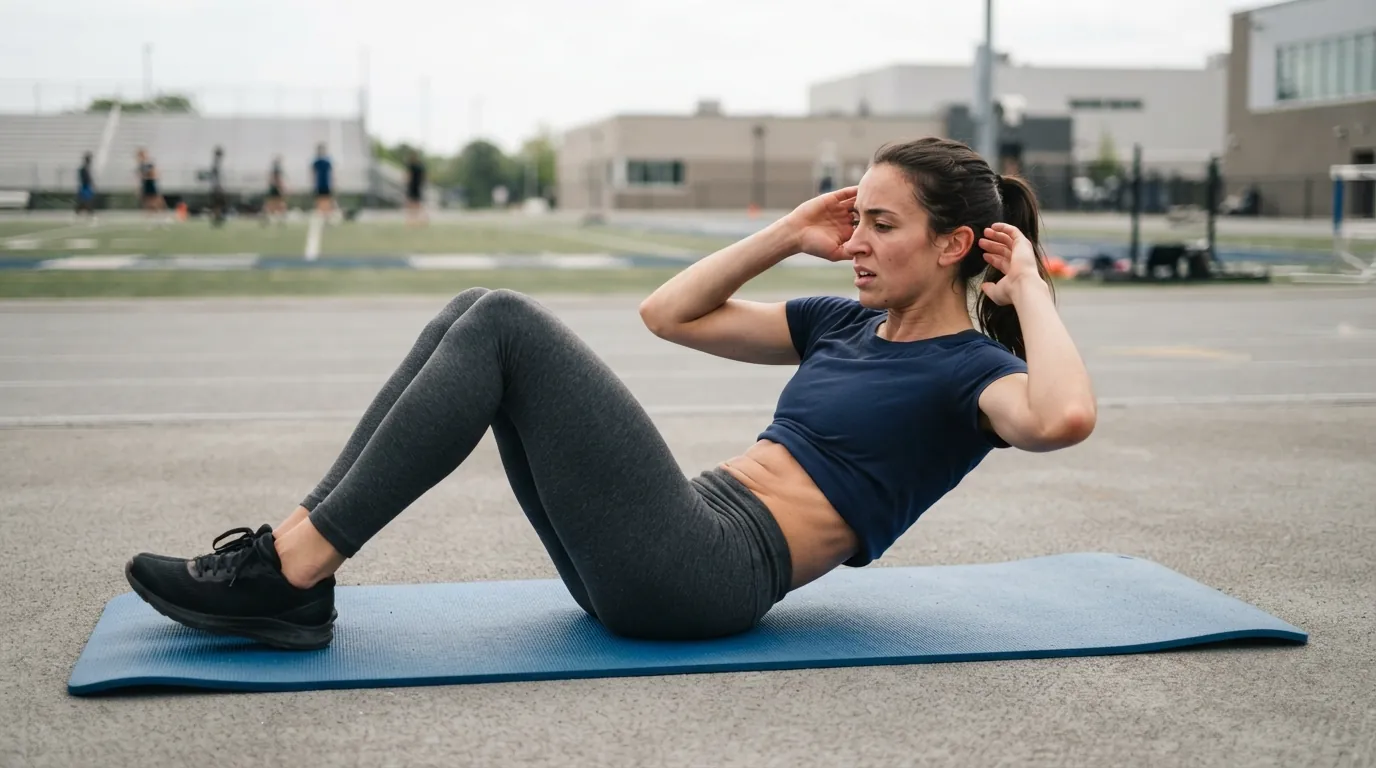
The step test trips up more candidates than the rep-count events, mostly because people train for sit-ups and push-ups and skip steady-state cardio. Five minutes at 120 steps per minute on a 14-inch box is roughly equivalent to a brisk stair-climbing session — not exhausting in isolation, but unforgiving if your resting cardiovascular fitness is low, since the pass/fail line depends on how fast your heart rate comes back down after the five minutes end.
If you fail PFT-1, CBP allows one retest. Between attempts, CBP’s own six-week BPA Pre-Employment Fitness Physical Readiness Program (published as a downloadable PDF on cbp.gov) lays out a structured plan built specifically around these three events.
PFT-2 Standards: Academy Entry Fitness Test
PFT-2 is administered close to your academy report date and re-tests sit-ups and push-ups while adding two running events. This is the test that actually resembles what field training will demand: short sprint power plus sustained aerobic capacity.
| Event | Standard | Notes |
|---|---|---|
| 220-yard run | 46 seconds or less | Straight sprint distance, not the obstacle-style course some early PFT-1 prep material describes |
| Sit-ups | 25 in 60 seconds | Same standard as PFT-1 |
| Push-ups | 20 in 60 seconds | Same standard as PFT-1 |
| 1.5-mile run | 15 minutes or less | Outdoor track or road course at the academy |
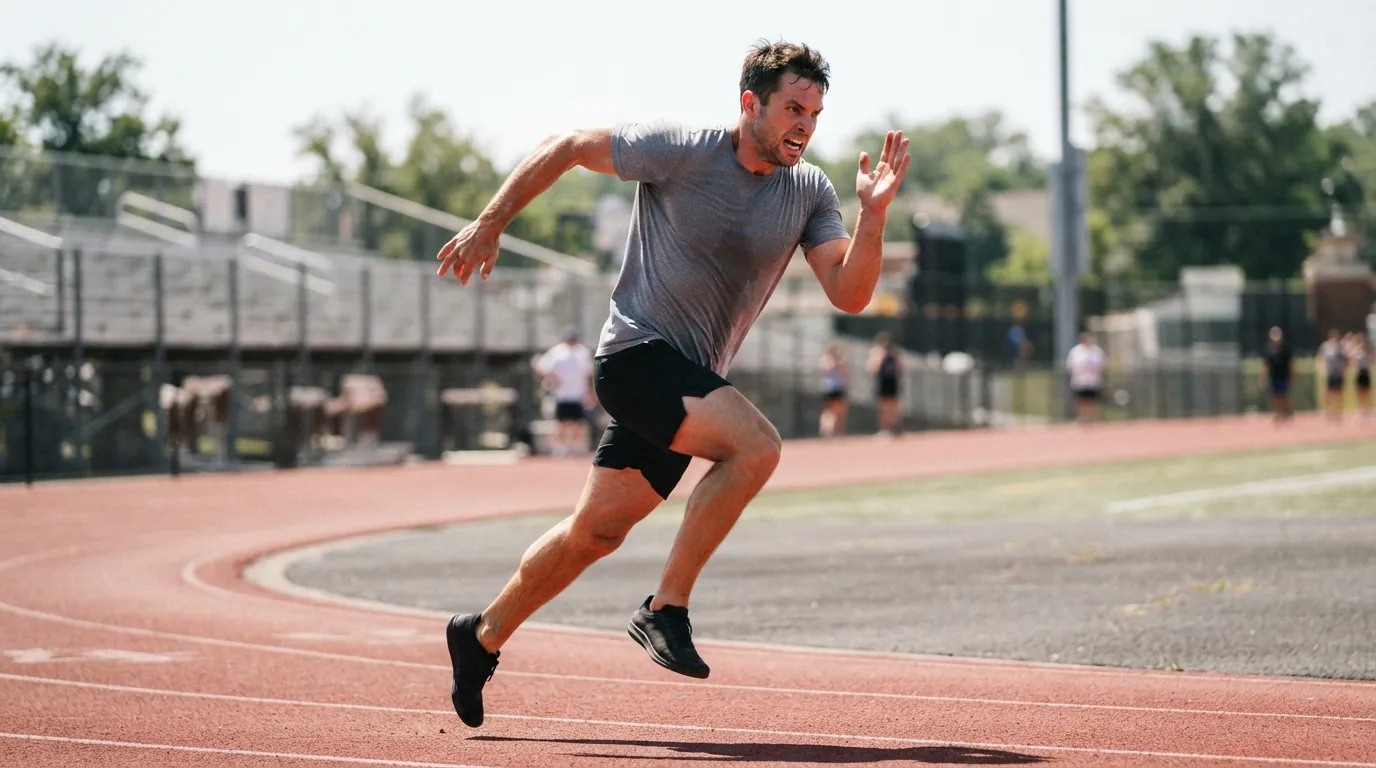
Two numbers deserve a flag because they get misquoted constantly across recruiting forums and prep sites: the 220-yard run cutoff is 46 seconds, not 50, and the 1.5-mile run cutoff is 15:00, not the tighter 13:00-14:25 range that shows up on a handful of third-party prep pages (those figures likely describe a scored “excellent” tier rather than the minimum pass line, or reflect an older test version). Treat 46 seconds and 15:00 as your working targets, and build in a buffer — passing at 45.9 seconds with no margin is not the goal; running comfortably under 44 seconds and finishing the 1.5 miles in 13:30 or better gives you a cushion against a bad-weather day at the academy.
There is no documented retest for PFT-2. CBP states failure results in withdrawal of your conditional offer of employment. That single fact should shape your entire training calendar: PFT-1 is a checkpoint, PFT-2 is the actual test.
How to Train for the Border Patrol PT Test
Six weeks is CBP’s own stated prep window between a PFT-1 failure and retest, and it’s also a realistic runway before PFT-2 if you start as soon as you get a conditional offer. The plan below sequences muscular endurance first, then adds running volume, then sharpens speed and taper — matching the order the two tests actually arrive in.
Weeks 1 and 2: Build a Base
Test your current sit-up and push-up max under real conditions (60-second clock, proper form, someone counting) before you assume you’re ready. Train sit-ups and push-ups three days a week using timed sets: three rounds of max reps at 60 seconds with two minutes of rest between rounds. Add two 20-30 minute cardio sessions — brisk incline walking or a stair machine — to start conditioning for the step test’s cadence and recovery demand. Keep intensity moderate; this block is about frequency, not burnout.
Weeks 3 and 4: Add Intensity
Layer in running. Two interval sessions a week built around 220-330 yard repeats at faster-than-race pace train the exact energy system the 220-yard sprint uses. Add one longer steady-state run (2-3 miles at conversational pace) to build the aerobic base the 1.5-mile run draws on. Continue sit-up and push-up training but shift from max-effort sets to sets just under your PFT number, done for multiple rounds, to build muscular endurance rather than a single-set ceiling. Introduce an actual step-test simulation once a week — 14-inch box (a sturdy step platform or plyo box works), metronome or timer at 120 steps per minute, five minutes continuous.
Weeks 5 and 6: Peak and Taper
Run a full mock PFT-2 under test conditions in week 5: 220-yard sprint, rest, sit-ups, rest, push-ups, rest, 1.5-mile run, in that order, timed and counted honestly. Use the result to identify your weakest single event and give it extra dedicated volume for the following ten days. Taper volume in the final week — cut total training load by roughly a third, keep intensity but shorten sessions, and prioritize sleep and hydration over any last-minute gains. Test day performance drops when candidates arrive fatigued from cramming, not undertrained.
Common Reasons Candidates Fail
- Training the wrong test. Candidates cram running for PFT-1 (which has no run) and neglect the step test, or cram push-ups for PFT-2 without addressing the 220-yard sprint, which is often the first event and the one that catches unprepared runners cold.
- No-count reps. Sit-ups and push-ups that don’t meet CBP’s range-of-motion standard don’t count, even if the candidate’s internal count says they hit 25 or 20. Practicing with a strict counter, not a mirror, closes this gap.
- Underestimating the step test. It looks easy on paper — a slow-paced box step — but the pass/fail line is tied to heart-rate recovery, which punishes candidates who only trained strength and skipped steady cardio.
- Going out too fast on the 1.5-mile run. A sub-15:00 pace (roughly 10:00/mile) is manageable for most conditioned candidates who pace evenly, but candidates who sprint the first quarter-mile to “bank time” frequently fade and miss the cutoff.
- Arriving at PFT-2 undertrained because PFT-1 felt easy. PFT-1’s lack of a running component gives some candidates false confidence. PFT-2’s running events are the actual bottleneck for most washouts.
How the PT Test Fits Into the Hiring and Academy Timeline
The full Border Patrol Agent hiring process typically runs 6 to 12 months from application to academy start, spanning the online application, entrance exam, structured interview, medical and psychological evaluations, background investigation, and polygraph. PFT-1 sits early in that sequence, generally clustered with the medical evaluation and interview steps, well before a final offer is issued.
PFT-2 comes much later and is scheduled roughly 30 days before your entrance on duty date, once you already hold a conditional offer. From there, candidates who pass report to the Border Patrol Academy at the FLETC campus in Artesia, New Mexico, for a training program that runs several months and includes Spanish-language instruction alongside law, firearms, and physical training curricula.
On the hiring-volume side, CBP has been actively expanding the Border Patrol workforce: the agency reported more than 34,000 applicants for Border Patrol jobs in the first four months of 2025 alone, a 44% jump year over year, according to reporting on CBP’s applicant data. In December 2025, CBP announced expanded recruitment and retention incentives — up to $60,000 in combined bonuses for new agents, funded through congressional appropriations for hiring thousands of additional customs officers and Border Patrol agents over the next several years, per CBP’s newsroom release and coverage from Government Executive and Federal News Network. None of that funding changes the PFT-1 or PFT-2 physical standards themselves — the fitness bar has stayed fixed even as hiring volume and incentives have grown.
FAQ
What is the border patrol PT test?
It is two separate physical fitness tests CBP uses to screen Border Patrol Agent candidates: PFT-1, given early in hiring, and PFT-2, given roughly 30 days before you report to the academy. Both are pass/fail with identical standards for every candidate.
How many push-ups and sit-ups does border patrol require?
Both PFT-1 and PFT-2 require 20 push-ups in 60 seconds and 25 sit-ups in 60 seconds, each performed with full range of motion.
Does PFT-1 include a run?
No. PFT-1 has three events: sit-ups, push-ups, and a step test on a 14-inch platform at 120 steps per minute for five minutes. The running events (220-yard sprint and 1.5-mile run) are part of PFT-2, not PFT-1.
How fast do you have to run the 220-yard dash for border patrol?
46 seconds or less, tested as part of PFT-2 near your academy report date.
What is the 1.5-mile run time for PFT-2?
15 minutes or less. Some third-party prep sites cite faster cutoffs in the 13 to 14-minute range, but the standard documented on CBP’s own PFT-2 materials is 15:00.
Can you retake the border patrol PT test if you fail?
You get one retest opportunity if you fail PFT-1, supported by CBP’s six-week readiness program. Failing PFT-2 withdraws your conditional offer of employment, and CBP does not document a retest option at that stage.
How to pass border patrol PFT-2?
Train sit-ups and push-ups to a comfortable margin above the minimums, then dedicate the bulk of your prep window to the 220-yard sprint and 1.5-mile run, since those are the two events with no retest safety net. A six-week progressive plan that builds muscular endurance first and running speed last mirrors how the two tests are actually sequenced.
Where does the border patrol PT test take place?
PFT-1 is administered at a CBP-designated testing location during the hiring process. PFT-2 is administered at or near the Border Patrol Academy on the Federal Law Enforcement Training Center campus in Artesia, New Mexico.
Sources and Verification
PFT-1 and PFT-2 numbers in this guide were cross-checked against CBP’s own BPA Physical Fitness Test page (careers.cbp.gov/s/applicant-resources/bpa-physical-fitness-test) and BPA PFT-1 Physical Readiness Program guide (cbp.gov), corroborated by independent recruiting resources that quote the same standards verbatim, including Border Patrol Recruiter’s dedicated PFT-1 and PFT-2 breakdowns and Mountain Tactical Institute’s published BPA training plan. Hiring-volume and incentive figures are sourced from CBP’s December 2025 newsroom release on recruitment and retention incentives, with corroborating coverage from Government Executive and Federal News Network. Applicant-volume statistics for early 2025 are sourced from Police1’s reporting on CBP application data.
Standards, incentive amounts, and process steps can change without notice. Confirm current PFT-1 and PFT-2 requirements directly on careers.cbp.gov before you test.