As an Amazon Associate, we earn from qualifying purchases.
Short answer: Lower glute exercises work the gluteus maximus; “lower glutes” describes a region of that muscle, not a separate named muscle. Hip-extension movements give that muscle work to do. Try a Romanian deadlift, split squat, step-up, glute bridge, or hip thrust, and choose the versions you can perform with control. A recent small trial found that cable hip-extension training produced more growth in the distal region of the gluteus maximus than hip-abduction training, but it did not compare all five exercises below or measure appearance. Anatomy study · 2026 training study
If you want a wider exercise library, see our best glute exercises guide. This guide compares lower glute exercises by equipment and control, then shows how to build a simple session from a few choices.
What are the “lower glutes”?
The gluteus maximus is one muscle with identifiable regions and a major role in hip extension. The hamstrings also assist hip extension in a hinge, so a Romanian deadlift will not work only one small patch of muscle. “Underbutt” is a useful description of the area, not the name of an independent muscle. Gluteus maximus anatomy · ACE Romanian deadlift technique and muscles
The crease beneath the buttock is not simply a line you can exercise away. A cadaveric study found that the superficial fascial structure of the gluteal fold varies by location. That is one reason to treat promises about “erasing” the crease with caution. The study examined anatomy, not the effect of training. Gluteal-fold dissection study
How to choose lower glute exercises
Use this table to select a hinge, a single-leg movement, and a bridge or thrust. The choices cover different ways to perform hip extension; they are not a ranking of which exercise grows the lower region fastest. A nine-week trial in untrained adults found similar gluteal growth after hip-thrust and back-squat training despite higher first-session glute EMG readings for the hip thrust. Hip-thrust versus squat trial
| Exercise | Equipment | Easier starting option | Form priority |
|---|---|---|---|
| Romanian deadlift | Dumbbells or a barbell | Unloaded hip hinge | Move at the hips while keeping the weight close. |
| Bulgarian split squat | Bench; weights optional | Floor-level split squat | Use a stable stance and control the descent. |
| Step-up | Stable, low platform; weights optional | Lower platform | Keep the lead foot planted and lower slowly. |
| Glute bridge | Floor or mat | Two-leg bodyweight bridge | Lift through the hips without arching the lower back. |
| Elevated bridge / hip thrust | Bench; weights optional | Floor glute bridge | Keep the bench stable and move the hips under control. |
The setup and form options above are adapted from the ACE RDL guide, ACE split-squat guide, ACE step-up guide, ACE floor-bridge guide, and ACE elevated-bridge guide.
How to choose a starting version
You do not need to perform all five lower glute exercises in one session. The sample workout below uses a hinge, a single-leg movement, and a floor bridge, with a fourth move optional. If the hinge pattern is new to you, practice it without dumbbells. If a raised platform makes the step-up hard to control, choose a lower, stable step or a floor-level split squat instead. For the bridge, start on the floor before trying a bench. These are practical options, not a tested sequence for regional muscle growth.
Equipment can make the choice simpler. With a mat and a secure low step, you can do the unloaded hinge, bodyweight step-up, and floor bridge. With dumbbells, you can add load to the hinge after you can keep the weights close to your legs and your back position steady. With a bench, choose either the rear-foot-elevated split squat or the elevated bridge as the optional movement. The bench should stay put during the movement. You can also skip the optional fourth row if three exercises are enough to keep your technique consistent that day.
1. Romanian deadlift
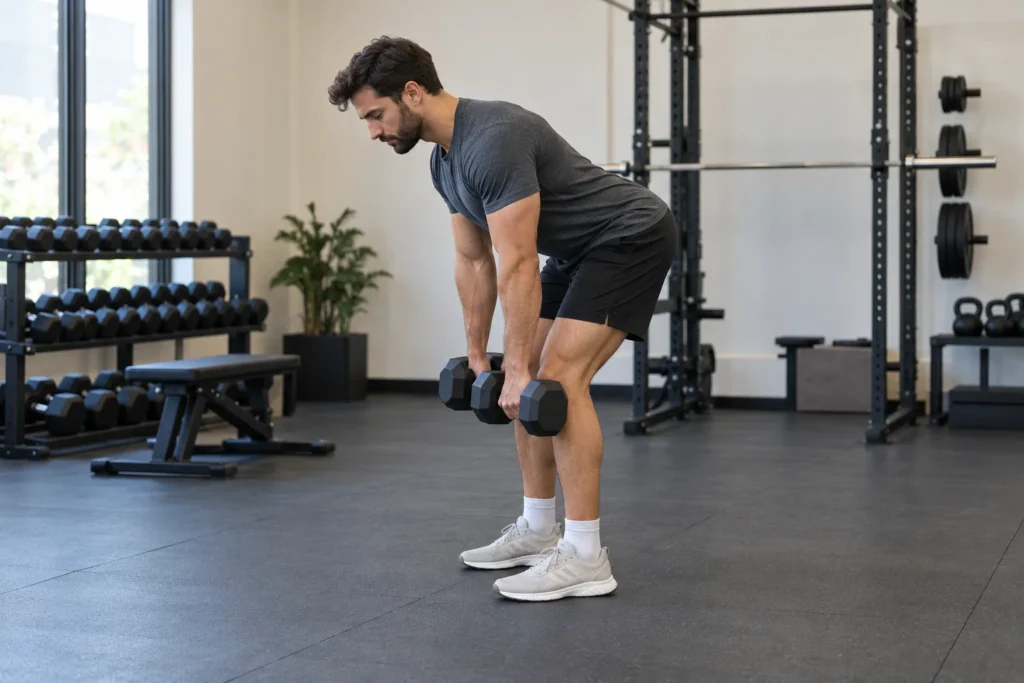
Stand with feet about hip-width apart, knees softly bent, and a dumbbell in each hand. Push the hips back so the weights travel close to the legs. Stop when you can no longer hinge without rounding your back, then stand tall by extending the hips. Start without weights if the pattern is unfamiliar. The RDL trains the gluteus maximus and hamstrings along with other posterior-chain muscles. ACE RDL technique
For more dumbbell movement options, see dumbbell exercises for thighs and glutes.
2. Bulgarian split squat
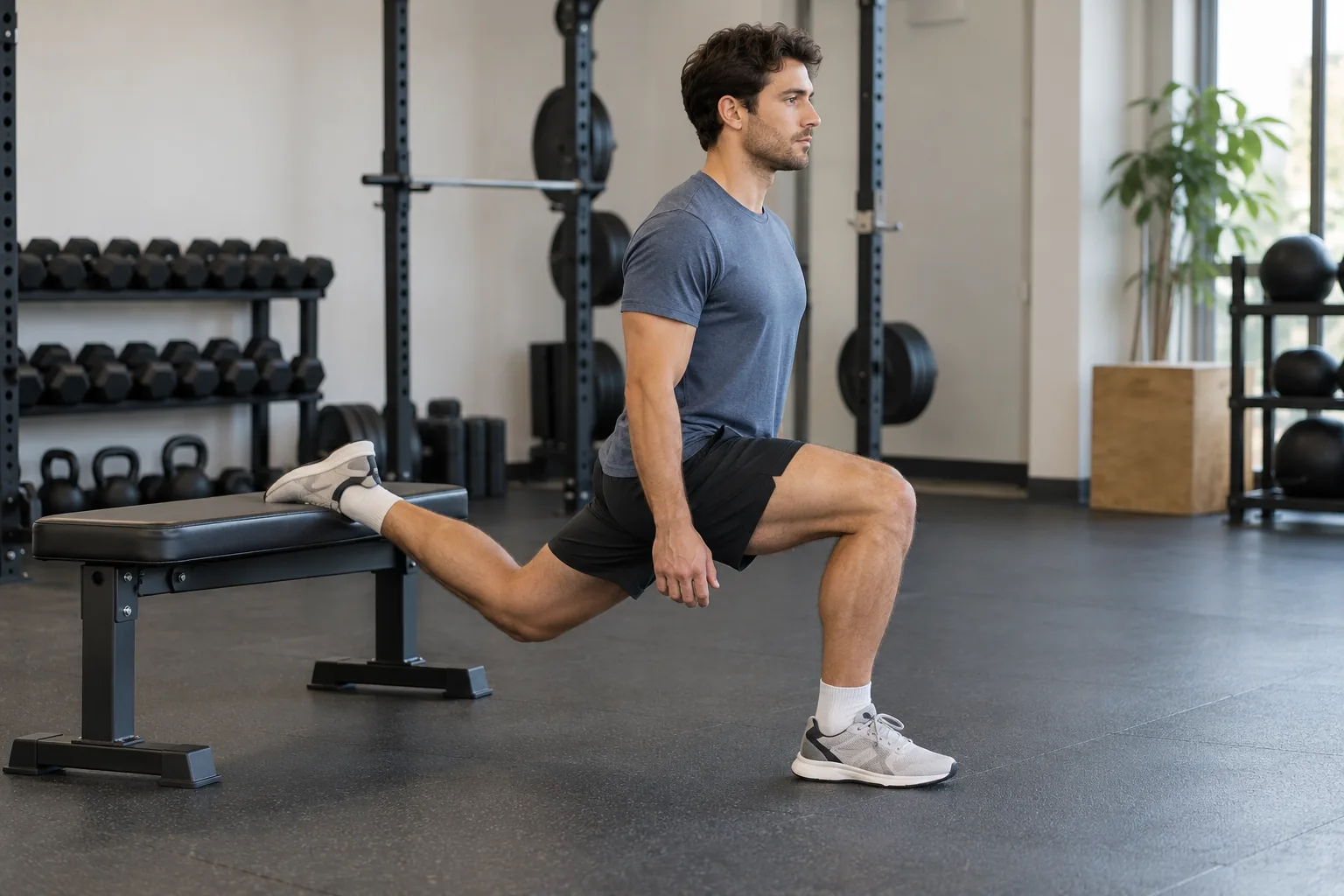
Place one foot behind you on a stable bench or box and the other in front. Lower under control, keeping the torso steady, then press through the front foot to rise. Try a floor-level split squat before adding the rear-foot elevation or dumbbells. ACE classifies the elevated version as advanced and describes the bench-and-dumbbell setup. ACE Bulgarian split squat
3. Step-up
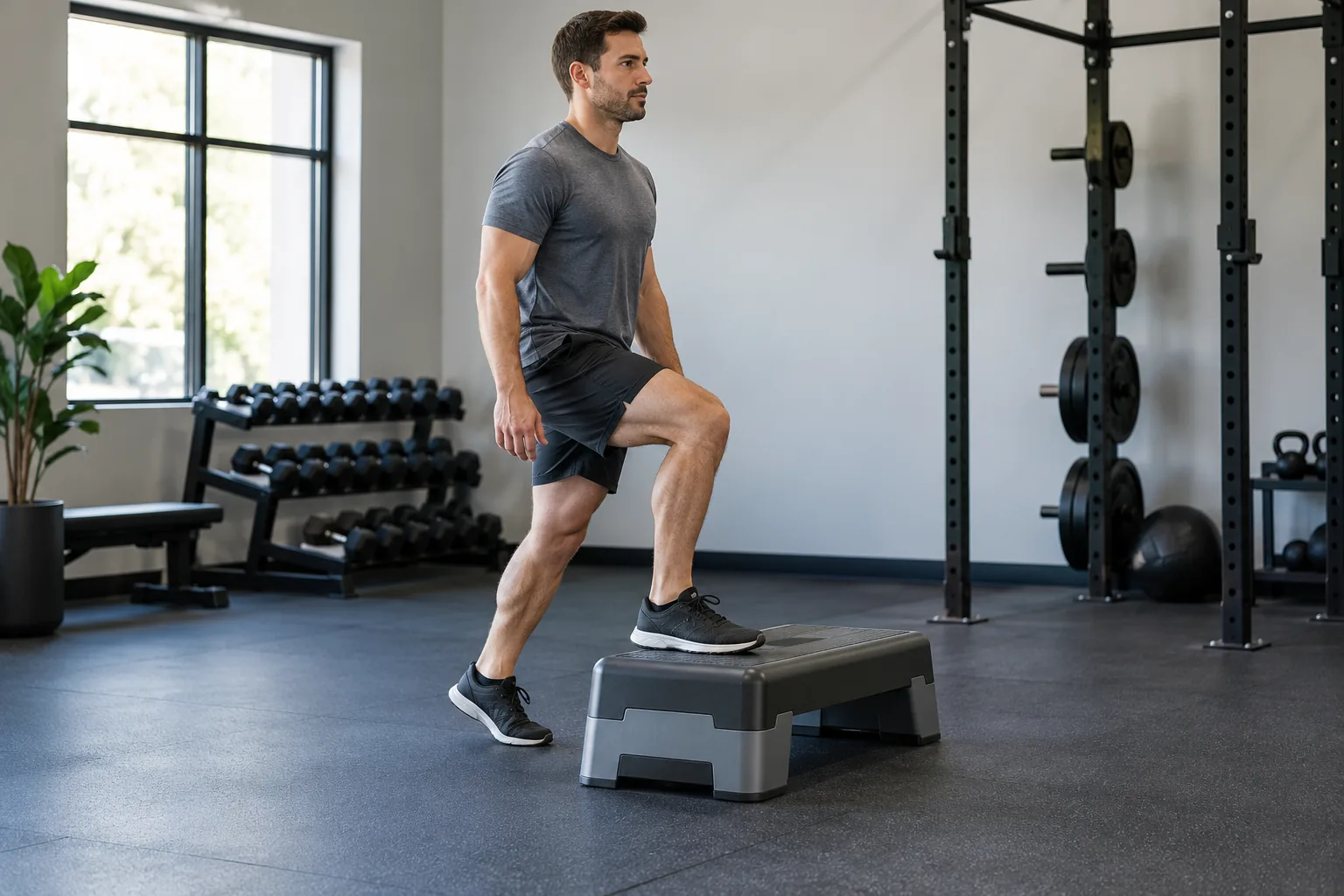
Plant your lead foot on a secure platform. Step up without rushing and lower the trailing foot under control. Begin with a platform low enough that you can keep your foot and knee aligned; add dumbbells only when the movement feels steady. ACE lists the step-up as a butt/hip and thigh exercise and advises monitoring foot, ankle, and knee position. ACE step-up
4. Floor glute bridge
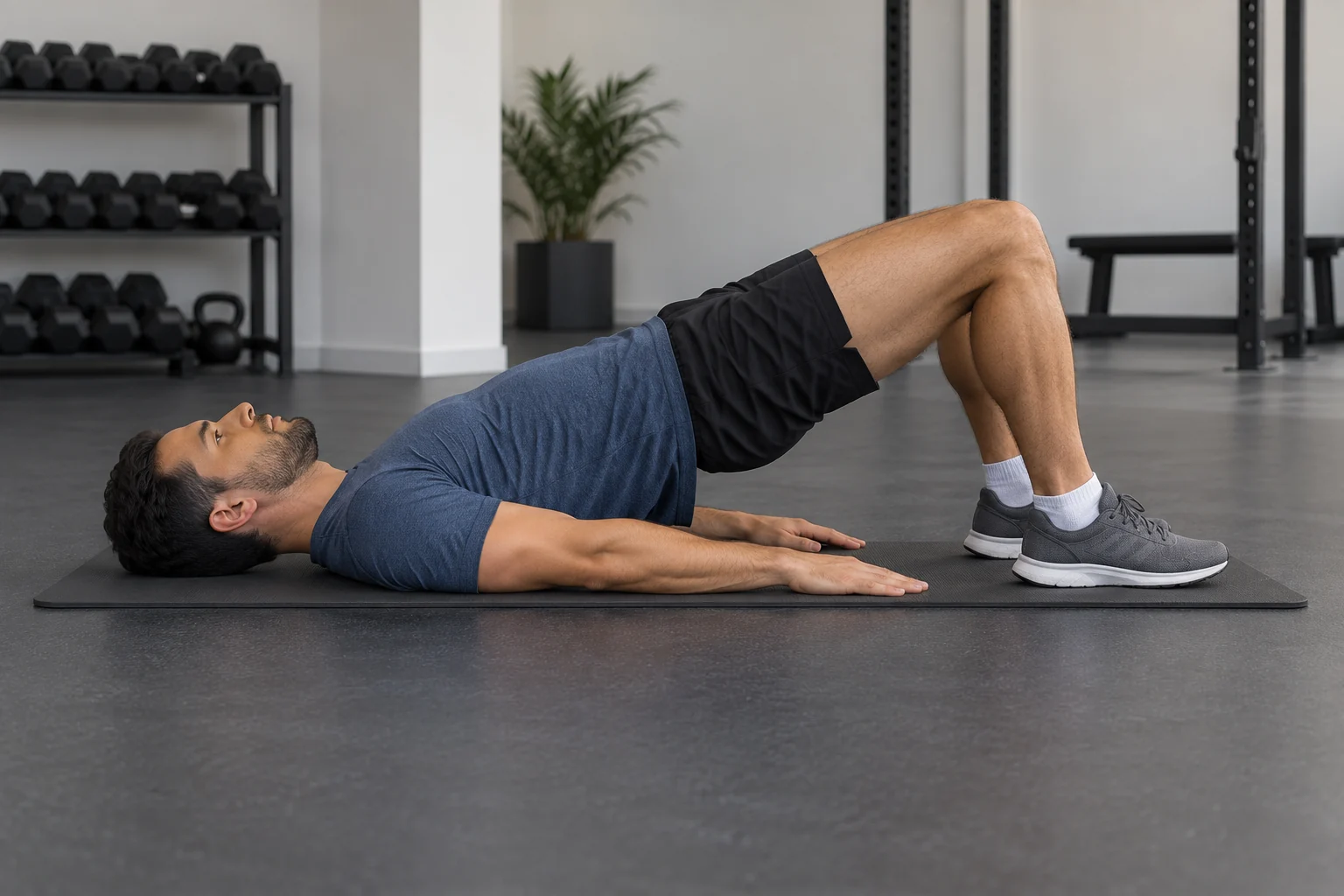
Lie on your back with knees bent and feet flat. Tighten your abdomen, press through the feet, and lift the hips into extension. Lower slowly. Stop the lift before the lower back arches to create extra height. ACE presents this as a beginner, no-equipment glute exercise and shows a single-leg progression. ACE glute bridge
For a home plan beyond this one session, use our lower-body workout without equipment. A band is optional for home training; if you want one, browse resistance bands for glute exercises. The bridge works without a band.
5. Elevated bridge / hip thrust
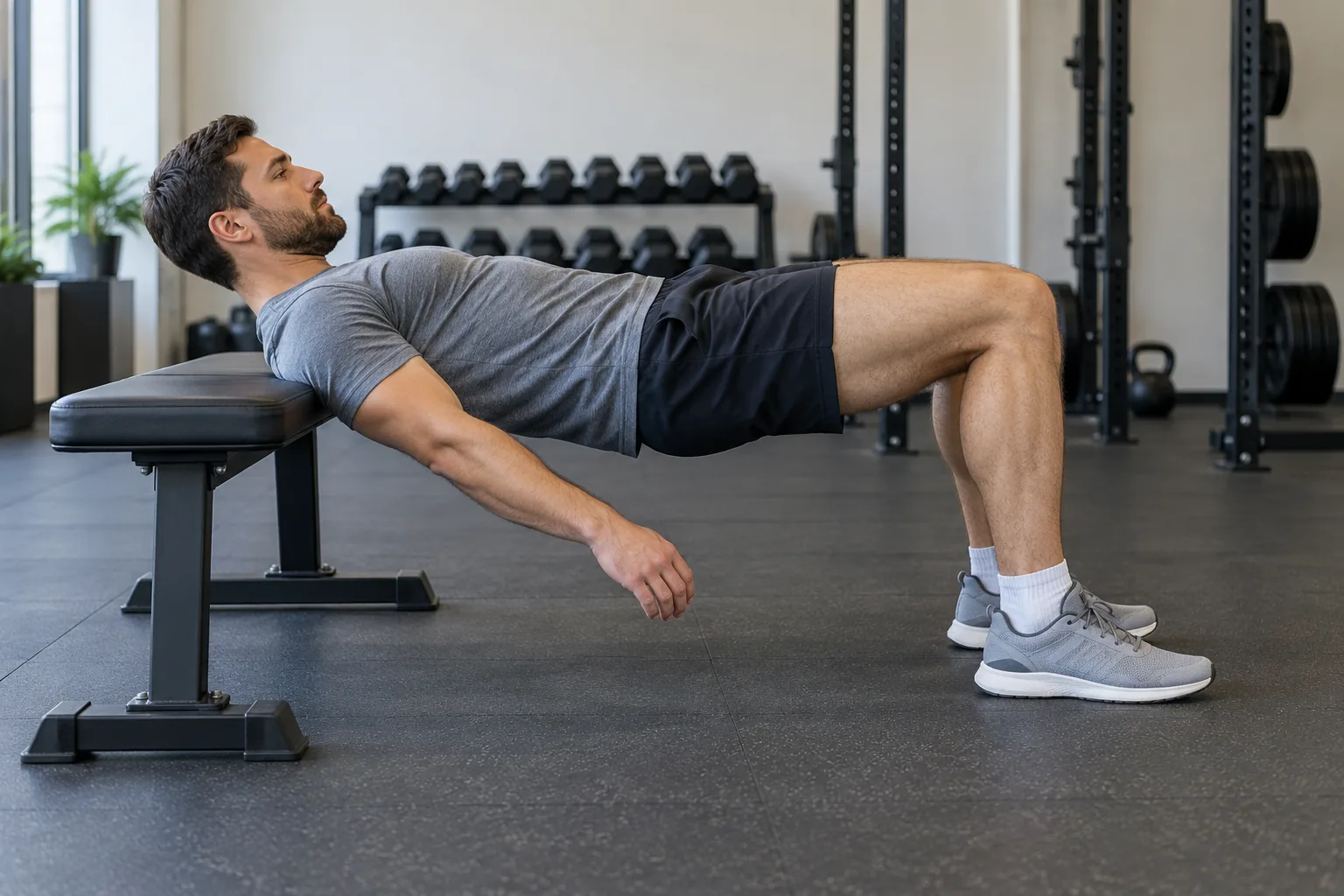
Rest the upper back and shoulders across a stable bench, with feet on the floor. Lower the hips, then press the feet down and extend the hips. Try the floor bridge first if the bench setup feels awkward. ACE describes an elevated bridge with optional dumbbells at the hips; the equipment is not required to learn the movement. ACE elevated glute bridge
For cable and hip-thrust machine options, see our glute machine guide.
Common form fixes for lower glute exercises
These are quick adjustments when a movement stops matching the instructions above. They are form checks, not a way to diagnose pain or prove that one part of a muscle is being isolated.
Romanian deadlift: If your back rounds as you lower, stop the hinge earlier and practice without load. The goal is hip movement with the weights close to the legs, not reaching a particular depth.
Bulgarian split squat: If the bench setup makes balance the main challenge, put the rear foot on the floor and use the floor-level split squat first. Add elevation only when the descent is controlled.
Step-up: If you need to rush or push hard with the trailing leg, use a lower step and slow the return to the floor. Keep the lead foot planted throughout the repetition.
Floor glute bridge: If extra height comes from arching the lower back, lift the hips less and lower under control. The bridge does not need a band to be useful as a practice movement.
Elevated bridge: If the bench moves or the upper-back support feels awkward, use the floor bridge. The bench setup is an option, not a requirement for this workout.
The form checks follow the linked ACE instructions for the RDL, split squat, step-up, floor bridge, and elevated bridge.
A sample workout using lower glute exercises
This is an editorial example, not a tested program or a claim that these sets and reps are optimal. Start with a few minutes of comfortable movement and practice repetitions without load. Pick weights and ranges that let you keep the technique described above. Do the following in order, resting as needed to regain control before the next set:
| Movement | Example amount | Home substitution |
|---|---|---|
| Romanian deadlift | 2 sets of 8–10 reps | Unloaded hinge, then light dumbbells if available |
| Step-up | 2 sets of 8 reps per leg | Stable, lower step without weights |
| Floor glute bridge | 2 sets of 10–12 reps | Same movement on a mat |
| Optional split squat or elevated bridge | 1–2 sets of 8 reps per side, or 10 bridge reps | Floor-level split squat or standard bridge |
If form changes, shorten the set or use an easier variation. In later sessions, change one thing at a time—repetitions, load, or exercise difficulty—while keeping the movement controlled. A large resistance-training review found that multiset programs can build muscle, but it did not test this particular workout or establish a lower-glute-specific prescription. Resistance-training network meta-analysis
How to progress lower glute exercises
Treat the amounts in the table as a starting example rather than a target to force. On the first attempt, note which version you used for each movement and how many repetitions you completed with steady form. The Romanian deadlift uses both legs together; the step-up and split squat list repetitions per leg. In the optional row, choose the split squat or elevated bridge, not both. That makes the session easier to follow and gives you a record to compare next time.
For later sessions, first try to repeat the same lower glute exercises with similar control. If every repetition of a set is steady, you could work toward the top of the example range before adding a small amount of weight or moving to a harder setup. If the movement becomes rushed or a form cue breaks down, keep the same version, shorten the set, or use an easier one. This is a simple way to adjust an example workout; the resistance-training review cited above did not test this exact progression.
You can also change the exercise without changing the pattern. A floor-level split squat can take the place of a step-up if you do not have a secure platform; a floor bridge can take the place of the elevated version if you do not have a stable bench. Keep the hinge, single-leg, and bridge choices clear in your notes so you can tell what changed between sessions. None of these swaps is evidence that a particular exercise will reshape the gluteal fold.
A short training note can make the next session easier to plan. Write down the date, the version of each movement, the weight if any, the completed repetitions, and one form cue that mattered. For example: “low step-up, bodyweight, 8 per leg, lead foot stayed planted.” If the next attempt feels less steady, the note helps you choose the same or an easier version instead of guessing. It also makes it clear when a bench or dumbbell was added, which is useful because those setup changes can alter how the exercise feels.
Keep comparisons modest. A smoother hinge or an extra controlled repetition shows that you performed that task differently on that day; it does not prove that a particular region of the gluteus maximus grew. This log is a practical way to follow the sample workout, not a measurement of muscle growth or a required training method.
Can you isolate the lower glutes or remove the underbutt crease?
No exercise in the evidence reviewed here has been shown to isolate only the lower gluteus maximus or guarantee a different crease. One small, 10-week trial did find more distal gluteus maximus growth with cable hip extension than with hip abduction. A different nine-week trial found similar lower-, middle-, and upper-glute growth with hip thrusts and squats. Those findings suggest exercise selection may matter, while leaving substantial uncertainty about any one person’s appearance or the five movements in this guide. 2026 regional-growth trial · 2023 hip-thrust/squat trial · Gluteal-fold anatomy
What did the cited studies actually test?
The recent regional-growth trial compared cable hip extension with hip abduction over ten weeks and reported more growth in the distal gluteus maximus with hip extension. It was small and did not compare the Romanian deadlift, split squat, step-up, floor bridge, or elevated bridge in this article. It also did not test whether training changes the visible crease beneath the buttock. That makes the result a reason to consider hip-extension work, not a ranking of these five movements. Regional-growth trial
A separate nine-week trial studied hip thrusts versus back squats in untrained adults. It found similar lower-, middle-, and upper-glute growth between the groups, even though first-session glute EMG was higher for hip thrusts. EMG describes activity during a movement; this trial shows why one higher reading should not be treated as proof of more long-term growth. It does not compare a bodyweight floor bridge with the elevated bridge shown above. Hip-thrust/squat trial
The gluteal-fold study is different again: it examined the anatomy of the fold in cadavers, not a workout. Together, these sources support careful language about regional anatomy, exercise selection, and uncertainty. They do not establish a method for “erasing” an underbutt crease or predicting an individual reader’s appearance. Gluteal-fold anatomy study
Is a floor bridge or an elevated bridge better?
Neither version is established here as the best way to grow the lower region. The floor bridge needs no bench and is the simpler starting setup in the ACE bridge guide. The ACE elevated-bridge guide uses upper-back support on a bench and allows optional loading. Choose the one whose setup you can control. The hip-thrust-versus-squat trial cited above does not compare these two bridge variations, so it cannot settle this choice.
Do I need bands or machines for lower glute exercises?
No. The floor bridge is a no-equipment exercise in ACE’s library, and the step-up can be practiced on a secure platform without weights. The sample workout gives unloaded and bodyweight options for each movement. A band or machine may give you another option if you already have it, but neither is necessary to use this guide. The optional band link above is a shopping option, not a required part of the routine.
What can I do at home without weights?
For lower glute exercises at home, try a floor bridge, a floor-level split squat, and a low step-up, keeping each movement controlled. ACE lists the bridge as a no-equipment option and the step-up with a platform; a split squat can be practiced without the advanced rear-foot elevation or dumbbells. ACE bridge · ACE step-up · ACE Bulgarian split squat
If exercise causes pain, stop and seek guidance from a qualified clinician or exercise professional for your situation.