

TL;DR — What Supplements Help Menopause Joint Pain?
Supplements for menopause joint pain with the strongest clinical backing for pain relief are boswellia, curcumin, and omega-3 fatty acids. Most of that evidence comes from osteoarthritis trials, not menopause-specific studies. The link between estrogen decline and joint symptoms is real, but supplement research hasn’t caught up to test menopausal women as a separate group.
Table of contents
Gymnase Tips is reader-supported. When you buy through links on our site, we may earn an affiliate commission at no extra cost to you.
Medical disclaimer: This guide is general information, not medical advice. Talk with your doctor or pharmacist before starting any supplement, especially if you take a blood thinner, a diabetes medication, or a bisphosphonate, or if your joint pain is severe, new, or comes with swelling, fever, or redness.
Declining estrogen during perimenopause and menopause reduces the protective cushion around joints and raises inflammatory signaling. That is the mechanism behind the stiffness and aching many women notice in their 40s and 50s. Supplements may help manage those symptoms, but they are not a replacement for medical evaluation if the pain is severe or new.
Why Menopause Causes Joint Pain
Declining estrogen reduces joint cushioning and increases inflammation, causing stiffness and pain that many women experience during perimenopause and menopause. Estrogen helps maintain cartilage and supports synovial fluid production. When estrogen drops, the decline in ovarian function is associated with spontaneous increases in proinflammatory cytokines, including IL-1, IL-6, and TNF-alpha (Source: Pfeilschifter et al., Endocrine Reviews, 2002). The result is faster cartilage degradation and low-grade inflammation.
A 2020 meta-analysis of 16 studies found that 71% of perimenopausal women reported musculoskeletal pain, with perimenopausal women 1.63 times more likely to experience it than premenopausal women (Source: Lu et al., Neural Plasticity, 2020). A 2024 review notes that pain tends to increase across the menopausal transition and may peak in early postmenopause (Source: Climacteric, 2024), though it does not resolve for everyone, especially if osteoarthritis develops independently.
How We Ranked These Supplements
We graded each supplement A through C based on clinical trial quality and clinical meaningfulness. Most joint-supplement research uses osteoarthritis patients, not menopausal women specifically. Each entry below states which population was studied.
- Grade A: Multiple RCTs or a meta-analysis in a relevant population showing a clinically meaningful pain reduction.
- Grade B: A meta-analysis or single well-designed RCT showing statistically significant but small or inconsistent effects, or strong OA evidence with clear limitations (small sample, high heterogeneity, industry funding, or short duration).
- Grade C: Mechanistic, preclinical, or indirect evidence only. Not enough human data on joint or muscle pain to recommend specifically for that purpose.
This grading system is what sets this list apart. Most supplement lists either skip evidence altogether or assign vague “tiers” without defining what each tier means. We define ours, and we tell you when the evidence comes from a population that is not menopausal women.
The Best Supplements for Menopause Joint Pain
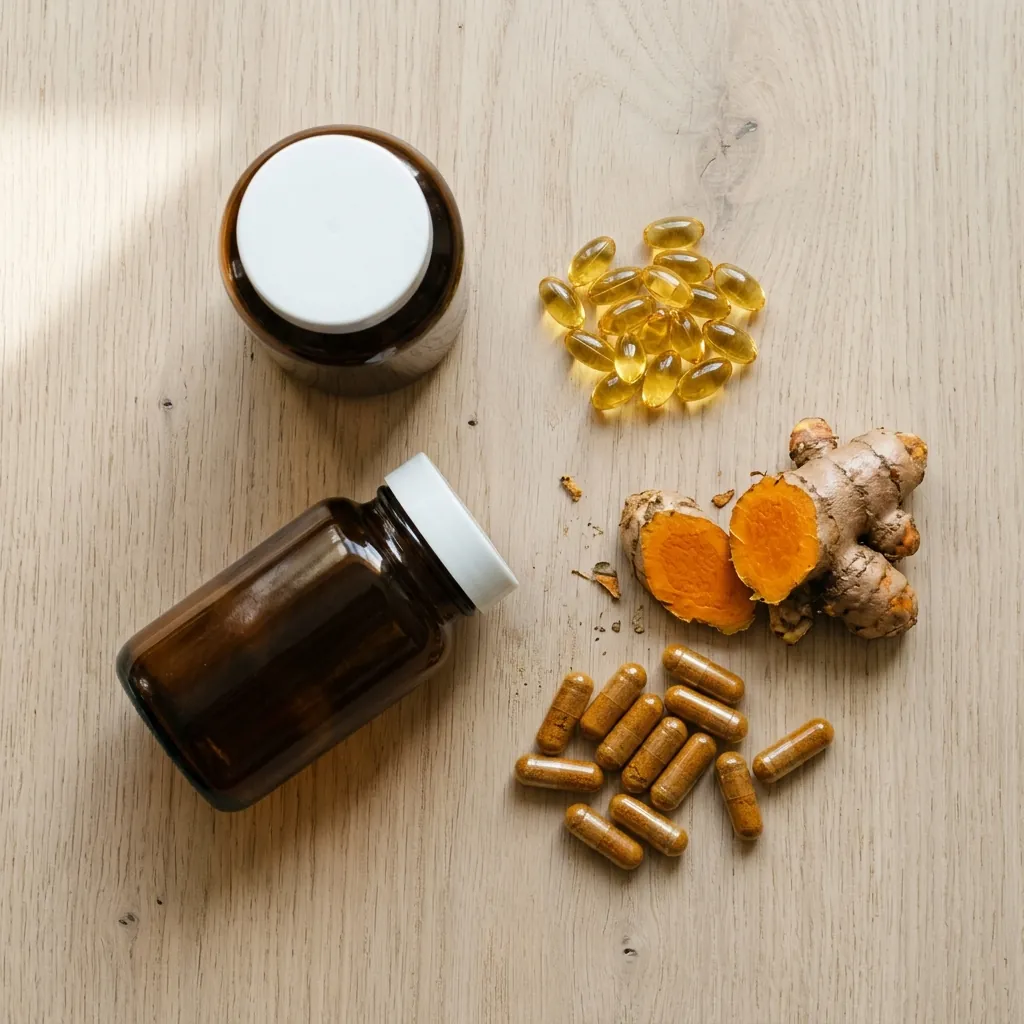
Based on clinical evidence, boswellia and curcumin have the strongest support for joint pain relief. The table below ranks all nine supplements by evidence grade, studied dose, and safety considerations.
| Supplement | What It May Help | Evidence Strength (Population) | Studied Dose | Main Caution |
|---|---|---|---|---|
| Boswellia | Joint pain, stiffness | Grade A, OA patients (network meta-analysis, 4,599 patients) | 100 mg/day (standardized extracts) to 1,000 mg/day (generic extracts) in OA trials; up to 1,000 mg/day used safely (NCCIH) | May raise INR in warfarin users (2 case reports) |
| Curcumin | Joint pain, function | Grade A, OA patients (umbrella review of 11 meta-analyses) | 1,000 mg/day curcuminoids with piperine or lipid formulation | Liver risk with high-bioavailability forms (NCCIH) |
| Omega-3 (EPA/DHA) | Joint pain, inflammation | Grade B, OA patients (meta-analysis, 2,070 patients; small effect size, SMD -0.29) | 2–3 g/day EPA+DHA combined | May increase bleeding at high doses with anticoagulants (NIH ODS) |
| Collagen peptides | Joint pain, function | Grade B, OA patients (meta-analysis, 507 patients; moderate quality, high bias risk) | 10 g/day hydrolyzed collagen | No significant drug interactions known |
| Glucosamine + chondroitin | Joint pain (moderate-severe OA subgroup) | Grade B, OA patients (GAIT trial, 1,583 patients; mixed overall) | 1,500 mg glucosamine HCl + 1,200 mg chondroitin sulfate/day (GAIT) | Shellfish allergy (glucosamine); may affect blood glucose and INR |
| Vitamin D | Bone health; deficiency correction | Grade C, no joint-pain RCT; widely inadequate in postmenopausal women with osteoporosis/osteopenia | RDA: 600 IU (up to age 70), 800 IU (71+) per NIH ODS | UL 4,000 IU/day; K2 + warfarin interaction |
| Magnesium | Muscle function, enzymatic support | Grade C, no joint/muscle-pain RCT; important cofactor, older adults often low | RDA: 320 mg/day for women 31+ per NIH ODS | Reduces bisphosphonate and antibiotic absorption |
| Resveratrol | Anti-inflammatory | Grade C, mostly preclinical; largest human RCT (142 patients) showed no pain benefit | 40–500 mg/day (no established joint dose) | Limited safety data at supplement doses |
| Soy isoflavones | Indirect (estrogenic activity) | Grade C for joints, hot-flash evidence exists (Taku 2012), but joint-specific data is weak | No joint-specific dose established | Estrogenic effects; if you have a history of hormone-sensitive cancer, ask your oncologist before use |
Boswellia
A 2025 network meta-analysis of 42 RCTs covering 4,599 OA patients found boswellia ranked highest among all tested supplements for both pain and stiffness reduction (Source: Zhang et al., Nutrients, 2025). Boswellia was the only supplement in that analysis with a statistically significant effect on WOMAC pain scores (mean difference 10.58, 95% CI 6.45–14.78 vs. placebo).
The mechanism is inhibition of 5-lipoxygenase (5-LOX), which blocks leukotriene synthesis. That is a different pathway from NSAIDs, which target COX enzymes. The active compounds are boswellic acids, particularly AKBA (acetyl-11-keto-beta-boswellic acid).
Dose: NCCIH notes that boswellia extract at doses up to 1,000 mg/day has been used safely in clinical trials lasting up to 6 months (Source: NCCIH, Boswellia). OA trials used doses ranging from 100 mg/day for concentrated standardized extracts to about 1,000 mg/day for generic extracts, depending on the formulation.
Important: This evidence is from OA trials. No RCT has specifically tested boswellia in menopausal women with arthralgia. The mechanism (anti-inflammatory) is relevant regardless of cause, but the gap in population-specific data exists.
Safety: Two case reports documented rising INR in warfarin users who started boswellia (1,200–1,500 mg/day), with recovery after stopping the supplement. The proposed mechanism involves CYP2C9 inhibition (Source: Paoletti et al., Evid Based Complement Alternat Med, 2011). If you take blood thinners, talk to your doctor first.
Product options: boswellia extract.
Curcumin (Turmeric Extract)
Curcumin reduces OA pain more than placebo across multiple meta-analyses. A 2024 umbrella review synthesizing 11 meta-analyses found curcuminoids decreased VAS pain and WOMAC subscores significantly in OA patients (Source: Bideshki et al., Phytotherapy Research, 2024). A 2025 review of 10 RCTs with 786 patients confirmed curcumin improved VAS pain by a mean difference of 18.25 points versus placebo (Source: J Rheum Dis, 2025).
The catch is bioavailability. Standard curcumin is poorly absorbed. You need either piperine (black pepper extract) or a lipid-based formulation to get meaningful blood levels. OA trials typically used 1,000–1,500 mg/day of curcuminoids paired with 10–15 mg piperine.
Dose: 1,000 mg/day curcuminoids (not raw turmeric powder) with piperine or a bioavailability-enhanced form. Below and above 1,000 mg/day showed similar pain improvements in one meta-analysis, so more is not necessarily better (Source: J Rheum Dis, 2025).
Population note: All major trials used OA patients. No menopause-specific RCT exists.
Safety: NCCIH warns that highly bioavailable curcumin formulations have been linked to liver damage in some users. Stop immediately if you notice fatigue, dark urine, or jaundice (Source: NCCIH, Turmeric). If you take blood thinners or other prescription drugs, check with your doctor or pharmacist before starting curcumin.
Product options: curcumin with piperine.
Omega-3 Fatty Acids (Fish Oil)
Omega-3s (EPA and DHA) reduce joint inflammation through a well-understood mechanism: they compete with arachidonic acid for COX and LOX enzymes, shifting the balance toward less inflammatory eicosanoids. For OA specifically, the benefit is statistically significant but modest. A 2023 meta-analysis of 9 RCTs with 2,070 OA patients found omega-3 supplementation reduced pain (SMD -0.29, p = 0.002) and improved function (Source: Deng et al., J Orthop Surg Res, 2023). That effect size is small, roughly a minor improvement on a standard pain scale.
A broader meta-analysis of omega-3 for chronic pain found significant benefits for rheumatoid arthritis (16 studies, SMD -0.42) but not for OA (5 studies, SMD -0.77, 95% CI crossing zero due to high heterogeneity) (Source: PMC12627051, 2025). If your joint pain has an autoimmune component, omega-3s may be more relevant.
Dose: OA trials used 2–3 g/day of combined EPA and DHA. The NIH ODS adequate intake for women is 1.1 g/day ALA (the plant form), but no specific EPA/DHA recommendation exists because ALA is the only omega-3 classified as essential (Source: NIH ODS, Omega-3 Fatty Acids). The NIH ODS notes that FDA has concluded dietary supplements providing no more than 5 g/day of EPA and DHA combined are safe when used as recommended (Source: NIH ODS, Omega-3 Fatty Acids).
Safety: The NIH ODS notes that high-dose fish oil may increase bleeding time by reducing platelet aggregation, but most research shows doses of 3–6 g/day do not significantly alter anticoagulant status in warfarin users. Periodic INR monitoring is still recommended if you combine fish oil with blood thinners (Source: NIH ODS, Omega-3 Fatty Acids).
Product options: omega-3 fish oil (EPA/DHA).
Collagen Peptides
Hydrolyzed collagen peptides at 10 g/day reduced OA knee pain in a 2023 meta-analysis of 4 RCTs with 507 patients (SMD -0.58, p = 0.004), though the included trials had a high risk of bias (Source: Lin et al., J Orthop Surg Res, 2023). A six-month RCT found collagen peptides improved the Lequesne index by 39% versus baseline, exceeding the minimal clinically important difference (Source: PMC11745964, 2025).
Hydrolyzed vs. undenatured type II: These are different products. Hydrolyzed collagen (types I and III, typically 10 g/day) provides amino acid building blocks. Undenatured type II collagen (UC-II, typically 40 mg/day) is proposed to work through oral tolerance, a process where small amounts of intact collagen interact with gut immune tissue to reduce the autoimmune response against joint cartilage (Source: Gupta & Maffulli, Annals of Medicine, 2025). Both have some OA trial data, but hydrolyzed collagen has more published RCTs for OA pain.
Dose: 10 g/day of hydrolyzed collagen peptides, taken consistently for at least 3 months. Most trials ran 12–24 weeks before seeing results.
Population note: All trials used OA patients. No menopause-specific data.
Safety: No significant drug interactions have been reported. Collagen supplements are generally well tolerated. Look for products with USP or NSF third-party testing.
Product options: hydrolyzed collagen peptides.
Vitamin D
Vitamin D has no direct RCT evidence for reducing joint pain. It earns a place on this list because inadequacy is extremely common in menopausal women, and correcting it supports bone and immune health. The EMAS position statement reports that vitamin D inadequacy (below 30 ng/mL) may affect up to 80% of postmenopausal women with osteoporosis or osteopenia, based on a European study of 8,532 women (Source: EMAS, Maturitas, 2023).
Dose: The NIH ODS sets the RDA at 600 IU (15 mcg) for adults up to age 70 and 800 IU (20 mcg) for those 71 and older. The tolerable upper intake level (UL) is 4,000 IU (100 mcg) per day, which is the safe upper limit for routine daily intake; the NIH ODS notes that signs and symptoms of toxicity are unlikely at daily intakes below 10,000 IU (Source: NIH ODS, Vitamin D). A healthcare provider may prescribe higher doses temporarily to correct a documented deficiency.
Get your 25(OH)D level tested before supplementing beyond the RDA. Levels of 50 nmol/L (20 ng/mL) or above are sufficient for most people (Source: NIH ODS, Vitamin D).
K2 note: Vitamin K2 (menaquinone) is a required cofactor for carboxylating osteocalcin, a protein involved in calcium deposition in bone (Source: Aaseth et al., Nutrients, 2024). If you add K2, be aware that all forms of vitamin K can interfere with warfarin. The NIH ODS states that people taking warfarin should keep vitamin K intake about the same every day, because a sudden change can cause dangerous bleeding or blood clots (Source: NIH ODS, Vitamin K Consumer Fact Sheet).
Safety: In the Women’s Health Initiative trial, the combination of calcium supplements (1,000 mg/day) and vitamin D (400 IU/day) increased kidney stone risk by 17% over 7 years in 36,282 postmenopausal women (Source: NIH ODS, Vitamin D, citing Jackson et al., NEJM, 2006).
Product options: vitamin D3.
Glucosamine and Chondroitin
Evidence is mixed, but one important subgroup showed benefit. The landmark GAIT trial (Clegg et al., NEJM, 2006) randomized 1,583 OA patients to glucosamine hydrochloride (1,500 mg/day), chondroitin sulfate (1,200 mg/day), the combination, celecoxib, or placebo for 24 weeks. Overall, none of the supplement groups significantly beat placebo. But in the moderate-to-severe pain subgroup (n=354), the glucosamine-chondroitin combination reduced pain in 79.2% of patients versus 54.3% on placebo (p = 0.002) (Source: Clegg et al., NEJM, 2006).
That subgroup finding is exploratory and comes from only 22% of the full trial. Take it as hypothesis-generating, not confirmed.
Dose: GAIT used 1,500 mg glucosamine hydrochloride + 1,200 mg chondroitin sulfate daily. Many supplements sold today use glucosamine sulfate instead. Some researchers argue the sulfate form may perform better, though head-to-head evidence is limited. Check the label for which form you are buying.
Safety: Glucosamine is derived from shellfish in most formulations, so check labels if you have a shellfish allergy. Case reports and pharmacovigilance data document increased INR in warfarin users taking glucosamine, with 20 reports in the FDA MedWatch database (Source: Knudsen & Sokol, Pharmacotherapy, 2008). Glucosamine may also worsen insulin resistance in people with poorly controlled diabetes (Source: MSKCC, Glucosamine).
Product options: glucosamine and chondroitin.
Magnesium
Magnesium is a cofactor in more than 300 enzyme systems that regulate biochemical reactions in the body, including those involved in muscle function and inflammation (Source: NIH ODS, Magnesium). No RCT has tested magnesium specifically for joint or muscle pain, but it is relevant to musculoskeletal health during menopause because the NIH ODS identifies older adults as a group at higher risk of inadequate magnesium intake.
Dose: The RDA for women aged 31 and older is 320 mg/day. The tolerable upper intake from supplements alone is 350 mg/day (this limit does not count magnesium from food). Exceeding it can cause diarrhea, nausea, and cramping (Source: NIH ODS, Magnesium).
Forms: Magnesium oxide has low solubility, and older absorption studies suggest it is less bioavailable than the organic salts tested, lactate and aspartate (Source: Firoz & Graber, Magnes Res, 2001). Glycinate is often recommended for better GI tolerance, though head-to-head trial data comparing forms is limited.
Safety: Magnesium reduces absorption of bisphosphonates (like alendronate, commonly prescribed for osteoporosis) and tetracycline/quinolone antibiotics. Separate doses by at least 2 hours for bisphosphonates, and take antibiotics at least 2 hours before or 4–6 hours after magnesium (Source: NIH ODS, Magnesium).
Product options: magnesium glycinate.
Resveratrol
Evidence for resveratrol and joint pain is early-stage and mostly preclinical. Animal studies consistently show anti-inflammatory and chondroprotective effects, but human trials have not confirmed this.
The largest human trial to date, the ARTHROL study, a Phase 3 RCT with 142 OA patients in France, found no significant pain reduction with oral resveratrol compared to placebo after 6 months (pain decreased by 15.7 points vs. 15.2 on placebo) (Source: Nguyen et al., PLOS Medicine, 2024). A smaller trial of 110 knee OA patients in Iraq found benefit when resveratrol (500 mg/day) was added on top of meloxicam for 90 days, but this tested an add-on effect, not resveratrol alone (Source: Marouf et al., J Med Food, 2018).
Our take: Skip resveratrol for joints unless future RCTs change the picture. The preclinical data looks promising, but ARTHROL did not find a benefit.
Soy Isoflavones (Brief)
Soy isoflavones have weak joint-specific evidence. They are included here because their estrogenic activity could theoretically support joint tissue, but no RCT has tested them specifically for joint pain.
What does exist: a 2012 meta-analysis found soy isoflavones reduced hot-flash frequency by 20.6% more than placebo across 13 RCTs (1,196 women), and reduced severity by 26.2% across 9 RCTs (988 women) (Source: Taku et al., Menopause, 2012). Those are moderate effects for vasomotor symptoms, not for joints.
Supplements for Menopause Muscle Pain
Muscle pain during menopause often overlaps with joint stiffness. Magnesium, omega-3, and vitamin D address both. Distinguishing between the two matters for choosing supplements.
Joint pain (arthralgia) feels like aching or stiffness centered on the joint itself, typically worse after rest. Muscle pain (myalgia) is broader, often described as soreness or heaviness in the surrounding tissue, and can worsen with activity.
Magnesium is the most directly relevant supplement for muscle function. It regulates muscle contraction and relaxation, and low levels contribute to cramps and spasms. The same 320 mg/day RDA applies.
Omega-3 fatty acids reduce systemic inflammation that affects both muscle and joint tissue. Vitamin D inadequacy is common in postmenopausal women and correcting it supports overall musculoskeletal health. If you are experiencing muscle pain alongside joint stiffness, these three supplements cover the most ground.
Drug Interactions to Check Before You Start
Several joint supplements thin the blood or interfere with common medications. Check this list against your prescriptions before adding anything. This is not optional.
| Supplement | Interacting Medication | Risk | Source |
|---|---|---|---|
| Curcumin | Any prescription drugs (ask a pharmacist) | NCCIH warns of liver damage with high-bioavailability forms | NCCIH, Turmeric |
| Omega-3 (high dose) | Warfarin, anticoagulants | May increase bleeding time; most studies show no clinically significant effect at 3–6 g/day | NIH ODS, Omega-3 Fatty Acids |
| Boswellia | Warfarin, anticoagulants | INR elevation in 2 case reports (CYP2C9 inhibition proposed) | Paoletti et al., eCAM, 2011 |
| Vitamin K2 | Warfarin | Alters anticoagulant effect; maintain consistent daily intake | NIH ODS, Vitamin K Consumer Fact Sheet |
| Magnesium | Bisphosphonates (alendronate), tetracycline/quinolone antibiotics | Reduces drug absorption; separate doses by 2+ hours | NIH ODS, Magnesium |
| Glucosamine | Warfarin; diabetes medications | 20 MedWatch reports of elevated INR; may worsen insulin resistance | Knudsen & Sokol 2008; MSKCC |
If you take any blood thinner, the pattern is clear: omega-3, boswellia, and glucosamine all carry at least a theoretical bleeding risk. Do not stack multiple supplements from that list without medical oversight.
How Tendonitis During Menopause Differs
Menopausal tendonitis is treated differently from joint pain because tendons and cartilage respond to estrogen loss in distinct ways. Tendons contain hormone-specific receptors, and declining estrogen may reduce collagen production in tendon tissue, making tendons thinner and more injury-prone (Source: Ganderton et al., J Musculoskelet Neuronal Interact, 2016).
Common tendon and shoulder conditions associated with menopause include rotator cuff tendinopathy, frozen shoulder, and gluteal tendinopathy.
Treatment differs from general joint supplementation:
- Progressive loading exercises are widely recommended as the primary conservative approach for tendinopathy. Clinical practice guidelines for Achilles tendinopathy, for example, give tendon-loading exercise the highest recommendation grade (Source: Chimenti et al., JOSPT, 2024). This typically starts with isometric holds and progresses to isotonic loading as pain allows.
- NSAIDs provide short-term relief but do not address the underlying tendon weakness.
- HRT may improve tendon composition based on observational studies, though the randomized evidence is limited.
- Joint supplements like glucosamine or boswellia target cartilage and synovial inflammation, not tendon collagen. They are unlikely to help tendonitis specifically.
If your pain is localized to a tendon insertion point rather than inside a joint, see a physiotherapist for a targeted loading program rather than relying on supplements.
Exercise and Lifestyle Support for Joint Pain
Supplements work better alongside regular movement. Resistance training and mobility work reduce joint load and stiffness directly, and their evidence base for OA pain is stronger than most supplements.
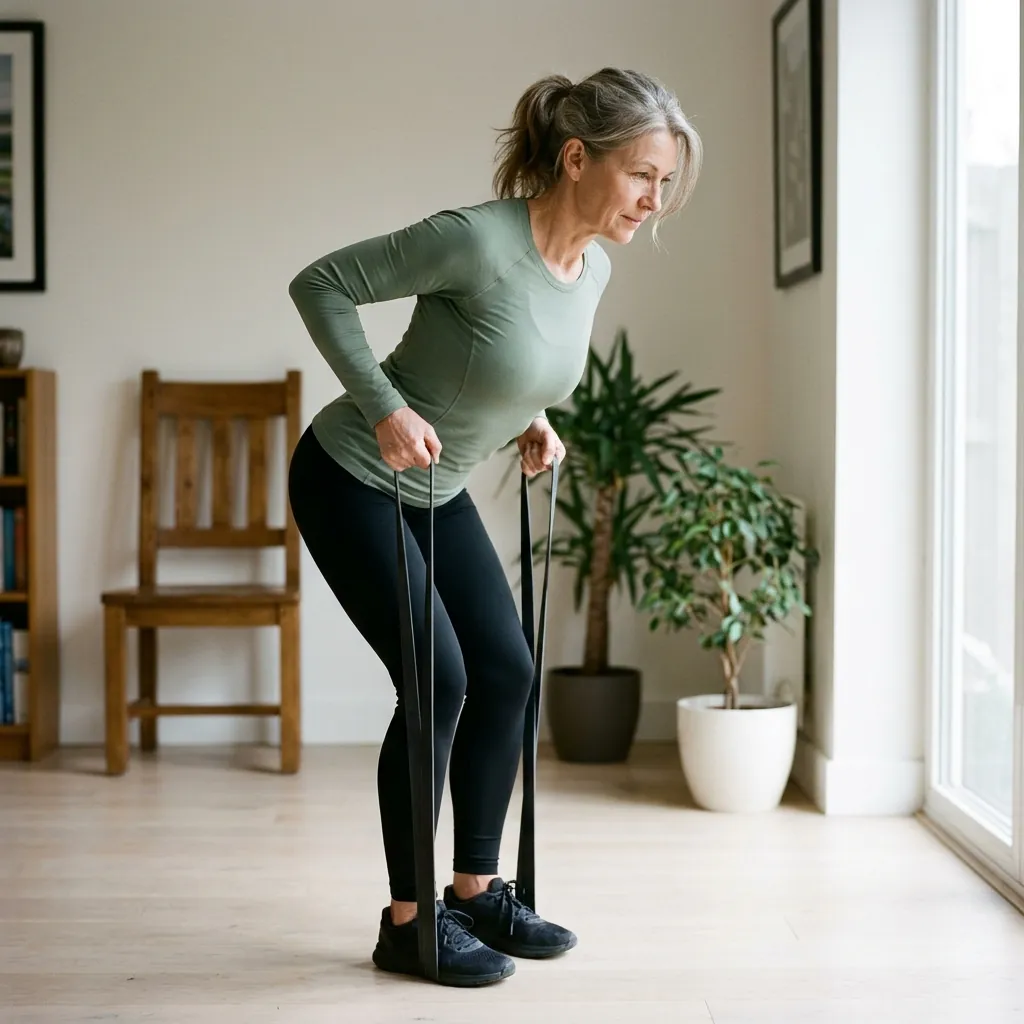
Resistance training builds muscle around joints, absorbing impact and reducing cartilage stress. If you are over 50 and new to resistance training, start with bodyweight movements and progress gradually.
Mobility routines target range of motion and synovial fluid circulation. Short daily sessions tend to work better than infrequent longer ones.
Weight management also matters. A study of overweight adults with knee OA found that each pound of weight lost corresponded to roughly a 4-pound reduction in knee-joint compressive force per step (Source: Messier et al., Arthritis Rheum, 2005). Even modest weight loss reduces joint loading significantly.
Leg strengthening exercises build the quadriceps and glutes that protect knee and hip joints during daily activities.
When to See a Doctor
See a doctor if joint pain is symmetrical, if morning stiffness lasts more than 30 minutes, or if you have swelling, fever, or redness alongside the pain. These are signs that something beyond normal menopausal arthralgia may be happening.

Red-flag checklist (seek medical evaluation):
- Symmetrical joint swelling: both hands or both feet affected at the same time. This is a hallmark of rheumatoid arthritis (Source: NIAMS, Rheumatoid Arthritis).
- Morning stiffness lasting more than 30 minutes: RA stiffness typically persists 30–60+ minutes, while OA stiffness usually resolves in under 30 minutes (Source: NIAMS, Rheumatoid Arthritis).
- Joint redness or warmth: suggests active inflammation or possible infection.
- Fever with joint pain: could indicate septic arthritis, which is a medical emergency.
- Unexplained weight loss alongside joint symptoms.
- Family history of autoimmune disease: increases RA risk.
- Symptoms persisting more than 6 weeks: the ACR notes this as a sign of persistent inflammation warranting evaluation (Source: ACR, Rheumatoid Arthritis).
Other conditions to rule out:
- Thyroid disorders can cause joint and muscle pain. Hypothyroidism and menopause share overlapping symptoms, and EMAS advises clinicians to be aware of possible coexisting thyroid disease (Source: EMAS, Maturitas, 2024).
- Aromatase-inhibitor arthralgia: in surveys of postmenopausal women taking aromatase inhibitors for breast cancer, roughly 47% reported new or worsened joint pain (Source: Crew et al., J Clin Oncol, 2007).
Do not rely on supplements to manage symptoms that could indicate RA, infection, or another treatable condition.
Frequently Asked Questions
What vitamins help with menopause joint pain?
Vitamin D is the vitamin most relevant to menopausal joint health, primarily because inadequacy is widespread in postmenopausal women and correcting it supports bone and immune function. The NIH ODS recommends 600 IU daily for adults up to age 70 and 800 IU for those 71 and older. No RCT has shown vitamin D reduces joint pain directly, but addressing a deficiency removes a known contributor to poor musculoskeletal health. If you add vitamin K2, use it carefully alongside warfarin.
What can I take for perimenopause pain?
The same supplements that help postmenopausal joint pain apply during perimenopause: boswellia, curcumin, and omega-3 fatty acids for inflammation, plus vitamin D and magnesium for foundational support. The main difference is timing: perimenopause symptoms often fluctuate with hormonal cycles.
What are the top 3 supplements for menopause?
Vitamin D (bone and immune support — it is the only true vitamin on this list), omega-3 fatty acids (anti-inflammatory; technically a fatty acid, not a vitamin), and magnesium (muscle function, sleep, and mood — a mineral, not a vitamin). These three address the widest range of menopausal symptoms, though none is a vitamin in the strict sense except vitamin D.
Will joint pain from menopause go away?
It may improve. A 2024 review notes that musculoskeletal pain tends to increase across the menopausal transition and may peak in early postmenopause, then gradually lessen as the body adapts to lower estrogen levels (Source: Climacteric, 2024). However, if osteoarthritis has developed independently, that damage is structural and will not reverse on its own. Managing symptoms with supplements, exercise, and weight control remains important long-term.
What is the best collagen for menopause joint pain?
Hydrolyzed collagen peptides (types I and III) at 10 g/day have the most published RCT evidence for OA joint pain. Undenatured type II collagen (UC-II) at 40 mg/day is proposed to work through oral tolerance — a different mechanism — and also has some OA trial support (Source: Gupta & Maffulli, Annals of Medicine, 2025). Both require at least 3 months of consistent use. Look for products with third-party testing from USP or NSF. Start with hydrolyzed collagen peptides if you want the form with the most RCT data.
Sources
- NIH Office of Dietary Supplements. “Vitamin D Fact Sheet for Health Professionals.” ods.od.nih.gov
- NIH Office of Dietary Supplements. “Omega-3 Fatty Acids Fact Sheet for Health Professionals.” ods.od.nih.gov
- NCCIH. “Turmeric: Usefulness and Safety.” nccih.nih.gov
- NCCIH. “Boswellia.” nccih.nih.gov
- NIAMS. “Rheumatoid Arthritis.” niams.nih.gov
Key sources shown. Every other study is named inline where it is cited.
Medical disclaimer: This guide is general information, not medical advice, and does not replace care from your doctor. Do not start, stop, or change a supplement or prescription based on this article without talking to a clinician.