

Gymnase Tips is reader-supported. When you buy through links on our site, we may earn an affiliate commission at no extra cost to you.
TL;DR — How Long Does the Menopause Transition Last?
How long does menopause last? The transition lasts about 7 years on average and can take as long as 14 years (Source: NIH MedlinePlus Magazine). Perimenopause lasts about 4 years on average and can run up to 10, typically starting in the mid-40s. Menopause is a single day, confirmed after 12 consecutive months without a period. Hot flashes persist a median of 7.4 years (Source: SWAN study, JAMA Internal Medicine, 2015).
Table of contents
The 3 Stages of Menopause (With Duration Chart)
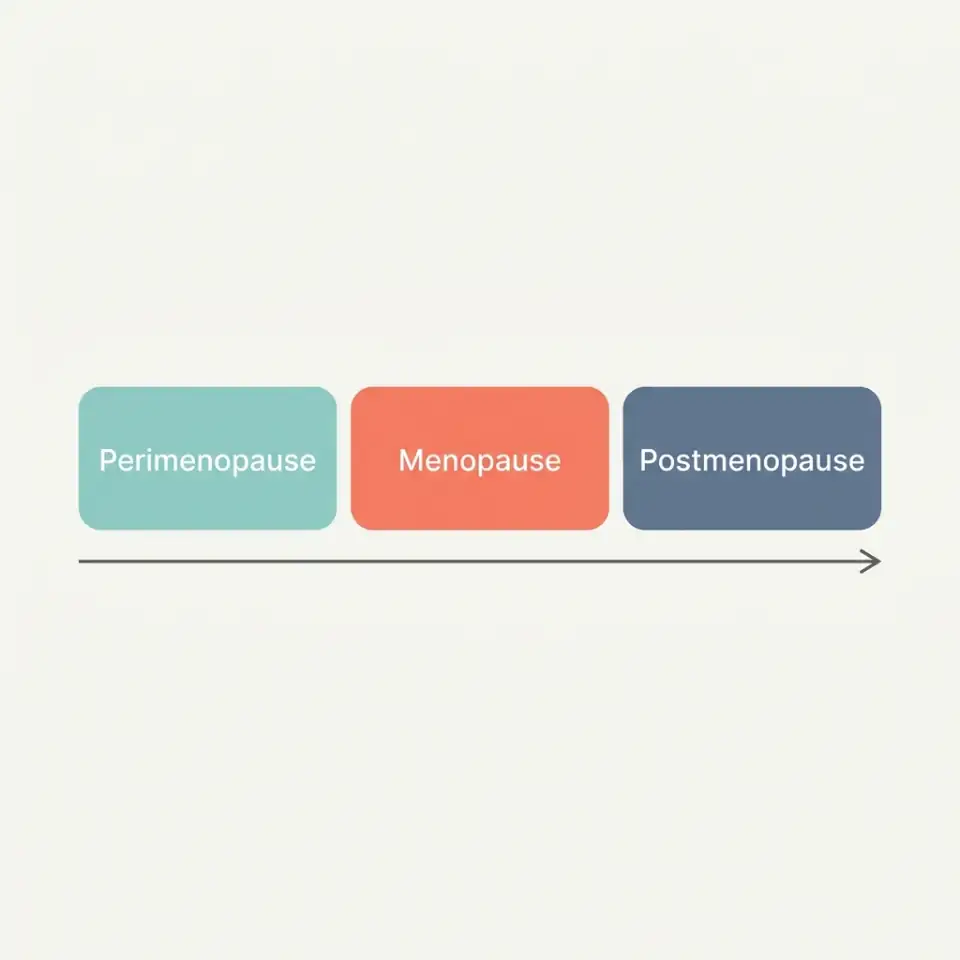
Clinicians recognize three stages: perimenopause (about 4 years on average, up to 10), menopause (a single confirmed point in time), and postmenopause (the rest of life). The total transition averages about 7 years, though some women spend up to 14 years moving through it (Source: NIH MedlinePlus Magazine). Some popular sources subdivide these into 5 or even 7 stages, but more on that below.
Here is the full duration chart with age ranges, symptoms, and hormone status for each phase.
| Stage | Typical age range | Average duration | Key symptoms | Hormone status |
|---|---|---|---|---|
| Early perimenopause | Mid 30s–mid 40s | 2–6 years | Irregular cycles, mood shifts, sleep disruption | Estrogen fluctuates widely; progesterone declines |
| Late perimenopause | Mid–late 40s | 1–3 years | Hot flashes intensify, skipped periods, severe vasomotor symptoms | Estrogen drops sharply |
| Menopause | ~51 (range 45–55) | Single confirmed day | 12 months without a period | Estrogen and progesterone at postmenopausal levels |
| Early postmenopause | ~52–57 | ~5 years | Hot flashes may continue, vaginal dryness, accelerated bone loss | Low, stable estrogen |
| Late postmenopause | 58+ | Rest of life | Hot flashes typically ease; cardiovascular and osteoporosis risk elevated | Persistently low estrogen |
Sources: Cleveland Clinic (stage definitions, age ranges), ACOG and NICHD (average age), SWAN/PMC6226267 (bone loss timing).
Perimenopause
Perimenopause lasts about four years on average, typically starting in the mid-40s, though some women notice changes as early as their mid-30s (Source: Cleveland Clinic). It can run as long as 10 years (Source: Office on Women’s Health, 2026).
The phase splits into early and late stages. During early perimenopause, cycles become less predictable and estrogen swings up and down rather than declining in a straight line. Progesterone drops first. Sleep disruption and mood shifts often appear before any hot flash does.
Late perimenopause covers the final 1 to 3 years before your last period. This is when estrogen falls fastest. Hot flashes and night sweats ramp up, and periods may skip months at a time.
The distinction between perimenopause and menopause itself trips up a lot of people. Perimenopause is the transition; menopause is the finish line.
Menopause
Menopause is a single point in time, confirmed after 12 consecutive months without a period. The average age in the US is 51 (Source: ACOG; NICHD). The typical range spans 45 to 55.
That is it. One day. You only know you hit it in retrospect.
Early menopause happens between 40 and 45. Premature menopause (before 40) affects roughly 1% of women and is sometimes called premature ovarian insufficiency (Source: Mayo Clinic). Surgical menopause, after removal of both ovaries, triggers immediate menopause regardless of age.
Postmenopause
Postmenopause begins the day after your 12-month mark and lasts the rest of your life. Some symptoms like hot flashes persist for years; others gradually ease.
Vasomotor symptoms can continue well into early postmenopause. Vaginal dryness tends to get worse, not better, because it is driven by sustained low estrogen rather than the fluctuations that cause hot flashes. Sleep disruption often improves once the hormonal volatility of perimenopause settles.
The bigger postmenopausal concern is long-term health risk. Bone density loss accelerates sharply in a 3-year window around the final menstrual period, averaging 2.5% per year in the lumbar spine and 1.8% per year in the femoral neck for White women (Source: SWAN bone health data, PMC, 2018). Cardiovascular risk also rises as estrogen’s protective effects diminish.
How Long Do Menopause Symptoms Actually Last?
Vasomotor symptoms (hot flashes and night sweats) last a median of 7.4 years, according to the SWAN study of 3,302 women tracked through the transition (Source: JAMA Internal Medicine, 2015). But that median hides enormous individual variation, and race and ethnicity are among the strongest predictors of duration.
SWAN found significant differences by racial and ethnic group (unadjusted medians):
- Black women experienced the longest VMS duration: median 10.1 years
- Hispanic women: 8.9 years (unadjusted; the adjusted median is considerably lower at 4.8 years, suggesting other factors like BMI and education account for much of the difference)
- Non-Hispanic White women: 6.5 years
- Chinese women: 5.4 years
- Japanese women: 4.8 years
(Source: Avis et al., JAMA Internal Medicine, 2015)
Women whose VMS started during perimenopause had longer total durations than those whose symptoms began after their final period. Among women who were already postmenopausal at VMS onset, the median post-final-period duration was 3.4 years.
Can symptoms come and go? Yes. Hot flashes are not constant. Many women experience clusters of bad weeks or months, then relative calm, then a return. Sleep disruption and mood changes often follow a similar stop-start pattern, particularly during perimenopause when hormone levels are most volatile.
What Makes Menopause Last Longer or Shorter?
You cannot stop or skip menopause. But several factors shape how long symptoms persist and how intense they get: genetics, BMI, smoking, race, and whether menopause was natural or surgical.
Smoking is the most well-documented modifiable factor. Current smokers reach menopause about one year earlier than nonsmokers on average and face roughly double the risk of premature menopause (Source: pooled analysis of 17 studies, PLOS Medicine, 2018). Quitting more than 10 years before menopause considerably reduced the risk of early menopause compared to those who continued smoking (Source: PMC, 2007). Paradoxically, earlier onset does not mean a shorter symptom window. Smokers often have more severe VMS despite the earlier timeline.
BMI plays a complicated role. Higher body fat is associated with higher circulating estrogen in postmenopause (fat tissue produces estrone), which may reduce VMS severity for some women. However, higher BMI is also linked to longer symptom duration and worse sleep disruption.
Genetics matter more than most people assume. If your mother had an early or late transition, yours is more likely to follow a similar track. In one Penn Medicine study, heavy smokers who carried specific gene variants (CYP3A4*1B) reached menopause up to eight years earlier than nonsmoking carriers of the same variant, though this effect was seen only in European-American women with those particular variants (Source: Butts et al., Menopause, 2014).
Surgical menopause is an entirely different experience. Removing both ovaries causes an immediate drop in estrogen with no gradual transition. Symptoms are often more abrupt and severe, particularly for women under 45 who have not yet reached natural perimenopause.
Race and ethnicity influence duration independently of other factors, as the SWAN data above shows. The reasons are not fully understood but likely involve a combination of genetics, stress exposure, socioeconomic factors, and biological differences in hormone metabolism.
How Training and Nutrition Should Shift at Each Stage
Strength training becomes the single most protective exercise modality during and after menopause. Bone density drops fastest in the 3-year window around the final menstrual period (Source: SWAN bone data, PMC, 2018), and muscle mass declines accelerate in postmenopause. Resistance training and adequate protein are not optional additions to a menopause plan. They are the foundation.
A 2023 review in the International Journal of Environmental Research and Public Health concluded that combining aerobic and resistance training outperforms either modality alone for maintaining bone density and body composition during the transition (Source: PMC, 2023). Balance work (yoga, tai chi) adds fall-prevention value, particularly in postmenopause.
Consult your healthcare provider before making significant changes to your exercise routine, especially if you have existing bone density concerns.

Perimenopause — Build the Strength Base
Prioritize resistance training 3 to 4 days per week during perimenopause. This is the window to build or maintain muscle and bone density before the accelerated losses of late perimenopause and postmenopause hit.
Protein intake should reach 1.0 to 1.2 g per kg of body weight daily (Source: Nutrients review, 2023; Mayo Clinic Press). For a 70 kg (154 lb) woman, that is 70 to 84 g of protein per day. Spread it across meals, aiming for at least 25 to 30 g per serving to support muscle protein synthesis (Source: Symons et al., Journal of the American Dietetic Association, 2009).
Sleep disruption in perimenopause undermines recovery. Magnesium supplementation, such as magnesium glycinate, and consistent sleep-wake timing help protect training adaptations.
Our best perimenopause supplements guide covers the options in more detail.
Two moderate cardio sessions per week maintain cardiovascular health without cutting into recovery. If you use heart rate zones to guide intensity, zone 2 training (60 to 70% of max heart rate) is a solid default for these sessions.
Postmenopause — Protect Bone and Muscle
After menopause, shift the focus toward bone-loading movements and fall prevention. Continue resistance training at least 3 days per week, and add dedicated balance work twice weekly.
Weight-bearing and impact exercises (walking, stair climbing, light jumping) stimulate bone remodeling at loaded sites. High-intensity resistance training with compound movements like squats and deadlifts has shown the strongest bone density preservation in postmenopausal populations (Source: PMC, 2023).
Nutrition targets tighten in postmenopause:
- Calcium: 1,000 to 1,200 mg per day, ideally from food sources. Do not exceed 1,200 mg without medical guidance (Source: NAMS 2021 Osteoporosis Position Statement)
- Vitamin D: 400 to 800 IU per day to support calcium absorption (Source: NAMS, 2021)
- Protein: Maintain 1.0 to 1.2 g per kg of body weight daily
A daily multivitamin for women over 50 may help close gaps, but whole foods should be the primary source.
Stage-by-Stage Fitness and Nutrition Shift Table
| Stage | Exercise priority | Weekly target | Nutrition focus | Why it matters |
|---|---|---|---|---|
| Early perimenopause | Build strength base, maintain cardio | 3–4 resistance sessions + 2 moderate cardio | Protein 1.0–1.2 g/kg; reduce alcohol | Preserve muscle and bone before accelerated loss begins |
| Late perimenopause | Intensity over volume; add HIIT if tolerated | 3–4 resistance + 1–2 HIIT | Same protein target; magnesium for sleep | Counter metabolic slowdown and worsening VMS |
| Postmenopause | Bone-loading, balance, resistance | 3+ resistance + daily walking + 2 balance sessions | Calcium 1,000–1,200 mg, vitamin D 400–800 IU, protein 1.0–1.2 g/kg | Counter bone loss, fall risk, and sarcopenia |

How Do You Know When Menopause Is Over?
Menopause is confirmed after 12 consecutive months without a period. Most women recognize the transition is ending when periods have fully stopped and hot flashes begin to taper, though some symptoms persist indefinitely. The transition ends; the postmenopausal state does not.
Here are the signs that you have moved from late perimenopause into postmenopause:
- No period for 12+ months. This is the clinical definition. Any bleeding after this point warrants a doctor visit.
- Hot flashes become less frequent or intense. They may not disappear entirely, but the worst of it usually falls in the 1 to 2 years around the final period.
- Sleep improves. The hormonal swings driving 3 a.m. wake-ups stabilize.
- Mood evens out. The anxiety and irritability tied to fluctuating estrogen typically ease.
- Vaginal dryness may worsen or persist. This is the exception to the “it gets better” trend, because it is driven by sustained low estrogen, not fluctuations.
- FSH levels stay elevated. A blood test showing elevated FSH, combined with 12 months without a period, supports laboratory confirmation.
- Energy returns. Many women report a rebound once the hormonal turbulence settles.
Blood tests alone are not reliable during perimenopause because hormone levels swing too wildly from day to day. They become more useful for confirmation once periods have stopped for at least a year.
At What Stage Is Menopause the Worst?
Late perimenopause, the 1 to 2 years before your final period, is typically the most intense stage. Estrogen drops fastest during this window, and hot flashes, sleep disruption, and mood changes all peak (Source: Cleveland Clinic).
The SWAN data backs this up. Women whose VMS started in early perimenopause had the longest total duration, but the highest frequency and severity clustered around the final menstrual period regardless of when symptoms began.
Not everyone follows this pattern. Some women sail through perimenopause and find early postmenopause harder, particularly if vaginal dryness or bone-related issues become the primary concern. Individual variation is the rule, not the exception.
Treatment Options Worth Knowing About
Fezolinetant (brand name Veozah), FDA-approved on May 12, 2023, is the first non-hormonal prescription medication specifically targeting hot flashes through a new mechanism: it blocks the neurokinin 3 (NK3) receptor in the brain’s thermoregulatory center (Source: FDA, 2023). On December 16, 2024, the FDA added a boxed warning for rare but serious liver injury, requiring monthly liver blood tests for the first three months, then at months six and nine (Source: FDA Drug Safety Communication, 2024).
Hormone replacement therapy (HRT) remains the most effective treatment for vasomotor symptoms. In a significant policy shift, the FDA announced on November 10, 2025 that it would remove boxed warnings related to cardiovascular disease, breast cancer, and probable dementia from HRT products (Source: FDA, 2025). The first six products received updated labels on February 12, 2026, covering all four HRT categories (Source: FDA, 2026). The endometrial cancer warning on systemic estrogen-alone products remains in place.
This does not mean HRT is risk-free. The label changes reflect newer evidence that starting HRT within 10 years of menopause onset, particularly before age 60, is associated with lower all-cause mortality and fewer fractures. Timing matters. Discuss the specifics with your healthcare provider.
Other non-hormonal options include:
- SSRIs/SNRIs (paroxetine, venlafaxine) for VMS, with low-dose paroxetine (Brisdelle) FDA-approved in June 2013 as the first non-hormonal treatment specifically for hot flashes (Source: FDA, 2013)
- Gabapentin for night sweats and sleep disruption
- Vaginal estrogen (low-dose, local) for genitourinary symptoms, which carries a different risk profile than systemic HRT
- Cognitive behavioral therapy (CBT) for sleep and mood symptoms
Every treatment involves trade-offs. What works depends on your symptom profile, medical history, and risk factors. A provider who specializes in menopause care, ideally a NAMS-certified practitioner, can help you weigh the options.
For non-prescription approaches, see our natural menopause treatments guide.
When to See a Doctor
See a doctor if you experience bleeding after 12 or more months without a period, symptoms severe enough to disrupt daily life, or signs of early menopause before age 40. These warrant evaluation, not reassurance.
Specific red flags:
- Postmenopausal bleeding. Any vaginal bleeding after 12 months without a period needs investigation to rule out endometrial pathology.
- Severe mood changes. Persistent depression, anxiety, or suicidal thoughts go beyond typical perimenopausal mood shifts.
- Symptoms disrupting work, sleep, or relationships. If VMS, insomnia, or brain fog are affecting your ability to function, treatment options exist.
- Family history of premature menopause or osteoporosis. Early screening and intervention can make a measurable difference.
- Bone density concerns. The USPSTF recommends bone density screening (DEXA scan) for all women at age 65, or earlier for postmenopausal women under 65 with risk factors (Source: USPSTF, 2025).
You do not need to suffer through the transition without support. Menopause is a normal biological process, but “normal” does not mean “untreatable.”
Frequently Asked Questions
What are the 5 stages of menopause?
The “5 stages” framework subdivides the three clinical stages by splitting perimenopause into early and late, and postmenopause into early and late. That gives you early perimenopause, late perimenopause, menopause (the confirmed point), early postmenopause, and late postmenopause. Medical organizations like ACOG and The Menopause Society recognize three stages. The five-stage breakdown is a useful way to think about the timeline, but it is not an official clinical classification.
What are the 7 stages of menopause?
No medical body recognizes 7 stages of menopause. This framing appears on some popular health websites that add pre-perimenopause, subdivide perimenopause and postmenopause into multiple phases, and sometimes include a “late-late postmenopause” category. The clinical consensus remains three stages: perimenopause, menopause, and postmenopause. If a source lists 7 stages, it is inventing divisions that do not have a basis in the medical literature.
What are the benefits of menopause?
No more periods. No pregnancy risk. No need for contraception. Many women also report a sense of freedom and increased confidence after the transition. Some research suggests that mood and life satisfaction often improve in late postmenopause compared to the perimenopausal years. The transition is difficult for many, but the destination is not all downsides.
What happens to your hormones after menopause?
Estrogen and progesterone remain permanently low after menopause. The ovaries produce very little of either. Testosterone declines more gradually and continues to be produced in small amounts by the ovaries and adrenal glands. The adrenal hormone DHEA partially compensates, and fat tissue converts androgens to estrone (a weaker form of estrogen). FSH stays elevated, which is why blood tests can confirm postmenopausal status.
Sources
- NIH MedlinePlus Magazine — “Menopause: What You Need to Know.” magazine.medlineplus.gov
- Office on Women’s Health — “Menopause Basics.” womenshealth.gov
- FDA — “HHS Advances Women’s Health, Removes Misleading FDA Warnings on Hormone Replacement Therapy.” November 10, 2025. fda.gov
- FDA — “FDA Approves Labeling Changes for Menopausal Hormone Therapy Products.” February 12, 2026. fda.gov
- NICHD — “Menopause.” nichd.nih.gov
Key sources shown. Every other study is named inline where it is cited.
