
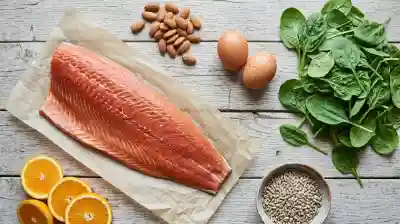
Top 3 Vitamins for Menopause: Evidence-Based Picks
TL;DR — What Are the Top 3 Vitamins for Menopause?
The top 3 vitamins for menopause are vitamin D, B vitamins (B6 and B12), and vitamin E. Each one targets a different cluster of symptoms tied to estrogen decline. Dosages, food sources, and a symptom-matching table are below.
- Vitamin D — protects bone density as estrogen declines (1,000–2,000 IU daily)
- B vitamins (B6 and B12) — support energy, mood, and cognitive function
- Vitamin E — may reduce hot flash frequency and severity (the RDA is 15 mg; a trial used 200 IU twice daily)
Understanding how long menopause typically lasts helps you plan which vitamins to prioritize at each stage. For herbal options like black cohosh or maca, see our perimenopause supplements guide.
Table of contents
Gymnase Tips is reader-supported. When you buy through links on our site, we may earn an affiliate commission at no extra cost to you.
Vitamin D — Your Bone and Mood Shield After Estrogen Drops
Vitamin D is the single most important vitamin during menopause because estrogen decline directly accelerates bone loss, and D is required for calcium absorption. The NIH RDA is 600 IU daily for women 51–70 (Source: NIH ODS, 2024), though the Endocrine Society’s 2011 clinical practice guideline suggests 1,500–2,000 IU daily for adults at risk of deficiency to maintain serum 25(OH)D above 30 ng/mL (Source: Holick et al., JCEM, 2011). The upper limit sits at 4,000 IU.
The bone math is stark. A woman can lose up to 20% of her bone density during the five to seven years following menopause (Source: Bone Health & Osteoporosis Foundation, 2024; StatPearls / NIH, 2024). Vitamin D doesn’t stop that process entirely, but without adequate D, your body can’t absorb the calcium it needs to slow it down.
Mood is the other angle. A 2022 meta-analysis of randomized controlled trials found that adults with low vitamin D levels (below 50 nmol/L) showed significant improvements in depressive symptoms with supplementation, with females showing particular benefit (Source: PMC, 2022). A separate RCT of 100 perimenopausal women reported significant improvements in both fatigue and mood scores at six months with vitamin D supplementation (Source: Ray et al., Bioinformation, 2026). The evidence isn’t unanimous. Some large trials show no effect. But the pattern leans toward benefit when baseline D levels are low.
Most women over 50 struggle to get enough from diet alone. Fatty fish (salmon, mackerel), fortified milk, egg yolks, and UV-exposed mushrooms all contain vitamin D, but supplementation is typically necessary. Based on national survey data, roughly 29% of US adults are vitamin D deficient and over 41% are insufficient per NHANES 2001–2010 data (Source: Liu et al., British Journal of Nutrition, 2018).

Pairing vitamin D with weight-bearing exercise supports bone health during menopause. If you’re building a routine, our guide to strength training for women over 50 covers programming basics.
The K2 Factor Most Guides Skip
Vitamin K2 (MK-7 form) activates two proteins that direct calcium into bones and away from arteries: osteocalcin, which binds calcium into bone matrix, and matrix Gla protein (MGP), which inhibits arterial calcification (Source: Maresz, Integrative Medicine, 2015). Without K2, calcium absorbed via vitamin D may deposit in soft tissue instead of bone. The adequate intake for all vitamin K forms is 90 mcg daily for women (Source: NIH ODS, 2024). One three-year trial of 244 postmenopausal women found that 180 mcg of MK-7 daily slowed bone mineral density decline at the lumbar spine and femoral neck compared to placebo (Source: Knapen et al., Osteoporosis International, 2013). The research supports pairing K2 with D3 for bone outcomes.
B Vitamins — Energy, Mood, and Brain Fog Support
B vitamins, especially B6 and B12, help manage menopause-related mood changes, fatigue, and brain fog by supporting neurotransmitter production and energy metabolism. If you’re dealing with that 3 p.m. wall or struggling to recall a word you used yesterday, B vitamins are worth investigating with your doctor.
B6 feeds serotonin and GABA production, both of which influence mood, anxiety, and sleep quality. The NIH RDA for women over 51 is 1.5 mg daily, with an upper limit of 100 mg (Source: NIH ODS, 2024). Taking high amounts chronically can cause severe nerve damage; symptoms typically stop when supplementation is discontinued, but early detection matters (Source: NIH ODS, 2024). More is not better here.
B12 drives energy metabolism and cognitive function. The RDA is 2.4 mcg for all adults (Source: NIH ODS, 2025). That sounds easy to hit, but absorption drops with age. Atrophic gastritis affects roughly 2% of the general population but 8–9% of adults 65 and older, reducing stomach acid and impairing B12 absorption from food (Source: NIH ODS, 2025). The IOM (as cited by NIH) recommends that adults over 50 get most of their B12 from supplements or fortified foods, since synthetic B12 doesn’t require stomach acid for absorption (Source: NIH ODS B12, 2025).
Get tested first. Sublingual tablets or methylcobalamin forms may absorb better for women with low stomach acid, but guessing at a deficiency wastes money if your levels are already fine.
Folate rounds out the B-complex picture. It works alongside B12 to regulate homocysteine, an amino acid linked to cardiovascular risk when elevated. Most women get adequate folate from diet, but a B-complex supplement covers the gap.
Good food sources for B vitamins include poultry, fish, eggs, fortified cereals, and leafy greens like spinach and kale.
B vitamins also interact with hormonal pathways involved in estrogen metabolism. For a broader look at that connection, see our hormone balance supplements overview.
Vitamin E — Hot Flash Relief and Skin Support
Vitamin E may reduce hot flash frequency based on clinical trial data, while also protecting skin from oxidative stress during the menopause transition. A 2023 systematic review in Nutrients found that all included studies demonstrated a reduction in both frequency and severity of hot flashes with oral vitamin E (Source: Nutrients, 2023).
The dosage that works best? A triple-blind RCT of 84 postmenopausal women found that vitamin E at 200 IU twice daily for eight weeks significantly reduced the mean number of hot flashes versus placebo (p = 0.002) (Source: Farshbaf-Khalili et al., Journal of Nutrition and Metabolism, 2022). The effect is real, but modest. Don’t expect it to replace HRT if your vasomotor symptoms are severe.
The skin angle is simpler. Vitamin E is a fat-soluble antioxidant that neutralizes free radicals in cell membranes. During menopause, oxidative stress increases as estrogen’s protective antioxidant effects decline. Vitamin E helps fill part of that gap.
The NIH RDA is 15 mg (about 22 IU of the natural form), with an upper limit of 1,000 mg (Source: NIH ODS, 2024). The bleeding risk is real at high doses: vitamin E can interfere with blood clotting, particularly in women taking warfarin or other blood thinners. Stay well below the upper limit unless a doctor directs otherwise.
Food sources: almonds, sunflower seeds, spinach, and avocado.
Vitamin C and Menopause — Collagen, Joints, and Immunity
Vitamin C plays a direct role in collagen synthesis, which matters during menopause because estrogen decline triggers rapid collagen loss. According to the American Academy of Dermatology, women’s skin loses about 30% of its collagen during the first five years of menopause (Source: AAD, 2024). Vitamin C won’t reverse that, but your body cannot build new collagen without it.
That matters beyond skin. Collagen is also cartilage, tendons, and ligaments. If menopause-related joint stiffness is a problem, adequate vitamin C intake supports the repair process. For a deeper look at joint-specific options, see our menopause joint pain supplements guide.
One perimenopause-specific note: vitamin C improves the absorption of non-heme iron, the form found in plant-based foods (Source: NIH ODS Vitamin C, 2024). During perimenopause, when heavy or irregular periods can deplete iron stores, pairing vitamin C-rich foods with iron sources helps your body absorb more iron from plants.
The NIH RDA for women is 75 mg daily, with an upper limit of 2,000 mg (Source: NIH ODS, 2024). Most women hit the RDA through diet if they eat citrus fruits, bell peppers, strawberries, or broccoli regularly. Supplementation is reasonable if your intake is inconsistent.
Vitamin-Symptom Quick-Reference Table
This table maps each vitamin or mineral to the menopause symptoms it targets, based on current evidence from NIH and peer-reviewed research. Use it to match your symptoms to the nutrients most likely to help.
| Nutrient | Bone Loss | Hot Flashes | Mood / Anxiety | Fatigue | Brain Fog | Sleep | Skin / Hair | Joint Pain |
|---|---|---|---|---|---|---|---|---|
| Vitamin D | Strong | — | Some | Some | — | — | — | Some |
| Vitamin B6 | — | — | Strong | Some | Some | Some | — | — |
| Vitamin B12 | — | — | Some | Strong | Strong | — | — | — |
| Vitamin E | — | Strong | — | — | — | — | Some | — |
| Vitamin C | — | — | — | — | — | — | Strong | Some |
| Vitamin K2 | Strong | — | — | — | — | — | — | — |
| Calcium | Strong | — | — | — | — | — | — | — |
| Magnesium | Some | — | Some | Some | — | Strong | — | — |
Key: Strong = supported by multiple trials or well-established physiological mechanism with direct relevance to menopause. Some = preliminary evidence or indirect mechanism. — = no meaningful evidence. These ratings reflect the author’s assessment of the available clinical literature as discussed throughout this article.
NIH Dosage Reference: RDA and Upper Limits
The table below lists NIH-recommended daily intakes and upper limits for each vitamin discussed, specific to women over 50. Confirm any supplementation plan with your healthcare provider, especially if you take medication.
| Nutrient | RDA (Women 51+) | Upper Limit (UL) | Form to Look For |
|---|---|---|---|
| Vitamin D3 | 600 IU (15 mcg) | 4,000 IU (100 mcg) | Cholecalciferol (D3) |
| Vitamin B6 | 1.5 mg | 100 mg | Pyridoxal-5-phosphate (P5P) |
| Vitamin B12 | 2.4 mcg | No UL established | Methylcobalamin or sublingual |
| Vitamin E | 15 mg (22.4 IU) | 1,000 mg | d-alpha-tocopherol (natural) |
| Vitamin C | 75 mg | 2,000 mg | Ascorbic acid |
| Vitamin K2 | 90 mcg (all K forms) | No UL established | Menaquinone-7 (MK-7) |
| Calcium | 1,200 mg | 2,000 mg | Calcium citrate |
| Magnesium | 320 mg | 350 mg (supplements only) | Magnesium glycinate |
(Source for all RDA/UL values: NIH Office of Dietary Supplements, 2024–2025)
Do You Need a Menopause Multivitamin?
A menopause-specific multivitamin can cover baseline needs, but women with confirmed deficiencies (especially vitamin D or B12) usually need individual supplements at higher doses than any multivitamin provides. Think of a multivitamin as insurance, not treatment.
Here’s a practical way to decide. A general menopause multivitamin makes sense if you eat a varied diet but want to fill small gaps across several nutrients. Look for one that contains at least 1,000 IU of vitamin D, a B-complex with adequate B12, vitamin E, calcium, and magnesium. Many formulations marketed to women over 50 hit these marks.
Individual supplements are the better route when blood work shows a specific deficiency. Many multivitamins provide less than 1,000 IU of vitamin D, which may not move the needle for someone who is already deficient. You’d need a standalone D3 supplement at 1,000–2,000 IU or more, under your doctor’s guidance. Same logic applies to B12 if testing confirms low levels.
Skip any multivitamin that loads unnecessary iron. The NIH iron RDA drops from 18 mg for premenopausal women to 8 mg after menopause, and most diets already cover 8 mg without a supplement (Source: NIH ODS Iron, 2025). Excess iron can accumulate. Check the label.
Start with blood work. Get your vitamin D and B12 levels tested before buying anything. That single step prevents both underdosing and wasting money on nutrients you already have enough of.
For a broader approach that includes lifestyle changes alongside supplementation, see our natural menopause treatments guide.
When to Talk to Your Doctor
Check with your doctor before starting any new supplement, especially if you take HRT, blood thinners, or thyroid medication. A few specific interactions to know about:
- Vitamin E at therapeutic doses (200–400 IU daily) exceeds the RDA — discuss with your doctor, especially if you take blood thinners. Vitamin E can increase bleeding risk in women on warfarin or antiplatelet drugs (Source: NIH ODS, 2024).
- Calcium supplements can interfere with levothyroxine absorption. Take them at least four hours apart (Source: NIH ODS, 2024; StatPearls, 2024).
- Doses of vitamin D above 4,000 IU daily over extended periods can cause hypercalcemia (Source: NIH ODS, 2024). Get your 25(OH)D levels tested before starting high-dose supplementation.
If you’re on HRT, most vitamins discussed here are compatible at standard doses, but confirm with your prescribing provider.
This content is for informational purposes and does not replace medical advice. Always consult a qualified healthcare professional before making changes to your supplement routine.
Frequently Asked Questions
Can you take prenatal vitamins during menopause?
You can, but they’re not ideal. Prenatal formulas are designed for women of childbearing age and typically contain 18 mg or more of iron — more than double the 8 mg RDA for women over 50 (Source: NIH ODS Iron, 2025). They also tend to provide less vitamin D and calcium than bone health demands after menopause. A multivitamin formulated for women over 50 is a better match.
What vitamins help with menopause fatigue?
B12, B6, vitamin D, and magnesium are the main four. B12 supports energy metabolism, B6 aids neurotransmitter function, and magnesium supports muscle function and sleep quality. An RCT of 100 perimenopausal women found significant improvements in fatigue and mood scores after six months of vitamin D supplementation (Source: Ray et al., Bioinformation, 2026). If fatigue is persistent, get B12 and D levels tested. Deficiency is common and easy to miss.
What is the number one supplement for menopause?
Vitamin D. It addresses the most serious long-term consequence of menopause: bone loss. A woman can lose up to 20% of her bone density in the five to seven years after menopause, and vitamin D is required for the calcium absorption that slows that process. The Endocrine Society’s guideline recommends 1,500–2,000 IU daily for adults at risk of deficiency (Source: Holick et al., JCEM, 2011). Most women over 50 need supplementation regardless of diet.
What vitamins help with menopause itchy skin?
Vitamin E (as an antioxidant protecting skin cell membranes), vitamin C (supporting collagen production), and omega-3 fatty acids (not a vitamin, but commonly recommended alongside them for skin health).
Sources
- NIH Office of Dietary Supplements, Vitamin D
- NIH Office of Dietary Supplements, Vitamin B12
- Bone Health & Osteoporosis Foundation
- Endocrine Society Vitamin D Clinical Practice Guideline (Holick et al., JCEM 2011)
- NIH Office of Dietary Supplements, Iron
Key sources shown. Every other study is named inline where it is cited.