

Last updated: May 2026 — written by the Gymnase Tips training team.
Military workouts at home use bodyweight calisthenics circuits adapted from Air Force, Army, Marine Corps, and Navy SEAL training to build muscular endurance, work capacity, and the ability to move under load — with zero equipment beyond a pull-up bar (optional). The 4 routines below cover 30 to 50 minutes per session, run 3 to 5 days per week, and produce the lean, work-capable physique seen across the U.S. military. Total commitment: 2.5 to 4 hours weekly. Equipment needed: floor space and ideally a doorway pull-up bar.
This guide gives you 4 complete at-home routines with sets, reps, and rest periods, a weekly schedule that combines them productively, modifications for beginners, the gear that’s actually worth buying, and the common mistakes that make these workouts ineffective.
Why military workouts work for home training
Military physical training has three constraints that make it perfect for home use: minimal equipment (the field doesn’t have a squat rack), measurable standards (every rep counts), and high time efficiency (sessions hit upper body, lower body, and conditioning together). These same constraints describe most home gyms.
- Bodyweight focus — pull-ups, push-ups, sit-ups, squats, dips do 80% of the work
- Circuit format — combines strength endurance with cardiovascular conditioning
- Time-efficient — 30 to 50 minutes covers full-body training
- Scalable — same exercises work for a beginner doing knee push-ups or a Pararescue candidate doing 8 rounds of strict pull-ups
- Measurable — every workout produces concrete numbers (rounds completed, reps achieved, time)
Routine 1: Air Force PT Test Prep (40 min)
Built around the Air Force PT test (push-ups, sit-ups, 1.5-mile run). Run 2x per week.
- Warm-up: 5 minutes — jumping jacks, arm circles, leg swings, 10 burpees
- Push-up pyramid: 1, 2, 3… up to your max reps, then back down. Rest 60 sec
- Sit-up sets: 3 × 30 reps with 60 sec rest
- 1.5-mile run: at moderate pace (60–70% effort) — outdoors or treadmill
- Cool-down: 5 minutes stretching
Hits cardiovascular base, push-up volume, and core endurance. Ideal first routine for anyone newer to military-style training. For full PT test prep, see our ACFT calisthenics prep guide.
Routine 2: Marine Corps OCS Conditioning (45 min)
Modeled on Marine Corps Officer Candidate School pre-conditioning. Run 2x per week.
- Warm-up: 800 m run or 5 min jump rope
- Round structure: Repeat 5 rounds with 60 sec rest between rounds
- 20 push-ups
- 20 sit-ups
- 20 squats
- 20 mountain climbers (each side counted)
- 10 burpees
- Finisher: max-rep flutter kicks for 60 seconds
Total volume per session: 100 push-ups, 100 sit-ups, 100 squats, 100 mountain climbers, 50 burpees. Tough but achievable for intermediate civilians. See our Marine Corps PFT calisthenics guide for the full PFT-specific build.

Routine 3: Navy SEAL “PT Pyramid” (50 min)
Adapted from Navy SEAL pre-BUD/S workouts. Run 1x per week. Requires a pull-up bar.
- Warm-up: 10 min easy jog or jump rope
- Pyramid sequence: 1 pull-up, 2 push-ups, 3 sit-ups → 2 pull-ups, 4 push-ups, 6 sit-ups → 3, 6, 9 → continue increasing
- Climb until form breaks, then descend back to 1, 2, 3
- Cool-down: 800 m walk or easy jog
The pyramid format means total volume scales with your fitness level. A beginner might top out at round 5 (5 pull-ups, 10 push-ups, 15 sit-ups). Advanced lifters reach round 10+ for 55+ pull-ups, 110+ push-ups, 165+ sit-ups in a single session. See our Navy SEAL calisthenics workout guide for more variations.
Routine 4: Army Ranger Smoke Session (35 min)
High-intensity finisher modeled on Ranger School “smoke sessions.” Run 1x per week — typically as your hardest session.
- EMOM (Every Minute on the Minute) for 25 minutes:
- Min 1, 6, 11, 16, 21: 10 burpees
- Min 2, 7, 12, 17, 22: 15 push-ups
- Min 3, 8, 13, 18, 23: 20 squats
- Min 4, 9, 14, 19, 24: 25 sit-ups
- Min 5, 10, 15, 20, 25: 30 sec plank
- Whatever time remains in each minute is rest.
Total volume: 50 burpees, 75 push-ups, 100 squats, 125 sit-ups in 25 minutes. The compressed time creates Ranger-grade conditioning. Reduce reps by 30% if you’re new to EMOM format.
Weekly schedule combining all 4
| Day | Workout | Time |
|---|---|---|
| Monday | Air Force PT Test Prep | 40 min |
| Tuesday | Strength work (weighted pull-ups, dips, squats) | 45 min |
| Wednesday | Marine Corps OCS Conditioning | 45 min |
| Thursday | Active recovery: walk, mobility, stretching | 30 min |
| Friday | Navy SEAL PT Pyramid | 50 min |
| Saturday | Army Ranger Smoke Session | 35 min |
| Sunday | Full rest | — |
Total weekly time: 4 hours. The split alternates upper/lower emphasis and high/moderate intensity to manage cumulative fatigue. After 8 weeks, retest your max push-ups, max pull-ups, max sit-ups in 2 minutes, and 1.5-mile run time. Most users see 30–50% improvement in PT test scores.
Beginner modifications
- Push-ups: drop to knees, or wall push-ups for total beginners
- Pull-ups: use a band for assistance, or do “jumping negatives” (jump up, lower slowly)
- Burpees: step-back instead of jump-back; skip the jump at the top
- Run: alternate run/walk intervals (60 sec run, 60 sec walk) for the first 4 weeks
- Total volume: cut reps in half for the first 2 weeks; rebuild gradually
Our beginner calisthenics routine covers the prerequisite push-up, pull-up, and squat progressions in detail.
Gear that’s actually worth buying
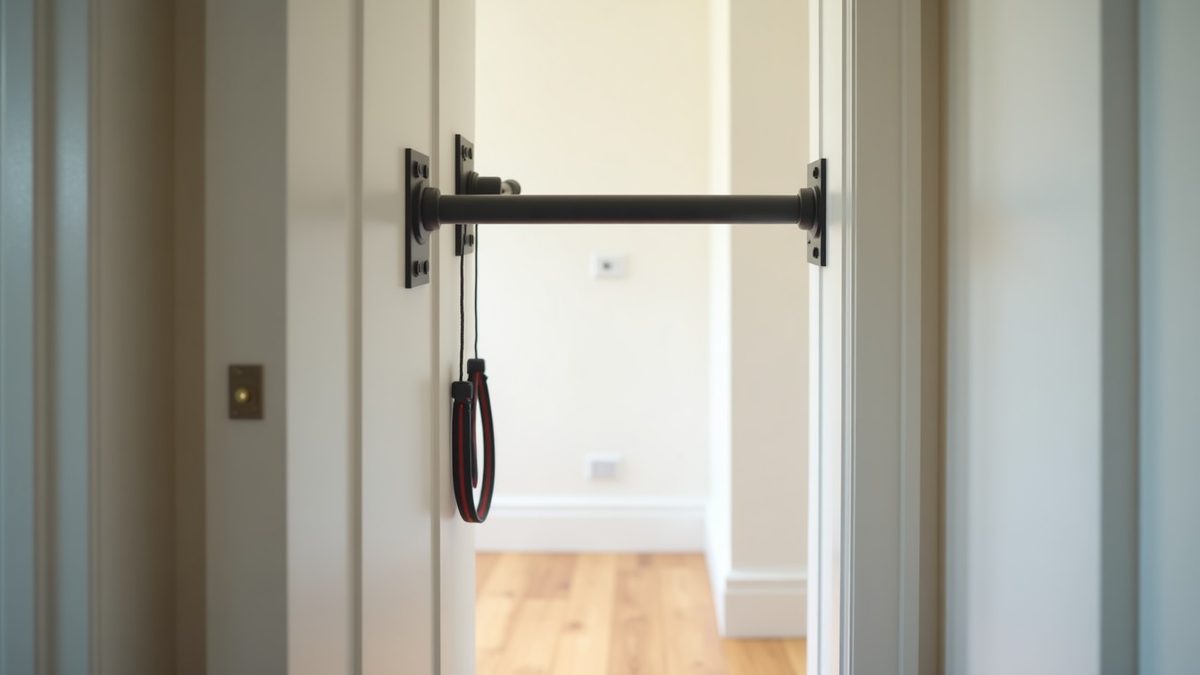
- Doorway pull-up bar ($25–40) — Iron Gym, Perfect Pull-up, etc. Non-negotiable for routines 3 and 4.
- Resistance band set ($20–40) — for assisted pull-ups during early progression
- Yoga / exercise mat ($25–50) — for sit-ups, mountain climbers, planks
- Jump rope ($15–30) — for warm-ups and conditioning
- Optional: weighted vest ($60–100) — for advanced progression after 6+ months
Total starter cost under $100. Skip: ab rollers, push-up handles, “core sliders” — they don’t add measurable benefit at this stage.
5 common mistakes
- 1. Doing all 4 routines daily. The schedule above alternates intentionally. Daily high-intensity training builds fatigue without adaptation.
- 2. Skipping the strength day. Heavy weighted pull-ups, dips, and squats on Tuesday raise the ceiling for the rest of the week’s calisthenics volume.
- 3. Counting partial reps. Push-ups that don’t reach the floor and pull-ups that don’t clear the bar don’t count. Military standards exist for a reason.
- 4. Ignoring the run. Cardiovascular base limits everything else. Run 2x per week minimum.
- 5. Adding no protein. 0.7 to 1 g per lb bodyweight daily. Without it, recovery stalls and improvement plateaus by week 4.
Military Workouts at Home FAQ
Can you really get military fit working out at home?
Yes. The vast majority of military physical training is bodyweight-based — push-ups, pull-ups, sit-ups, squats, runs. None of it requires a gym. Selection candidates routinely build their fitness at home before reporting to training.
How long until I see results?
Push-up and pull-up max reps typically improve 30–50% in 8 weeks of consistent training. Body composition changes (lower fat, slight muscle gain) take 12–16 weeks. Run time improvements depend heavily on starting cardiovascular base.
Do I need a pull-up bar?
For routines 3 and 4 (Navy SEAL Pyramid and the Ranger session if you sub pull-ups in), yes. Without one, you can do routines 1 and 2 effectively. A doorway bar costs $25–40 and lasts years — worth the investment.
How do I add running without a track?
Map a 1.5-mile route on Google Maps from your home. Most neighborhoods support an out-and-back route. Time yourself once weekly to track improvement. A treadmill works equally well for tempo runs but doesn’t replicate the variable terrain of outdoor running.
Are these routines safe for women?
Yes — the exercises are unisex. Female military prep typically uses the same routines with adjusted starting volumes. Our military calisthenics for women guide covers the specific scaling and additional considerations.
Can these routines build muscle?
To a moderate degree. Bodyweight calisthenics builds lean muscle and produces the lean, work-capable physique seen across the military — but not the size of dedicated bodybuilding training. For maximum mass, add weighted variations (vest, weighted backpack, heavier dips/pull-ups) once you’ve built a base. See our can you gain muscle with calisthenics guide.
The bottom line: military workouts at home build serious strength, endurance, and conditioning with zero equipment beyond an optional pull-up bar. The 4 routines above — Air Force, Marine, Navy SEAL, and Ranger-style — combined into the weekly schedule produce 30–50% improvement in PT test scores over 8 weeks. For specialized prep see our military calisthenics, special forces calisthenics, and Basic Endurance Drill guides.
For a circuit-format alternative with EMOM and AMRAP structures, check out our bodyweight circuit training guide — includes a military conditioning EMOM circuit.