Last updated: May 2026 — written by the Gymnase Tips training team.
A workout bench plus a pair of adjustable dumbbells unlocks 10+ proven workout bench exercises that hit every major upper-body and lower-body muscle group — without needing a spotter, a power rack, or a gym membership. The right bench (flat or adjustable, $80–250) covers chest press, shoulder press, rows, split squats, hip thrusts, step-ups, dips, Bulgarian split squats, and several core movements. With 25–40 lb adjustable dumbbells you can progress for 12–24 months before outgrowing the setup. The 10 exercises below are ranked by training value (compound first, isolation second) with form cues, weight progression rules, and a 4-week routine that uses all of them.
This guide covers the 10 best workout bench exercises (with form cues for each), the bench setup that actually matters (flat vs adjustable, weight rating, padding), a complete 4-week routine combining the exercises, set/rep schemes for strength vs hypertrophy, and the safety adjustments that let you train heavy without a spotter.
Why a bench + dumbbells is the highest-ROI home setup
The bench-plus-dumbbells combo solves four problems that pure bodyweight or barbell training don’t:
- Progressive overload without a barbell. Adjustable dumbbells (5–50 lb each) cover 12–24 months of progression for most lifters at a fraction of a barbell setup’s cost.
- Bench enables compound chest and shoulder work. Push-ups stop progressing once you hit 30+ reps. Bench work scales linearly with weight.
- Unilateral training comes built-in. Single-arm dumbbell rows, single-leg Bulgarian split squats, single-arm shoulder presses fix imbalances in ways barbell training can’t.
- Safe to train alone. Drop a heavy dumbbell — minor problem. Drop a heavy barbell on your chest without a rack — major problem.
Total starter cost: $80–150 for a flat bench, $200–400 for adjustable dumbbells (PowerBlock, Bowflex 552/1090, NÜO Bell, or budget cast-iron sets). Total under $500 for a setup that supports 12+ months of training.
Choosing the right bench
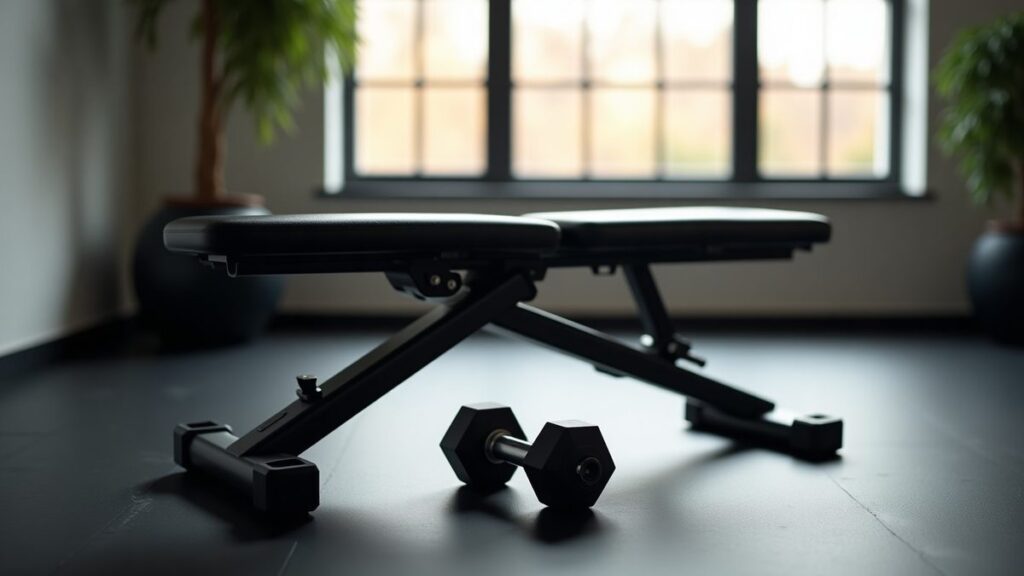
- Flat bench ($80–150): covers 80% of exercises. Good for chest press, rows, hip thrusts, step-ups, dips. Best for limited budget or limited space.
- Adjustable bench ($150–300): adds incline and decline angles for shoulder press, incline chest press, decline crunches. Worth the upgrade if budget allows.
- Weight rating: 600+ lb minimum (your bodyweight + dumbbells). Cheap benches rated for 300 lb wobble dangerously under load.
- Padding: 2-inch high-density foam minimum. Thin padding makes heavy chest press uncomfortable on the back.
- Width: 10–12 inches. Wider feels stable; too wide restricts shoulder mobility on chest press.
Recommended budget picks: Rep Fitness FB-3000 (flat, $200), Bowflex 5.1S (adjustable, $260), FLYBIRD FB149 (adjustable, $130 — best budget pick).
The 10 best workout bench exercises
1. Dumbbell Bench Press (chest, shoulders, triceps)
Lie flat, dumbbells at chest level, palms forward. Press up and slightly inward — handles meet roughly above the sternum. Lower under control to a chest-touch (or just above). Why it’s #1: covers the full chest press pattern with deeper ROM than barbell bench. Sets/reps: 4 × 8–12 for hypertrophy.
2. Single-Arm Dumbbell Row (back, biceps, core)
Knee and same-side hand on bench, opposite leg planted, dumbbell hanging at arm’s length. Pull to lower rib using elbow drive (not bicep curl). Squeeze shoulder blade back at the top. Why it matters: the unilateral demand fixes back imbalances and strengthens the deep core anti-rotation muscles. Sets/reps: 4 × 8–10 per side.
3. Bulgarian Split Squat (quads, glutes, balance)
Rear foot elevated on the bench, front leg 18–24 inches forward. Descend into a deep lunge until rear knee almost touches the floor, then drive up through the front heel. Hold dumbbells at sides for resistance. Why it matters: hits quads and glutes harder than back squats per pound of load — the unilateral position eliminates lower back as a limiter. Sets/reps: 3 × 8–12 per leg.
4. Dumbbell Hip Thrust (glutes, hamstrings)
Upper back on bench, knees bent at 90 degrees, dumbbell across hip crease. Drive hips up to full extension (body straight from knees to shoulders). Squeeze glutes hard at the top. Why it matters: the single best glute-building exercise outside a barbell, hits the muscle through its full strength curve. Sets/reps: 3 × 10–15.
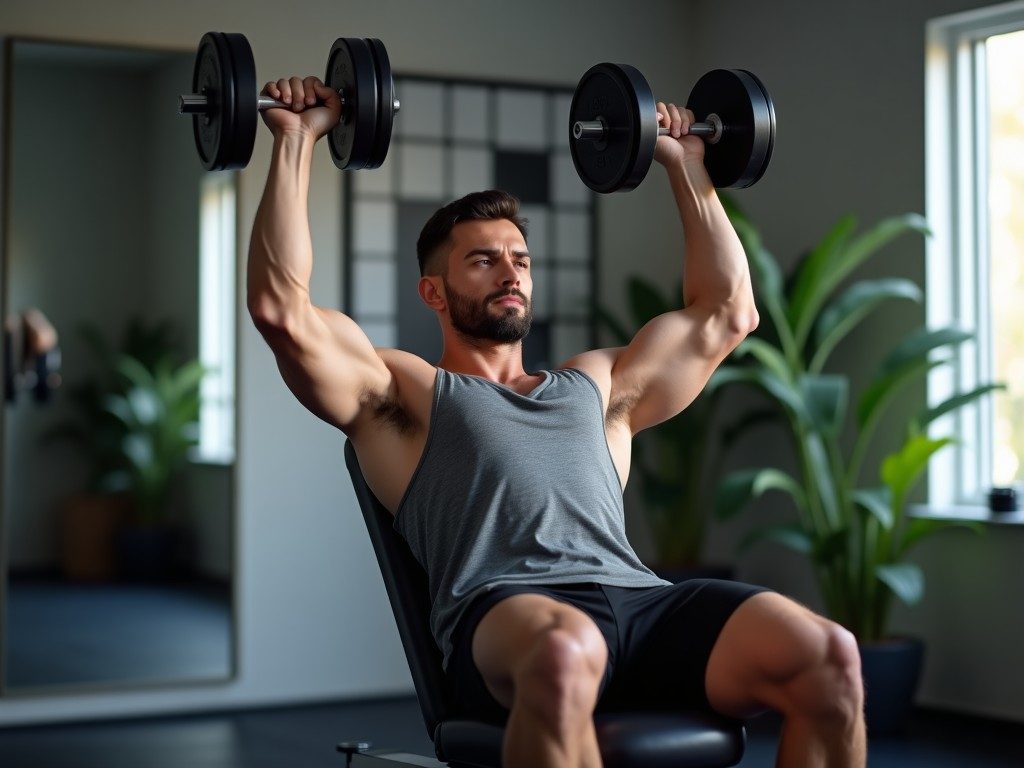
5. Seated Dumbbell Shoulder Press (delts, triceps)
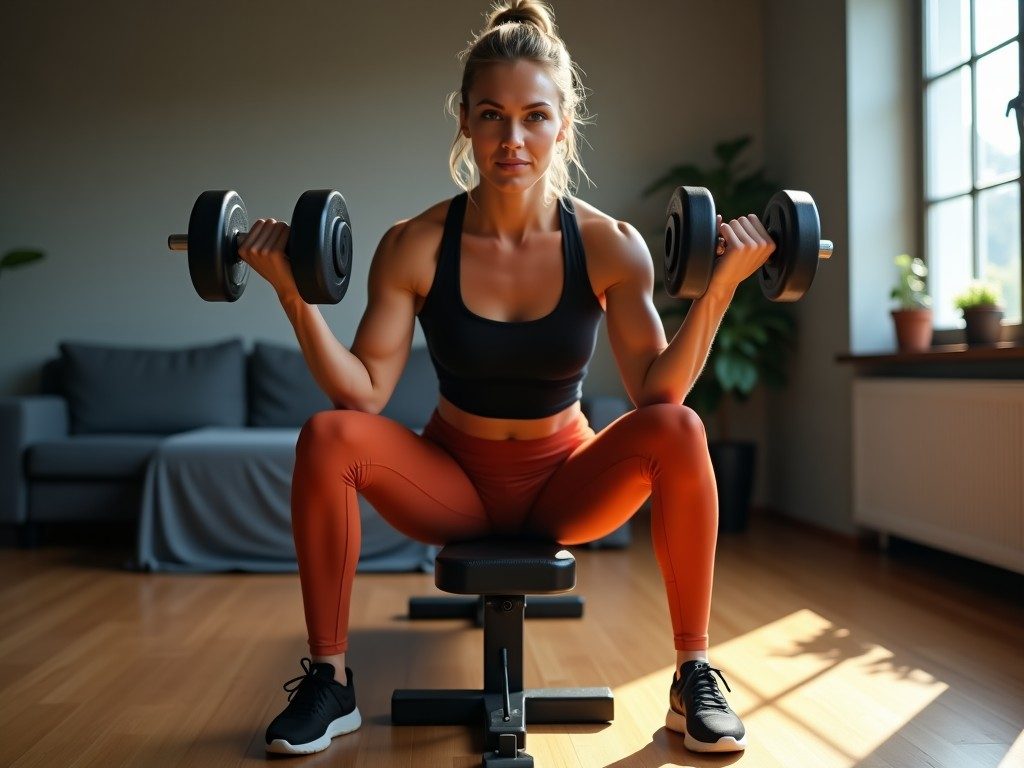
Set bench to 75–85 degrees (slightly reclined supports the lower back). Press dumbbells overhead, stopping just before lockout. Keep core tight to avoid arching. Why it matters: safer than overhead pressing for most lifters because each arm works independently. Sets/reps: 4 × 8–12.
6. Step-Up (quads, glutes, balance)
Bench at knee height. Step up onto the bench with one leg, drive through the heel to stand fully, lower under control. Don’t push off with the trailing leg. Why it matters: simple unilateral leg builder with high carryover to running, hiking, and stair climbing. Sets/reps: 3 × 10 per side.
7. Bench Dip (triceps, chest, anterior deltoids)
Hands on bench edge behind you, legs extended forward. Lower body until elbows hit 90 degrees, push back to lockout. Add weight by placing a dumbbell on your lap. Why it matters: hits the triceps long head with full ROM. Cheap, high-rep tricep builder. Sets/reps: 3 × 12–20.
8. Incline Dumbbell Press (upper chest, front delts)
Bench at 30–45 degrees. Press dumbbells from chest level to overhead, palms forward. Lower under control. Why it matters: targets the upper chest fibers that flat pressing under-stimulates. Sets/reps: 3 × 10–12.
9. Dumbbell Pullover (lats, chest, serratus)
Lie across bench (or flat on it), holding one dumbbell with both hands above chest. Lower the dumbbell behind your head, keeping arms slightly bent. Pull back to start using lats. Why it matters: the only at-home alternative to a lat pulldown. Develops the lats from a stretched position. Sets/reps: 3 × 10–12.
10. Decline Crunch (abs)
Set bench to slight decline (or flat). Anchor feet under the leg pad if available, or hook them under a stable object. Crunch up to elbows-near-thighs, lower under control. Add a dumbbell at chest for resistance. Why it matters: loaded ab work that bodyweight crunches can’t replicate. Sets/reps: 3 × 12–20.
4-week routine using all 10 exercises
Run as a 3-day-per-week split: Monday upper, Wednesday lower, Friday full-body. Each session 45–60 minutes.
Day 1 — Upper (Monday)
| Exercise | Sets × Reps | Rest |
|---|---|---|
| Dumbbell Bench Press | 4 × 8–10 | 2 min |
| Single-Arm Dumbbell Row | 4 × 8–10/side | 90 sec |
| Seated Dumbbell Shoulder Press | 3 × 10–12 | 90 sec |
| Bench Dip | 3 × 12–15 | 60 sec |
| Dumbbell Pullover | 3 × 10–12 | 60 sec |
Day 2 — Lower (Wednesday)
| Exercise | Sets × Reps | Rest |
|---|---|---|
| Bulgarian Split Squat | 3 × 8–10/leg | 2 min |
| Dumbbell Hip Thrust | 3 × 12–15 | 90 sec |
| Step-Up | 3 × 10/leg | 60 sec |
| Decline Crunch | 3 × 15 | 45 sec |
Day 3 — Full Body (Friday)
| Exercise | Sets × Reps | Rest |
|---|---|---|
| Incline Dumbbell Press | 3 × 8–10 | 2 min |
| Bulgarian Split Squat | 3 × 10–12/leg | 2 min |
| Single-Arm Dumbbell Row | 3 × 10/side | 90 sec |
| Dumbbell Hip Thrust | 3 × 12 | 90 sec |
| Bench Dip | 2 × max | 60 sec |
Progression: when you complete the top of the rep range on all sets, increase weight by 2.5–5 lb per dumbbell next session. When stuck, do an extra set instead of dropping reps.
Set and rep schemes by goal
| Goal | Sets per exercise | Reps | Rest |
|---|---|---|---|
| Strength | 4–6 | 4–6 | 2.5–3 min |
| Hypertrophy | 3–5 | 8–12 | 60–90 sec |
| Endurance | 3–4 | 15–20 | 30–45 sec |
| Mixed (most lifters) | 3–4 | 8–15 | 60–90 sec |
Training heavy without a spotter
- 1. Use dumbbells, not barbells, for chest press. Failed dumbbell rep = drop them sideways. Failed barbell rep = stuck under the bar.
- 2. Stop 1–2 reps short of failure. True failure with dumbbells in solo training risks dropping weight on yourself or near valuable items.
- 3. Start with conservative weights. Better to add weight than ramp up to failure on the first set.
- 4. Train on a flat surface with clear floor space around the bench. Drop zone matters.
- 5. Use neutral grip when in doubt. Palms-facing-each-other on chest press is more shoulder-friendly than palms-forward.
For more bodyweight pairings to combine with bench work, see our leg day with dumbbells and dumbbell + bodyweight hybrid workout guides.
Workout Bench FAQ
Can I get a full workout with just a bench and dumbbells?
Yes — the 10 exercises above hit chest, back, shoulders, biceps, triceps, quads, hamstrings, glutes, and core. The combination covers a complete bodybuilding-style program for the first 12–24 months of training. Beyond that, you may want to add a barbell setup or join a gym for heavier compound lifts.
How heavy should the dumbbells be?
Adjustable dumbbells covering 5–50 lb per hand suit beginner-to-intermediate lifters. Beginners use 10–25 lb on most exercises. Intermediates need 30–50 lb for chest press and Bulgarian split squats. Advanced lifters often outgrow 50 lb dumbbells within 2 years and need a barbell setup for further strength progression.
Flat bench or adjustable bench?
Adjustable, if budget allows. The added incline angles unlock seated shoulder press, incline chest press, and decline crunches — three exercises a flat bench can’t do. The price difference is typically $50–100, well worth it for the versatility.
How often should I train with a bench setup?
3 days per week is the sweet spot for the routine above. 4 days per week works if you split upper and lower further. Daily training with this setup leads to overuse — dumbbells and bench movements stress the same shoulder and lower back joints repeatedly.
Can I build muscle without a barbell?
Yes — extensive research confirms total weekly volume drives hypertrophy more than implement choice. Dumbbells with progressive overload deliver comparable muscle growth to barbells for the first 2+ years of training. Strength-specific goals (max bench, max squat) eventually need barbell work, but size and definition gains plateau no faster on dumbbells.
Is a flat bench strong enough for 100 lb dumbbells?
Most quality benches rated 600+ lb handle 100 lb per hand plus your bodyweight without issue. Cheap benches rated 300 lb wobble dangerously at higher loads. Buy once, buy quality — a $200 bench lasts 10+ years. A $60 bench wobbles within 6 months.
Bench dips or parallel bar dips — which is better?
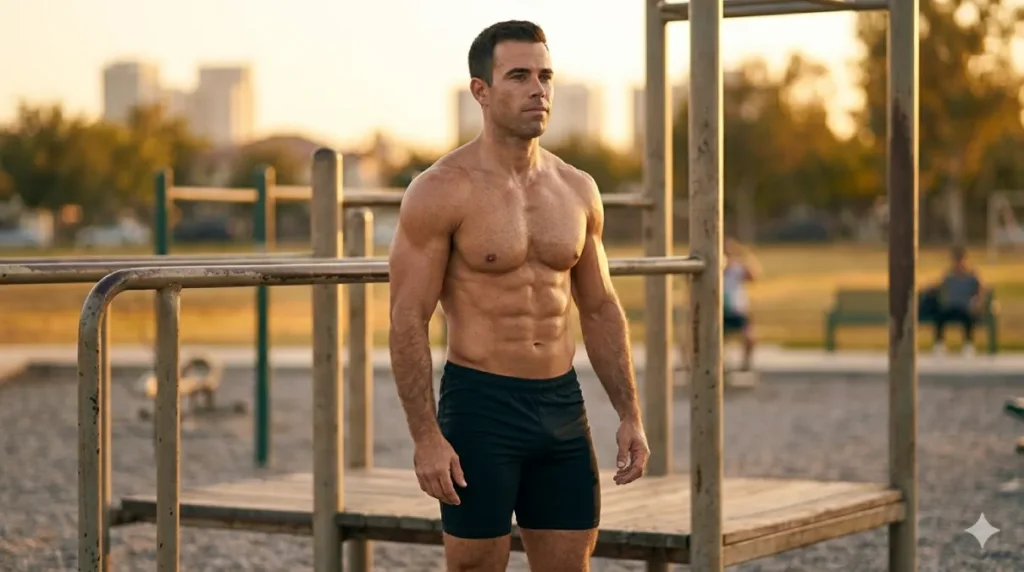
Parallel bar dips are better — full ROM, more triceps and chest activation, deeper stretch. Bench dips work when you don’t have parallel bars but limit shoulder ROM and put more strain on the front deltoid. If you have access to dip bars (parallettes, dip stand, or playground bars), use those instead.
The bottom line: a workout bench plus adjustable dumbbells unlocks a complete upper and lower body program. The 10 exercises above hit every major muscle group with progressive overload that scales for 12–24 months. The 3-day routine combines them productively without overtraining. Total cost under $500 for a setup that builds real strength and muscle. For complementary leg work and bodyweight pairings, see our leg day with dumbbells, upper body gym machine workout, and dumbbell + bodyweight hybrid workout guides.