
Last updated: August 2026 — written by the Gymnase Tips training team.
Calisthenics skills break into three tiers: foundational (handstand, pistol squat, L-sit) reachable in 3–6 months by most trainees, intermediate (muscle-up, front lever, back lever, dragon flag) requiring 6–18 months of dedicated work, and advanced (planche, human flag, one-arm pull-up, one-arm push-up) demanding 1–4 years depending on body weight, lever length, and training consistency. The 12 skills below cover the full progression curve. Each one is a real benchmark — not a TikTok stunt — and the prerequisites and timelines are honest, not motivational.
This guide ranks the 12 essential calisthenics skills by difficulty, lists the prerequisite strength benchmarks for each, gives the standard progression sequence (in correct order), realistic timelines for average-built trainees, the most common mistakes that stall progress, and how to build a weekly skill routine that actually moves the needle.
The 3 skill tiers
| Tier | Skills | Timeline (consistent training) |
|---|---|---|
| Foundational | Handstand, Pistol Squat, L-sit, 10+ Pull-ups, 30+ Push-ups | 3–6 months |
| Intermediate | Muscle-up, Front Lever, Back Lever, Dragon Flag, Handstand Push-up | 6–18 months |
| Advanced | Planche (full), Human Flag, One-arm Pull-up, One-arm Push-up | 1–4 years |
The timelines assume 3–5 sessions per week with focused skill practice (not just general fitness training). Body weight, lever length (long-limbed athletes have it harder for static holds), and starting strength all shift the timeline.
Foundational skills (months 1–6)
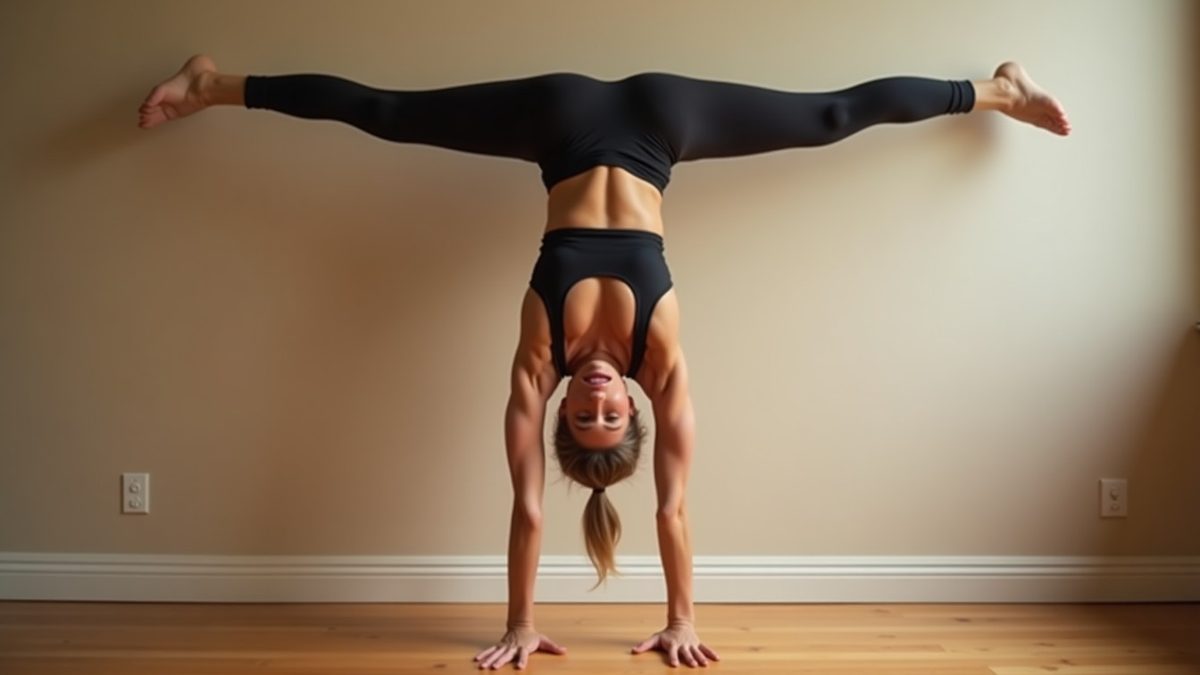
1. Freestanding Handstand
Prerequisites: Pain-free shoulder mobility, basic wrist conditioning. Timeline: 2–4 months for 30-second freestanding hold. Progression:
- Pike push-up against wall (4 weeks)
- Wall handstand chest-to-wall hold (work to 60 seconds)
- Wall handstand back-to-wall hold (60 seconds)
- Wall walks (3 sets of 5)
- Freestanding kick-up practice (10 attempts daily)
- Freestanding hold (start at 1–5 seconds; build to 30+)
Common mistakes: banana back (over-arched lower back), looking forward instead of at the floor between your hands, kicking up too hard. Practice daily — handstand is a skill, not a strength exercise.
2. Pistol Squat (Single-Leg Squat)
Prerequisites: Bodyweight squat to depth, hamstring flexibility, ankle mobility. Timeline: 2–4 months. Progression:
- Box pistol squat (sit to 16-inch box)
- Heel-elevated pistol (plate under heel)
- Counterweighted pistol (hold 5–10 lb plate in front)
- Assisted pistol (TRX or doorframe support)
- Negative pistol (5-second descent, kick up with both legs)
- Full pistol squat (work toward 5 reps per side)
Common mistakes: heel coming off the floor (mobility issue), losing balance forward (need counterweight phase longer), knee caving inward (glute weakness).
3. L-Sit
Prerequisites: 10 strict push-ups, decent hamstring flexibility. Timeline: 4–8 weeks for 15-second hold. Progression:
- Tuck L-sit on parallettes or floor (knees pulled to chest)
- Single-leg L-sit (one leg straight, one tucked)
- Full L-sit, knees slightly bent
- Full L-sit, legs straight (work to 15+ seconds)
- Advanced: V-sit (legs above hip line)
Common mistakes: rounding shoulders forward, not pressing the floor down (active scapular depression), bending knees to cheat. Hamstring flexibility is often the limiting factor — stretch before each session.
Intermediate skills (months 6–18)
4. Bar Muscle-Up
Prerequisites: 10+ strict pull-ups, 8+ strict dips, explosive pull-up power. Timeline: 3–9 months from prerequisites. Progression:
- High pull-ups (chest to bar, then sternum to bar)
- Explosive pull-ups with band assistance
- Negative muscle-ups (jump to top, lower slow)
- Kipping muscle-up (CrossFit style — easier transition)
- False-grip strict muscle-up
- Strict muscle-up
Common mistakes: chicken-winging (one elbow flares before the other), losing the false grip, lack of explosive pull height. The transition phase (chest at bar level) is where most failed attempts happen.

5. Front Lever
Prerequisites: 10+ pull-ups, strong hollow body hold, scapular strength. Timeline: 6–18 months. Progression:
- Tuck front lever hold (10–15 sec)
- Advanced tuck (knees away from chest, 8–12 sec)
- Single-leg front lever (alternate sides, 6–10 sec)
- Straddle front lever (legs spread wide)
- Full front lever (legs together, parallel to ground, 5+ sec)
Common mistakes: sagging hips (hollow body collapses), bent arms (huge cheat that defeats the move), not depressing scapulae. Practice scapular pull-ups daily as accessory work.
6. Back Lever
Prerequisites: 10+ pull-ups, shoulder mobility for hyperextension, basic skin-the-cat. Timeline: 4–12 months. Progression:
- Skin-the-cat (controlled rotation through bar)
- German hang (shoulder mobility prep)
- Tuck back lever (knees to chest, parallel to ground)
- Advanced tuck back lever
- Single-leg back lever
- Straddle back lever
- Full back lever (5+ sec)
Common mistakes: shoulder injury from rushed progression — back lever puts intense stress on biceps tendons. Spend extra time on German hang and skin-the-cat conditioning before loading the lever positions.
7. Dragon Flag
Prerequisites: Strong core, hollow body hold for 30+ seconds. Timeline: 3–6 months. Progression:
- Hanging knee raises (15 reps)
- Hanging leg raises (10 reps)
- Tuck dragon flag (knees to chest, body straight)
- Single-leg dragon flag (one leg extended)
- Negative dragon flag (slow descent only, kick to start)
- Full dragon flag (5+ reps)
Common mistakes: bending at the hip, losing tension at the bottom, kicking up from too low. The body should remain rigid like a plank rotating around the upper back.
8. Handstand Push-Up
Prerequisites: Stable wall handstand for 60+ sec, 5+ pike push-ups elevated. Timeline: 4–10 months. Progression:
- Pike push-up flat ground
- Pike push-up with feet elevated
- Wall HSPU partial range (3 inches)
- Wall HSPU half range
- Wall HSPU full range to head touch
- Freestanding HSPU (advanced)
Common mistakes: losing the handstand position during the press, head hitting floor too hard, banana back. Place a folded mat under the head for the head-touch reps to protect the neck during learning.
Advanced skills (years 1–4)
9. Full Planche
Prerequisites: Solid pseudo planche push-ups, strong protracted scapulae, low body fat (high body fat makes planche disproportionately harder). Timeline: 18 months to 4 years for full planche. Progression:
- Planche lean (feet on ground, lean forward into protracted scapulae)
- Tuck planche on parallettes (5–10 sec)
- Advanced tuck planche (10–15 sec)
- Single-leg planche (alternate sides)
- Straddle planche (5+ sec)
- Full planche (legs together, body parallel — 3+ sec)
Common mistakes: rushing past the planche-lean phase, retracted scapulae instead of protracted, bending elbows to cheat. The full planche is genuinely elite — fewer than 1% of dedicated calisthenics practitioners ever achieve a clean full planche. Don’t be discouraged by long timelines.
10. Human Flag
Prerequisites: Strong lats, lateral core strength, side plank for 60+ seconds, ideally lower body fat. Timeline: 6–18 months. Progression:
- Vertical pole hold (body straight up against pole)
- Chamber flag (knees tucked to chest, sideways)
- Single-leg flag (one leg extended sideways)
- Straddle flag
- Full flag (legs together, body horizontal)
Common mistakes: grip slipping (use chalk or tape), bottom arm not pushing actively, legs sagging. Both arms work hard — top arm pulls, bottom arm pushes.
11. One-Arm Pull-Up
Prerequisites: 15+ strict pull-ups, low body fat (BF% under 12 for men, 18 for women makes a huge difference), strong grip. Timeline: 1–3 years. Progression:
- Weighted pull-ups (work to +50% bodyweight)
- Archer pull-ups (extending one arm out)
- Typewriter pull-ups (pulling to one side, then sliding to the other)
- Assisted one-arm pull-up (band or other arm holding rope/towel)
- Negative one-arm pull-up (jump to top, slow descent)
- Full one-arm pull-up
Common mistakes: trying it too early (need true 15+ strict pull-ups first), kipping/swinging, not building up unilateral strength. Body weight matters enormously here.
12. One-Arm Push-Up
Prerequisites: 30+ strict push-ups, strong core anti-rotation. Timeline: 6–18 months. Progression:
- Archer push-up (one arm extended laterally)
- Uneven push-up (one hand on a basketball or block)
- One-arm push-up with feet wide
- One-arm push-up with feet shoulder-width (full)
- One-arm push-up with feet together (advanced)
Common mistakes: rotating the body to cheat (hip drops sideways), not maintaining core tension, going too low too soon. Foot stance width is the main difficulty modifier.
Sample weekly skill routine
Allocate 20–30 minutes per session for dedicated skill work, after warmup, before strength training. Skills require fresh CNS — never train them at the end of a heavy workout.
| Day | Primary skill | Secondary skill |
|---|---|---|
| Monday | Handstand (5×30 sec) | Pike push-up (3×8) |
| Tuesday | Front lever progression (5×10 sec) | Hollow body (3×30 sec) |
| Wednesday | Pistol squat work (4×5/side) | L-sit (5×10 sec) |
| Thursday | Handstand (5×30 sec) | Wall HSPU (3×3-5) |
| Friday | Muscle-up progression (5 sets) | Dragon flag negatives (3×3) |
| Saturday | Optional skill of choice | — |
| Sunday | Rest / mobility | — |
Pick 1–2 skills to focus on per training cycle (8–12 weeks). Trying to progress all 12 simultaneously stalls everything. Rotate focus every cycle.
FAQ
How long does it take to learn calisthenics skills?
Foundational skills (handstand, pistol squat, L-sit) take 3–6 months for most trainees. Intermediate skills (muscle-up, front lever, back lever) take 6–18 months. Advanced skills (planche, human flag, one-arm pull-up) take 1–4 years. Body weight, lever length, training consistency, and genetics all affect the timeline significantly.
Can I learn calisthenics skills at home without a bar?
For some skills, yes — handstand, L-sit, pistol squat, dragon flag, planche progressions, and one-arm push-up don’t require equipment. For others (muscle-up, front lever, back lever, human flag, one-arm pull-up), you need at least a pull-up bar. A doorframe pull-up bar is sufficient for most progressions. See our calisthenics equipment guide for minimal-budget setups.
What’s the easiest calisthenics skill to learn first?
L-sit. It requires the least mobility, has clear progression steps, and produces visible results in 4–6 weeks. Handstand is also a good starting point but requires more wrist conditioning and shoulder mobility upfront.
Are calisthenics skills bad for joints?
Done with progressive overload, no — they build joint strength and tendon resilience. The injury risk comes from skipping progressions, training to failure on dynamic moves, or going for advanced skills (planche, back lever) without sufficient connective tissue conditioning. Take 50% longer than you think you need on each progression step.
Can I do skill work every day?
For low-volume skill practice (handstand, L-sit, easier progressions), yes. For high-strain static holds (planche, lever progressions), 3–4 days per week works better — connective tissue needs recovery. See our can you do calisthenics every day guide for the full programming framework.
What’s the hardest calisthenics skill?
Generally accepted hardest movements: full planche (extreme leverage demand), iron cross on rings (gymnastic-level connective tissue), and one-arm handstand (rare and brutal balance + strength combo). The full planche is the most realistic “elite” goal for non-gymnasts.
Do I need to be lean to do calisthenics skills?
For static holds (planche, levers, one-arm pull-up): yes, body fat under 15% (men) or 22% (women) helps significantly. For dynamic skills (muscle-up, pistol, handstand push-up): less critical — pure strength matters more. If you’re carrying excess body fat, the static skills will feel impossible until you cut down.
The bottom line: the 12 skills above represent the full progression curve from beginner to elite calisthenics. Focus on 1–2 at a time, work the prerequisites honestly, and accept that real skill development takes years — not weeks. Foundational skills should come first; jumping to planche or one-arm pull-up before mastering 15 strict pull-ups is the most common reason people stall. For broader programming, see our calisthenics workout plan and how to build muscle without weights guides.

Pingback: 10 Hardest Calisthenics Moves Ranked by Difficulty (2026)