
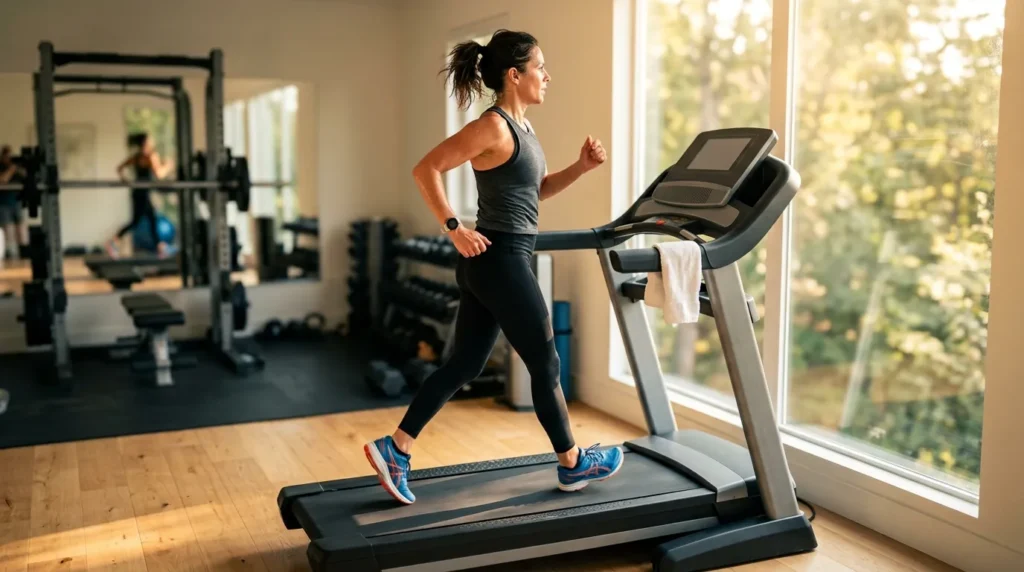
Japanese Indoor Walking: Treadmill Speeds and 4-Week Plan
Gymnase Tips is reader-supported. Some links may be Amazon affiliate links; if you buy through them we may earn a small commission at no extra cost to you.
TL;DR – How Does Japanese Indoor Walking Work?
Japanese indoor walking uses the interval walking training (IWT) protocol on a treadmill or walking pad — 3 minutes brisk, 3 minutes easy, repeated 5 times for 30 minutes. Below: exact treadmill speeds and incline settings by fitness level, a 4-week progressive plan, and calorie burn data from peer-reviewed research.
Table of contents
What Is Japanese Indoor Walking?
Japanese indoor walking applies the interval walking training (IWT) method to a treadmill, walking pad, or any indoor space. Walk briskly for 3 minutes at RPE 6–7, then walk slowly for 3 minutes at RPE 3–4. Repeat 5 times for a 30-minute session that builds more fitness than steady-pace walking.
The protocol comes from Dr. Hiroshi Nose and his team at Shinshu University in Japan. They studied it across hundreds of middle-aged and older adults starting in the mid-2000s, publishing results in Mayo Clinic Proceedings (Nemoto et al., 2007). Moving the method indoors — onto a treadmill or walking pad — changes nothing about the intervals. It just gives you precise speed and incline control, which actually makes the protocol easier to follow correctly.
Treadmill Speed and Incline Settings by Fitness Level
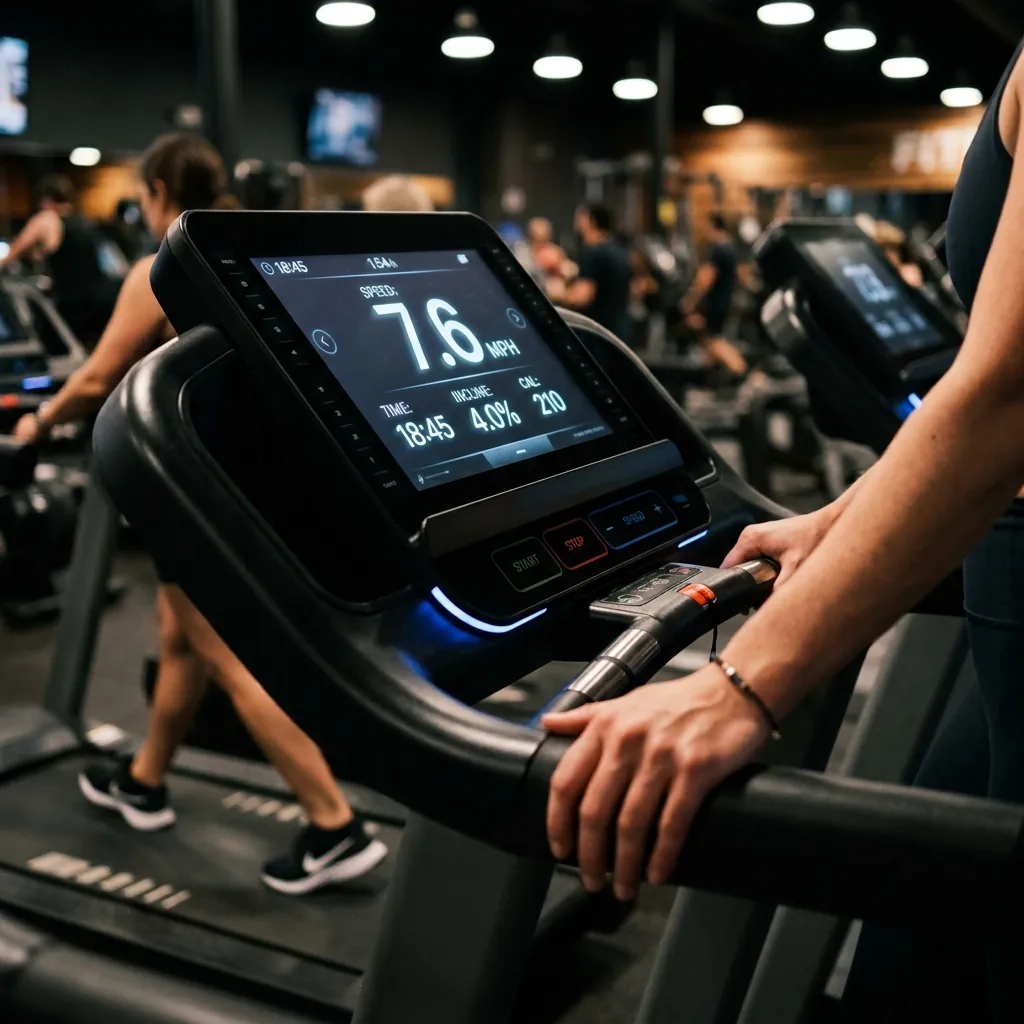
Set your treadmill to 3.0–3.5 mph for the fast interval if you are new to interval walking. The table below shows exact speeds and incline percentages for three fitness levels, based on RPE and the original IWT protocol.
| Level | Slow Interval (mph) | Fast Interval (mph) | Incline (%) | RPE Slow / Fast | Best For |
|---|---|---|---|---|---|
| Beginner | 2.0–2.5 | 3.0–3.5 | 0–1% | 3 / 6 | New walkers, returning after injury, 60+ |
| Intermediate | 2.5–3.0 | 3.5–4.0 | 2–4% | 3–4 / 6–7 | Regular walkers ready for more challenge |
| Advanced | 3.0–3.5 | 4.0–4.5 | 4–6% | 3–4 / 7–8 | Fit walkers, runners using active recovery days |
Start every session with a 2-minute warm-up at your slow-interval speed. End with 2 minutes at the same pace. These bookend minutes are not counted in your 5 interval cycles.
How to Find Your Fitness Level
Use the talk test during your first session. Walk at the fast-interval speed listed for beginners. If you can speak in full sentences without pausing for breath, move up to intermediate. If short phrases feel comfortable at intermediate speeds, try the advanced tier. You should feel noticeably challenged during fast intervals but never gasping or unable to maintain form.
Does Japanese Walking Actually Work? What the Research Shows
Yes — three peer-reviewed studies confirm that interval walking training outperforms steady walking across aerobic fitness, leg strength, and disease risk markers. The improvements are consistent, not just statistically significant.
| Study | Participants | Duration | Key Findings |
|---|---|---|---|
| Nemoto et al., 2007 (Mayo Clinic Proceedings) | 246 (mean age 63) | 5 months | 10% VO2peak increase, 13% knee extension strength gain, 9 mmHg systolic BP drop |
| Masuki et al., 2019 (Mayo Clinic Proceedings) | 679 (mean age 65) | 5 months | 14% VO2peak improvement, 17% lifestyle disease score decline |
| Karstoft et al., 2013 (Diabetes Care) | 32 (type 2 diabetes) | 4 months | 16% aerobic fitness increase, ~3 kg body fat loss, 89% adherence |
A note on a widely repeated claim: several popular articles cite a “40% increase in peak fitness” from interval walking. That number is misleading. The largest study — Masuki 2019, with 679 participants — found a 14% improvement in estimated peak aerobic capacity. Still a strong result for a walking program, but accuracy matters.
The Nemoto 2007 study deserves attention for a different reason. Participants who did steady moderate walking for the same duration saw almost no change in VO2peak or leg strength. The intervals — not the walking itself — drove the adaptations.
Karstoft’s 2013 trial is the standout for metabolic health. Type 2 diabetes patients doing IWT saw significant drops in blood glucose, total body fat, and visceral fat. The continuous-walking group? No statistically significant changes on any of those measures. And the 89% adherence rate over four months suggests people actually stick with this protocol.
Consult your doctor before starting any new exercise program, especially if you have diabetes, heart disease, or other chronic conditions.
Japanese Walking vs Regular Walking
Interval walking training outperforms steady-pace walking on every measured outcome in published trials — higher VO2peak gains, greater leg strength improvement, and larger blood pressure reductions.
| Outcome | Interval Walking (IWT) | Steady Walking | Source |
|---|---|---|---|
| VO2peak change | +10–14% | No significant change | Nemoto 2007, Masuki 2019 |
| Knee extension strength | +13% | No significant change | Nemoto 2007 |
| Systolic blood pressure | -9 mmHg | -3 mmHg | Nemoto 2007 |
| Body fat (type 2 diabetes) | -3 kg | No significant change | Karstoft 2013 |
| Adherence over 4 months | 89% | Similar | Karstoft 2013 |
| Time per session | 30 min | 30 min | All studies |
Steady walking still beats sitting. But if you are already walking 30 minutes a day and want measurably better results, switching to the 3-3 interval structure costs zero extra time. The only difference is effort distribution.
You can also pair walking with bodyweight training for faster fat-loss results.
How Many Calories Does Japanese Walking Burn?
A 150 lb person burns roughly 128 calories in 30 minutes of interval walking, compared to 119 calories for steady walking at the same duration. The difference grows with body weight — see the table below.
| Body Weight | IWT (30 min) | Steady Walking (30 min) | Difference |
|---|---|---|---|
| 120 lb (54 kg) | ~102 cal | ~95 cal | +7 cal |
| 150 lb (68 kg) | ~128 cal | ~119 cal | +9 cal |
| 180 lb (82 kg) | ~153 cal | ~143 cal | +10 cal |
| 210 lb (95 kg) | ~179 cal | ~167 cal | +12 cal |
How the math works: IWT alternates between ~5.0 METs (fast intervals) and ~2.5 METs (slow intervals), averaging roughly 3.75 METs across 30 minutes. Steady moderate walking sits at about 3.5 METs (Compendium of Physical Activities, 2024 edition). Calories = METs x body weight in kg x hours.
The per-session calorie gap looks small. Here is why that undersells IWT: the fitness adaptations — 10–14% higher VO2peak, more muscle mass in the legs — raise your resting metabolic rate over time. And higher-intensity bouts create a small EPOC (excess post-exercise oxygen consumption) effect that is not captured in the MET calculation. Over weeks and months, those compounding advantages matter far more than the 7–12 extra calories per session.
If you want to push calorie burn even higher, rucking burns even more calories per session than interval walking.
4-Week Japanese Walking Treadmill Plan
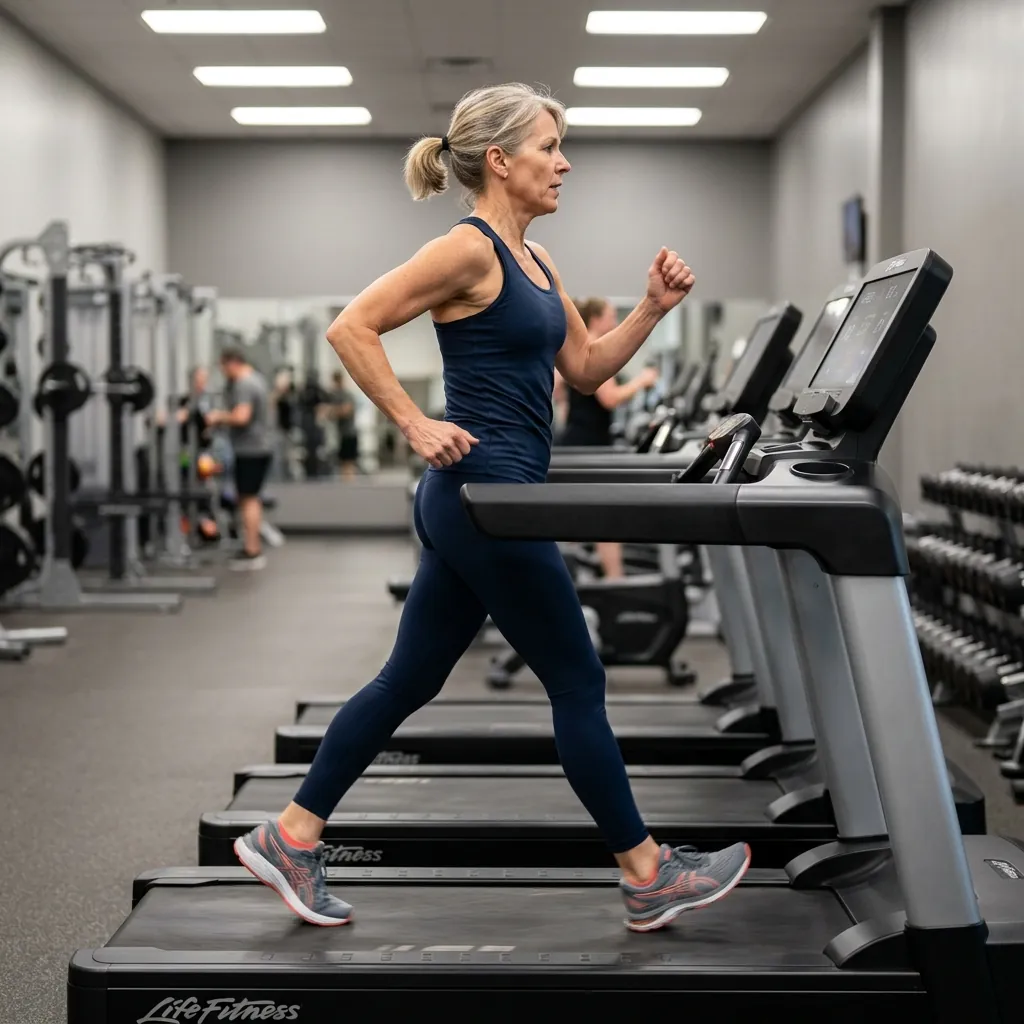
Start with 4 intervals at moderate speed in week 1 and build to 6 intervals with higher speed and incline by week 4. The plan below progresses speed, incline, and session length so you never plateau.
| Week | Intervals | Fast Speed (mph) | Slow Speed (mph) | Incline (%) | Total Time | Rest Days/Week |
|---|---|---|---|---|---|---|
| 1 | 4 cycles | 3.0–3.5 | 2.0–2.5 | 0–1% | 28 min (includes warm-up/cool-down) | 3–4 |
| 2 | 5 cycles | 3.2–3.7 | 2.0–2.5 | 1–2% | 34 min | 2–3 |
| 3 | 5 cycles | 3.5–4.0 | 2.5–3.0 | 2–3% | 34 min | 2–3 |
| 4 | 6 cycles | 3.5–4.0 | 2.5–3.0 | 3–4% | 40 min | 2 |
Each session includes a 2-minute warm-up walk and 2-minute cool-down walk at your slow-interval speed. The total times above account for those minutes.
Progression logic: Week 1 focuses on learning the rhythm. Week 2 adds one cycle and a small speed bump. Week 3 holds the cycle count but increases speed and incline — this is the hardest adjustment. Week 4 adds the sixth cycle at maintained intensity.
When to repeat a week: If you cannot complete all intervals at the target speed without breaking form or gripping the handrails, repeat that week. Progressing too fast is the most common mistake. There is no deadline.
The Masuki 2019 study found that benefits plateaued at roughly 50 minutes per week of high-intensity walking. By week 4, you hit approximately 36–40 minutes of total fast-interval time across 4–5 sessions, which lands right in that optimal zone.
Walking Pad Adaptation
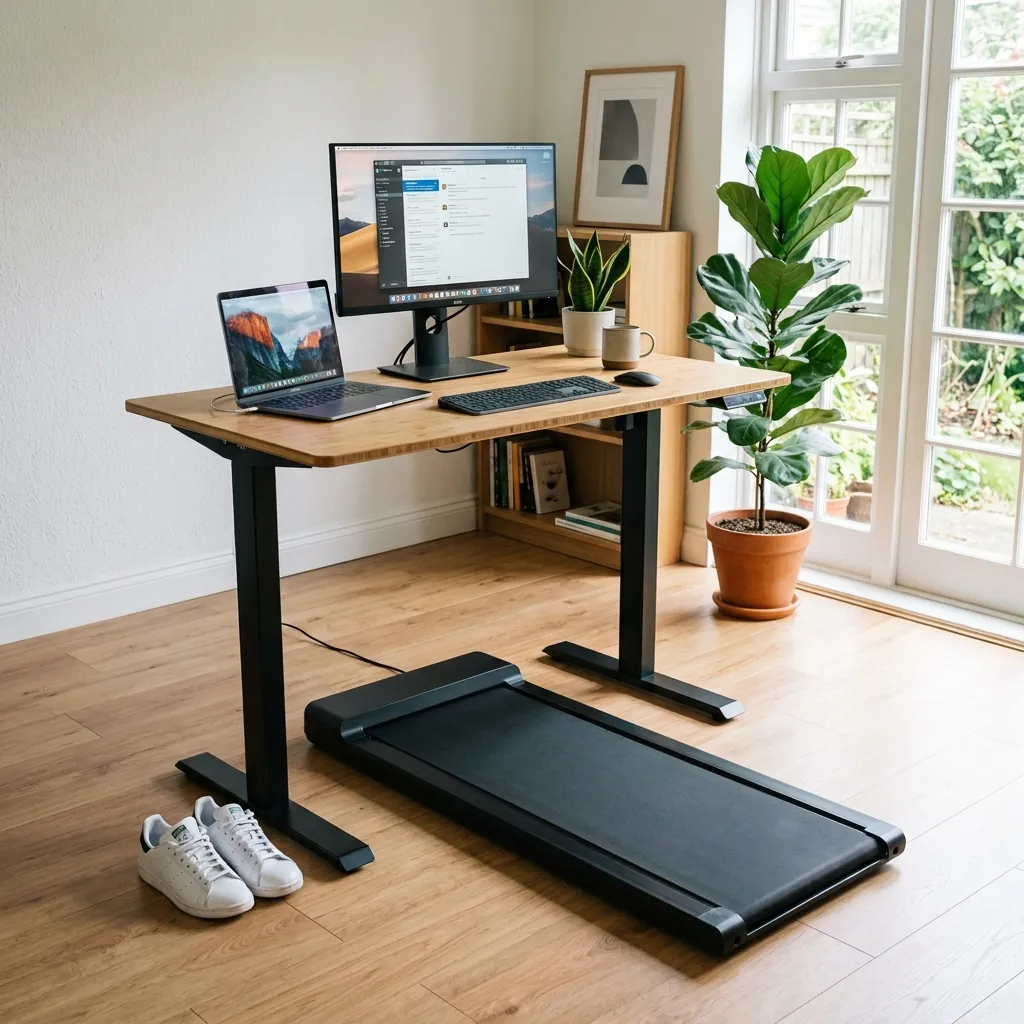
Most walking pads top out at 3.5–4.0 mph and have no incline adjustment. That limits the fast interval for intermediate and advanced users but does not disqualify the protocol.
If your walking pad’s max speed covers your fast-interval target, run the plan as written. If it caps below your target, compensate with two strategies:
- Increase arm drive. Pump your arms aggressively during fast intervals. This raises heart rate by 5–10 BPM and adds upper-body engagement.
- Add a light weighted vest at 5–10% of your body weight. A 150 lb person would use a 7.5–15 lb vest. This increases MET cost without requiring higher speed.
You can also shorten the fast interval to 2 minutes and extend the slow interval to 4 minutes if your max speed feels like RPE 5 or below at the highest setting. The goal is reaching RPE 6–7 during the fast portion — the speed is just a tool to get there.
FAQ
How does japanese walking work?
Japanese walking alternates 3 minutes of brisk walking (RPE 6–7) with 3 minutes of slow walking (RPE 3–4), repeated 5 times for a 30-minute session. The fast intervals drive cardiovascular and muscular adaptations that steady-pace walking does not produce.
How many calories does japanese walking burn in 30 minutes?
Between 100 and 180 calories depending on your body weight. A 150 lb person burns about 128 calories per 30-minute IWT session. See the calorie comparison table above for estimates at 120, 150, 180, and 210 lb.
Can you do japanese walking on a treadmill?
Yes. A treadmill is arguably the best tool for IWT because you can set exact speeds for each interval and add incline for progressive overload. Use the speed and incline settings table above to find your starting point by fitness level.
Is japanese walking better than regular walking?
For fitness gains, yes. IWT produces 10–14% VO2peak improvements where steady walking produces near-zero change in the same time frame (Nemoto 2007, Masuki 2019). That said, steady walking still delivers real health benefits — any walking beats no walking. IWT is for people who want more from their 30 minutes.
What speed should I walk for japanese walking on a treadmill?
Beginners should set fast intervals at 3.0–3.5 mph and slow intervals at 2.0–2.5 mph. Intermediate and advanced walkers go higher. Check the full treadmill speed and incline settings table above for all three fitness levels.
How often should you do japanese walking?
Three to five days per week. The Masuki 2019 dose-response study found that benefits peak at roughly 50 minutes of high-intensity walking per week — that is about 4 sessions of 5 cycles each (Masuki et al., Mayo Clinic Proceedings, 2019). More sessions beyond that threshold did not produce additional gains.
Sources
- Nemoto, K., et al. “Effects of High-Intensity Interval Walking Training on Physical Fitness and Blood Pressure in Middle-Aged and Older People.” Mayo Clinic Proceedings, 82(7), 803–811. 2007. Mayo Clinic Proceedings
- Masuki, S., et al. “High-Intensity Walking Time Is a Key Determinant to Increase Physical Fitness and Improve Health Outcomes After Interval Walking Training in Middle-Aged and Older People.” Mayo Clinic Proceedings, 94(12), 2061–2072. 2019. Mayo Clinic Proceedings
- Karstoft, K., et al. “The Effects of Free-Living Interval-Walking Training on Glycemic Control, Body Composition, and Physical Fitness in Type 2 Diabetic Patients.” Diabetes Care, 36(2), 228–236. 2013. Diabetes Care / ADA
- Ainsworth, B.E., et al. “Compendium of Physical Activities.” 2024 edition. Compendium of Physical Activities



I appreciate the detailed 4-week plan you provided for indoor walking! It’s helpful to have a structured approach to gradually increasing treadmill speeds.
Pingback: What Size Weighted Vest Should I Get? Women's Chart