
TL;DR — What Are the Best Supplements for Perimenopause?
The best perimenopause supplements backed by clinical trials are calcium + vitamin D (bone density), magnesium glycinate (sleep and mood), and omega-3 fatty acids (inflammation). Creatine monohydrate and higher protein intake show strong emerging evidence for preserving lean mass. Every named product below is third-party tested (USP or NSF Certified for Sport); where no certified product could be confirmed, we link to the ingredient instead. None replace medical evaluation for severe symptoms.
Table of contents
Gymnase Tips is reader-supported. When you buy through links on our site, we may earn an affiliate commission at no extra cost to you.
How We Graded: Evidence Ratings Explained
Each supplement in this guide earns a letter grade based on the quality of clinical evidence behind it, because a perimenopause supplement decision is too important for guesswork. Grade A means multiple randomized controlled trials (RCTs) specifically in perimenopausal or postmenopausal women. Grade B means smaller RCTs or trials in closely related populations. Grade C means limited, mixed, or conflicting results. Grade D means insufficient or outright negative evidence.
Every named product pick carries USP Verified or NSF Certified for Sport status. For four ingredients (soy isoflavones, black cohosh, ashwagandha and berberine) we could not confirm a certified product, so those link to an ingredient search instead. Momentous shows up in several categories because four of its products are listed as NSF Certified for Sport and fit the evidence-backed doses below. When no verified product exists for a given supplement, we link to an Amazon category search so you can check current certifications yourself.
Evidence-Graded Comparison Table
This table is the quick-reference version of every supplement covered below. Read it left to right: find your symptom, check the evidence grade, confirm the dose, note the safety flag. Detailed breakdowns follow in each section.
| Supplement | Grade | Primary Symptom | Effective Dose | Key Safety Note |
|---|---|---|---|---|
| Calcium + Vitamin D3 | A | Bone density | 1,000-1,200 mg Ca + 600-2,000 IU D3/day | Upper limit 2,000 mg Ca; kidney stone risk at high doses |
| Magnesium glycinate | B | Sleep, mood, muscle | 200-400 mg/day | Supplement UL 350 mg/day (NIH); laxative effect at higher doses |
| Omega-3 (EPA/DHA) | B | Inflammation, mood | 1,000-2,000 mg EPA+DHA/day | May prolong bleeding at 2+ g/day; monitor if on anticoagulants |
| Creatine monohydrate | B | Lean mass, strength | 3-5 g/day | No serious adverse effects in RCTs; safe renal profile |
| Protein (whey/plant) | B | Lean mass, satiety | 1.0-1.2 g/kg/day (at least 1.2 if active) | Adjust if kidney disease present |
| Soy isoflavones | B | Hot flashes | 40-80 mg/day (aglycone equiv.) | Avoid with hormone-sensitive cancers; consult oncologist |
| Ashwagandha (KSM-66) | B-C | Stress, cortisol | 300-600 mg/day | Liver injury reports (rare); limit to 3 months without MD guidance |
| Black cohosh | C | Hot flashes | 40-80 mg standardized extract/day | Liver damage case reports; regulatory warnings in EU/Australia |
| Berberine | C | Metabolic support | 500 mg 2x/day | GI side effects; failed to beat placebo for fat loss in non-diabetic obesity |
Bone and Joint Health: Calcium, Vitamin D, and Magnesium
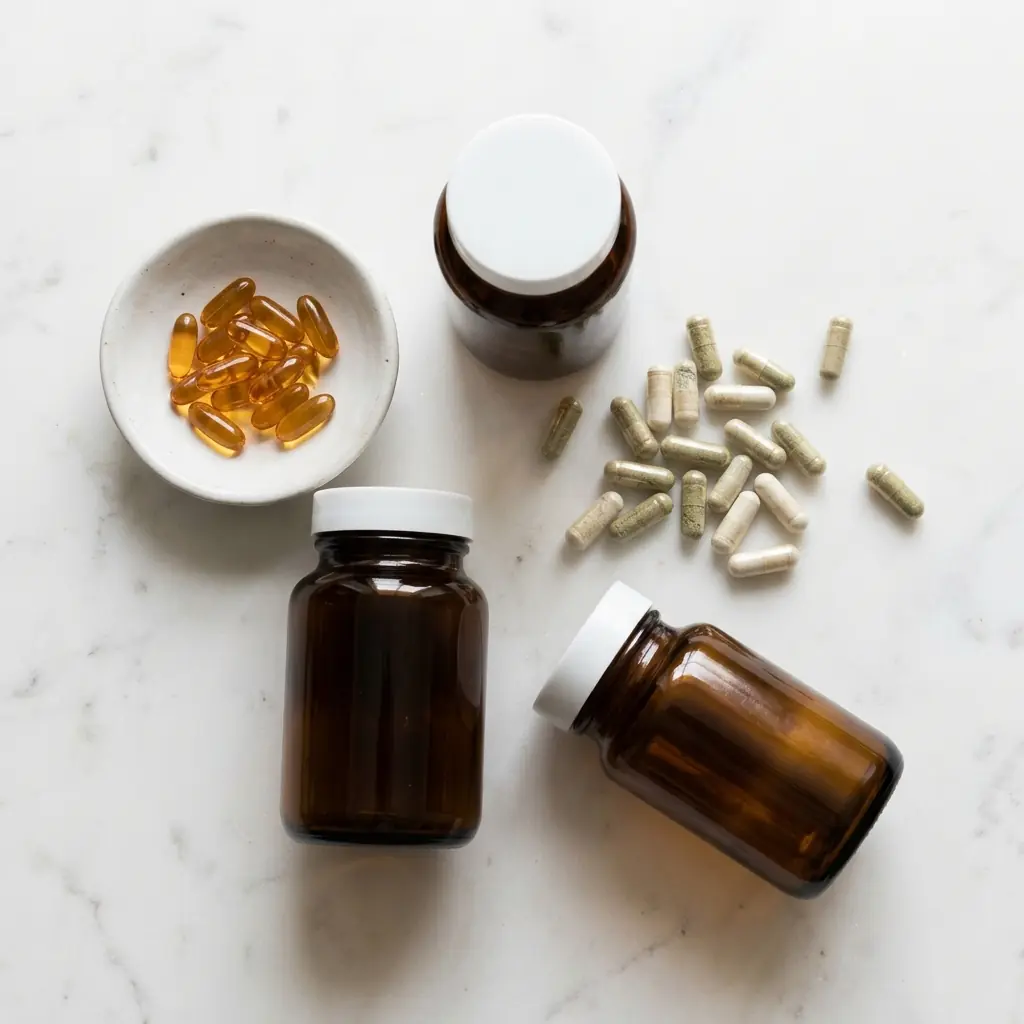
Calcium and vitamin D earn the only Grade A in this guide because decades of RCTs confirm they slow bone loss during the menopause transition. Magnesium supports both bone and sleep quality, earning a Grade B. As estrogen declines, bone resorption accelerates. The AACE estimates average losses of 1-2% per year during the 3-5 years before and after the final menstrual period, with some women losing 3-5% annually (Source: AACE/ACE Postmenopausal Osteoporosis Guidelines, 2020).
The RDA for calcium in women 51 and older is 1,200 mg/day from food and supplements combined (Source: NIH Office of Dietary Supplements, 2024). Calcium carbonate is the cheapest form but requires stomach acid for absorption, so take it with meals. Calcium citrate absorbs without food and is a better choice if you take a proton pump inhibitor. Watch the upper limit: 2,000 mg/day total. The Women’s Health Initiative found a 17% increase in kidney stones with 1,000 mg supplemental calcium (Source: NIH ODS Calcium Fact Sheet, 2024).
For vitamin D3, the RDA is 600 IU (15 mcg) for ages 51-70 and 800 IU for 71+ (Source: NIH ODS Vitamin D Fact Sheet, 2024). Many practitioners recommend 1,000-2,000 IU, which the NIH considers safe and well below the 4,000 IU upper limit. Get a 25(OH)D blood test before supplementing beyond the RDA.
The glycinate form of magnesium is better tolerated than oxide or citrate at bedtime. A 2025 RCT of 155 adults found magnesium bisglycinate (250 mg/day) improved insomnia severity scores versus placebo over four weeks, though the effect size was small (Source: Schuster et al., Nature and Science of Sleep, 2025). The supplement upper limit is 350 mg/day from non-food sources (Source: NIH ODS, 2024).
For calcium + D3, Nature Made Calcium 600 mg with Vitamin D3 is USP Verified and widely available.
For magnesium bisglycinate, Momentous Magnesium Bisglycinate is NSF Certified for Sport and provides 200 mg per two-capsule serving (Source: Momentous, 2026; NSF Certified for Sport registry).
Hot Flashes and Night Sweats: What the Trials Show
Black cohosh and soy isoflavones have the most trial data for vasomotor symptoms, but the evidence is mixed for both. Honest Grade B for soy, Grade C for black cohosh. Neither comes close to the efficacy of hormone therapy or prescription options. If hot flashes disrupt your daily life, this section gives you the evidence floor, not the ceiling.
Soy isoflavones earn Grade B. A 2012 meta-analysis pooling 13 RCTs (1,196 women) found soy isoflavone supplements reduced hot flash frequency by about 20.6% versus placebo (Source: Taku et al., Menopause, 2012). A 2016 JAMA review estimated roughly one fewer hot flash per day on average (Source: Franco et al., JAMA, 2016). The effect takes weeks to build. Supplements with higher genistein content (above 18.8 mg) performed better. Dose: 40-80 mg/day in aglycone equivalents.
Black cohosh earns Grade C. The most recent Cochrane systematic review (16 RCTs, 2,027 women) concluded there is “insufficient evidence to support the use of black cohosh for menopausal symptoms” (Source: Leach & Moore, Cochrane Database, 2012). That review is now 14 years old, and some newer individual trials show modest benefit, but the overall picture remains murky. Dose if trying: 40-80 mg standardized extract daily, the usual recommended range (Source: NCCIH Workshop on the Safety of Black Cohosh).
On safety: the NIH ODS documents at least 83 case reports of liver damage associated with black cohosh, though no causal link has been established (Source: NIH ODS Black Cohosh Fact Sheet, 2024). Adulteration with Asian Actaea species may explain some reports. The EU and Australia require liver warnings on product labels. Stop use and see your doctor if you develop fatigue, nausea, dark urine, or jaundice.
No USP/NSF-verified soy isoflavone product could be confirmed at publication. Search soy isoflavones on Amazon and look for a USP or ConsumerLab seal on the label. For black cohosh, Remifemin is the most-studied formulation, but no current third-party verification could be confirmed. Search black cohosh Remifemin on Amazon and check for certification marks. For non-supplement approaches to hot flashes, see natural menopause treatments.
Sleep and Mood Support
Magnesium glycinate is the strongest option here (Grade B for sleep), with ashwagandha (Grade B-C for stress and cortisol) and omega-3s (Grade B for mood) filling different roles. Sleep and mood problems during perimenopause overlap heavily, so many women stack two or three of these.
Magnesium for sleep was covered in the bone section above. The 2025 bisglycinate RCT showed modest improvements in insomnia scores. It works best in women with low dietary magnesium intake, and about 48% of Americans consume less than the Estimated Average Requirement (Source: NIH ODS Magnesium Fact Sheet, 2024). Take 200-400 mg in the evening.
Ashwagandha targets stress and cortisol (Grade B-C). A 2024 peer-reviewed meta-analysis of 9 RCTs (558 adults) found it significantly reduced perceived stress scores and serum cortisol levels versus placebo (Source: Arumugam et al., Explore, 2024). A 2025 conference abstract reviewing 15 RCTs (873 adults) further supported the anxiety benefit (Source: Bachour et al., BJPsych Open, 2025), consistent with the 2024 findings. Caveats: most trials were small, short-term (8-12 weeks), conducted in India, and often industry-funded. None specifically enrolled perimenopausal women. The KSM-66 extract (600 mg/day) is the most-studied form.
The NIH notes rare but documented cases of liver injury with ashwagandha, and the ODS fact sheet limits its safety endorsement to about 3 months of use (Source: NIH ODS Ashwagandha Fact Sheet, 2024). If you have liver disease, skip it.
Omega-3s support mood (Grade B). A meta-analysis of 26 RCTs found EPA-dominant omega-3 formulas significantly reduced depressive symptoms (SMD = -0.28, P = 0.004) (Source: Liao et al., Translational Psychiatry, 2019). Formulas with EPA making up 60% or more of the total omega-3 content were the most effective. Dose: 1,000-2,000 mg combined EPA + DHA daily.
For omega-3s, Momentous Omega-3 is NSF Certified for Sport with 800 mg EPA and 800 mg DHA per two-softgel serving (Source: Momentous, 2026; NSF Certified for Sport registry). Nordic Naturals Ultimate Omega-D3 Sport is another NSF Certified for Sport option with 1,480 mg total omega-3 (850 mg EPA, 425 mg DHA) plus 1,000 IU vitamin D3 per serving (Source: Nordic Naturals, 2026; NSF listing ID 1400694).
No USP/NSF-verified ashwagandha could be confirmed at publication. Search KSM-66 ashwagandha on Amazon and check for a third-party testing seal.
The Perimenopause Training Stack: Creatine, Protein, and Resistance Training
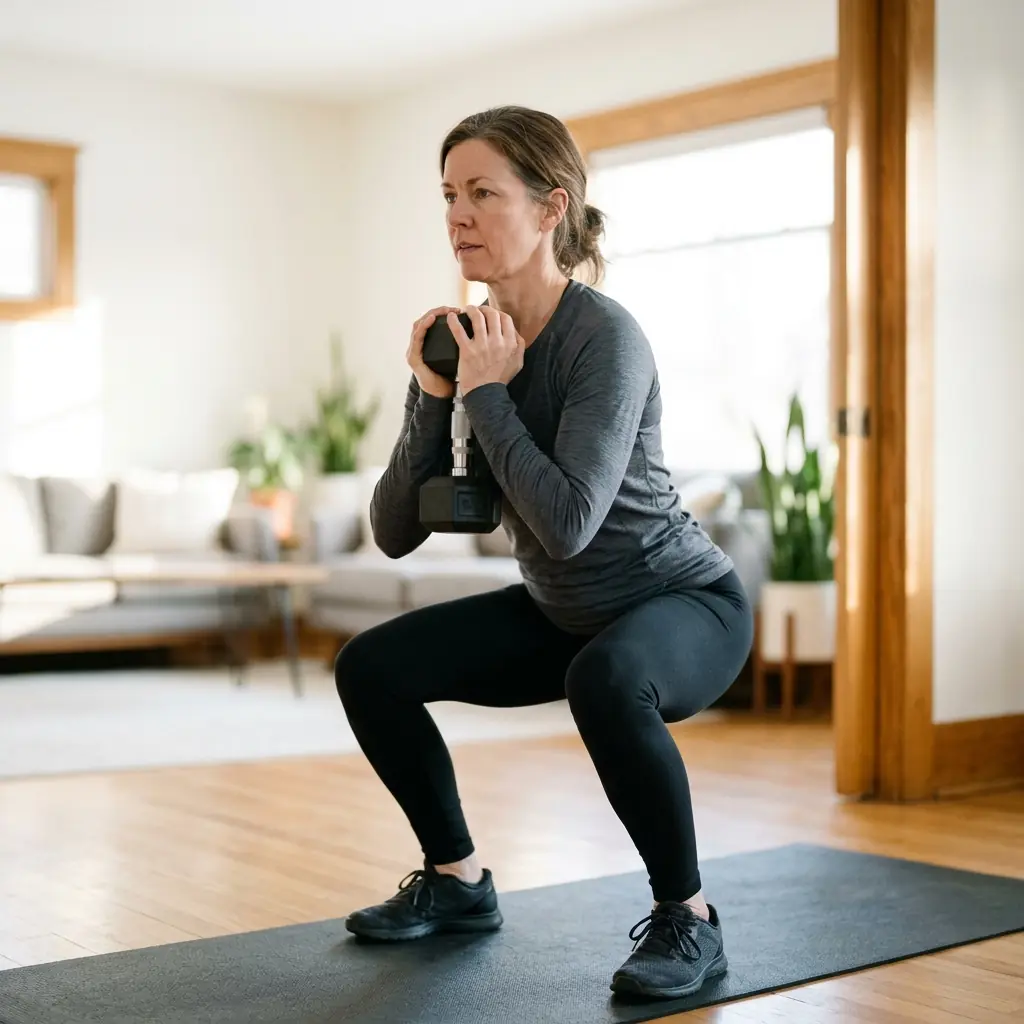
Creatine monohydrate plus adequate protein plus resistance training is the evidence-backed combination for preserving muscle and bone during perimenopause. A 2026 meta-analysis of 7 RCTs in 608 postmenopausal women (mean age 62) found creatine added 0.37 kg of lean mass and 7.5 kg to leg press strength compared to placebo (Source: Naddafha et al., JISSN, 2026). The data comes from postmenopausal populations (mean age 62), not perimenopausal women directly. Data on perimenopausal women specifically remains limited (Source: Smith-Ryan et al., JISSN, 2025). The physiological overlap makes the findings plausible but not proven for women still in perimenopause.
Take 3-5 g of creatine monohydrate daily. Timing does not matter. The Naddafha meta-analysis found the benefit was strongest at doses of 5 g/day or higher combined with resistance training. Trials ran 12 to 104 weeks (Source: Naddafha et al., JISSN, 2026).
Does creatine help bones? Not clearly. A 2-year RCT of 237 postmenopausal women doing resistance training found creatine had no effect on bone mineral density at the femoral neck, though it improved some bone geometric properties (Source: Chilibeck et al., Med Sci Sports Exerc, 2023). A separate 2-year trial of 200 postmenopausal women with osteopenia (no exercise component) also found no bone density benefit (Source: Sales et al., J Gerontol A, 2020). Take creatine for muscle and strength, not bone protection.
The baseline protein recommendation for older adults is 1.0-1.2 g/kg/day per the PROT-AGE expert group (Source: Black & Matkin-Hussey, Physiologia, 2024). Active women who resistance train should aim for at least 1.2 g/kg/day (Source: Black & Matkin-Hussey, Physiologia, 2024). For a 150 lb (68 kg) woman, the baseline range works out to 68-82 g daily; active women should target 82 g or more. Food first. Use a protein powder to fill the gap if you consistently fall 20-30 g short.
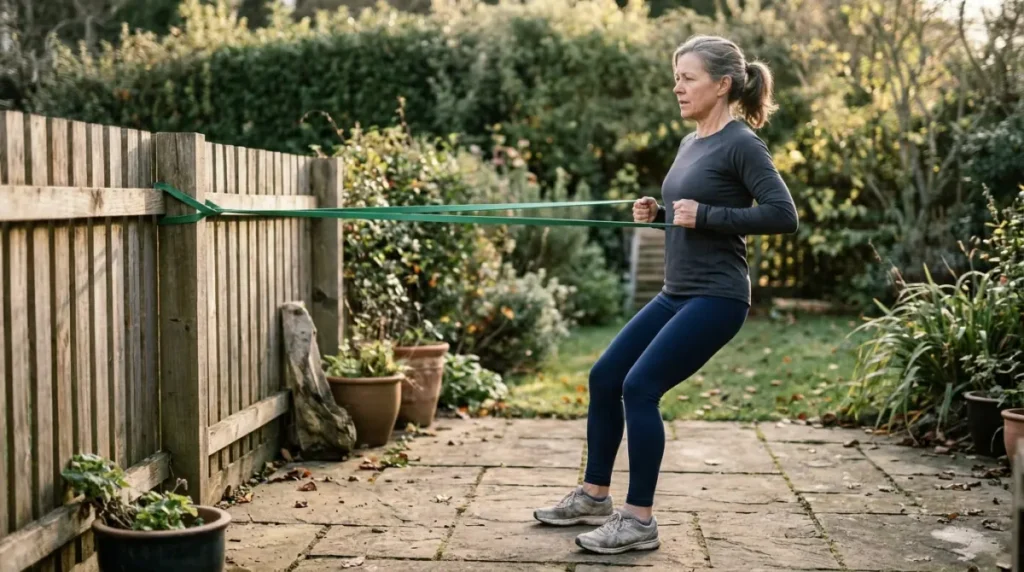
Resistance training is the multiplier. Creatine and protein do not build muscle sitting on a shelf. Both work through training, not instead of it. Two to three sessions per week of compound movements (squats, rows, presses, hinges) is the minimum effective dose. Gymstips has a full progressive overload guide and a post on creatine for training that covers dosing and timing in detail.
For creatine, Thorne Creatine Monohydrate is NSF Certified for Sport and unflavored (Source: NSF Certified for Sport registry, listing ID 1204244).
For whey protein, Momentous Essential Grass-Fed Whey Protein is NSF Certified for Sport (Source: NSF Certified for Sport registry). For plant-based, Momentous Plant Protein also carries NSF Certified for Sport certification (Source: NSF Certified for Sport registry).
Do Perimenopause Supplements Actually Work?
Some do. Some are overhyped. Calcium and vitamin D have decades of solid bone-density data in menopausal women. Magnesium, creatine, and omega-3s have good (not bulletproof) evidence for their specific targets. Black cohosh and soy isoflavones sit in a gray zone. Berberine for weight loss failed its biggest trial. No supplement replaces hormone replacement therapy for severe vasomotor symptoms.
The evidence is a spectrum, not a yes-or-no answer. The grading table above exists for exactly this reason: so you can match the evidence strength to your specific symptom instead of buying a 12-bottle stack based on Instagram claims.
A practical hierarchy:
- Start with the A and B grades: calcium + D, magnesium, protein, creatine (if you train), omega-3s. These have real RCT data in relevant populations.
- Consider the B-C grades with realistic expectations. Soy isoflavones may shave one hot flash per day. Ashwagandha may lower cortisol modestly.
- Skip berberine for perimenopause weight loss. The evidence says no. See the section below.
Berberine for Perimenopause: The Evidence Gap
Berberine earns a Grade C for perimenopause because its metabolic benefits show up primarily in people who already have diabetes or metabolic syndrome, not the general perimenopause population. An umbrella meta-analysis of RCTs found berberine reduced HOMA-IR by 1.04 points in adults with metabolic disorders (Source: Nazari et al., Clinical Therapeutics, 2024). That is a meaningful improvement in insulin sensitivity, if you have insulin resistance.
Here is the problem. A 2026 double-blind RCT published in JAMA Network Open randomized 337 diabetes-free adults with obesity and metabolic-associated steatotic liver disease to berberine (500 mg twice daily) or placebo for six months. Berberine did not reduce visceral fat, liver fat, or body weight compared to placebo (Source: Lei et al., JAMA Network Open, 2026). It did lower LDL cholesterol and apolipoprotein B modestly as secondary outcomes, though these were not adjusted for multiple comparisons. The viral claim that berberine is “nature’s Ozempic” fails its biggest controlled test.
If you have diagnosed insulin resistance or metabolic syndrome, berberine at 500 mg twice daily might help alongside medical treatment. If you are a healthy-weight perimenopausal woman hoping berberine will prevent weight gain, the data says save your money.
Given the weak evidence for perimenopause use, we do not recommend a specific berberine product. If your doctor suggests trying it, search berberine 500mg on Amazon and choose one with USP or ConsumerLab verification.
Supplements for Perimenopause Weight Gain and Belly Fat
No supplement reliably causes weight loss during perimenopause. That is the honest answer. The primary levers are resistance training and adequate protein intake to preserve lean mass, which keeps resting metabolic rate from dropping as estrogen declines. Creatine supports those training adaptations (see the training stack section above). Berberine failed its weight-loss trial in non-diabetic adults. Thermogenic “menopause weight loss” supplements sold on Amazon have zero quality RCTs behind them.
What actually moves the needle: strength train 2-3 times per week, hit your protein target (1.0-1.2 g/kg/day, at least 1.2 if you train), manage sleep (magnesium may help), and talk to your doctor about metabolic screening if weight gain is sudden and unexplained.
Safety, Drug Interactions, and When to Talk to Your Doctor
Most perimenopause supplements are safe at standard doses, but three interactions deserve specific attention: omega-3s with blood thinners, calcium with thyroid medication, and St. John’s wort with SSRIs. If you take prescription medications, run your supplement list past your prescriber before starting.
Fish oil at doses of 2 g/day or higher (EPA and/or DHA) may prolong bleeding time by reducing platelet aggregation (Source: NIH ODS Omega-3 Fact Sheet, 2024). Most research at standard supplement doses shows no clinically significant bleeding increase, but the prescription omega-3 label (Lovaza) still recommends periodic monitoring for patients on warfarin or similar drugs.
Calcium carbonate interferes with levothyroxine absorption. Separate them by at least 4 hours. The same applies to iron supplements.
St. John’s wort and SSRIs should never be combined. The interaction can cause serotonin syndrome, a potentially dangerous condition. This matters because SSRIs (like paroxetine) are sometimes prescribed for hot flashes.
Both black cohosh and ashwagandha have documented (though rare) liver injury reports. The NIH ODS notes at least 83 black cohosh-associated liver damage cases globally (Source: NIH ODS, 2024). For ashwagandha, the ODS limits its safety endorsement to approximately 3 months (Source: NIH ODS, 2024). If you take either, watch for fatigue, dark urine, nausea, or yellowing skin, and stop immediately if they appear.
Several supplements in this guide (black cohosh, ashwagandha, berberine, high-dose vitamin A) are not established as safe during pregnancy. Perimenopause does not mean you cannot become pregnant. If there is any chance you are pregnant, consult your OB-GYN before supplementing.
Most supplements here can be taken alongside hormone replacement therapy. Calcium, vitamin D, magnesium, omega-3s, and protein have no known HRT conflicts. Phytoestrogens (soy isoflavones, black cohosh) theoretically overlap with exogenous estrogen. Discuss with your prescriber if you are on combined HRT.
When symptoms are mild, targeted supplements plus lifestyle changes are a reasonable starting point. When hot flashes wake you nightly, mood changes strain relationships, or a DEXA scan shows rapid bone loss, the conversation shifts to HRT or non-hormonal prescriptions like fezolinetant (Veozah) or low-dose paroxetine (Brisdelle). Veozah was FDA-approved in May 2023 and received a boxed warning for liver injury in December 2024 (Source: FDA, 2024). Brisdelle was FDA-approved in June 2013 (Source: Noven/FDA, 2013). For a full breakdown of treatment options, see how long does menopause last.
FAQ
What are the best supplements to take for perimenopause?
The best evidence-backed options are calcium + vitamin D3 for bone health (Grade A), magnesium glycinate for sleep and mood (Grade B), omega-3s for inflammation (Grade B), and creatine monohydrate for preserving lean mass alongside resistance training (Grade B). Start with your primary symptom and match it to the evidence table above.
What vitamins should I take as a premenopausal woman?
Prioritize vitamin D3 (600-2,000 IU/day), calcium if your dietary intake falls below 1,200 mg, and magnesium glycinate (200-400 mg). A blood test for 25(OH)D and a DEXA scan give you a baseline. Add omega-3s if your fish intake is low. Skip megadose multivitamins. They rarely address the specific deficits that matter during perimenopause.
Can you take perimenopause supplements with HRT?
Yes, for most of them. Calcium, vitamin D, magnesium, omega-3s, creatine, and protein are all compatible with HRT. The exception is phytoestrogens like soy isoflavones and black cohosh, which have overlapping estrogenic mechanisms. If you are on combined estrogen-progestin therapy, ask your prescriber whether adding plant estrogens makes sense for your protocol.
What is the best supplement for perimenopause weight gain?
No single supplement reliably prevents or reverses perimenopause weight gain. The closest evidence-backed strategy is creatine (3-5 g/day) plus protein (at least 1.2 g/kg/day if you train) combined with resistance training 2-3 times per week, which preserves lean mass and metabolic rate. Berberine does not work for weight loss in non-diabetic adults, according to a 2026 JAMA Network Open trial.
How do you balance hormones during perimenopause?
Supplements do not “balance hormones” in a meaningful clinical sense. Estrogen and progesterone fluctuate unpredictably during perimenopause, and no over-the-counter supplement controls that trajectory. What supplements can do: support symptoms caused by those fluctuations (magnesium for sleep, omega-3s for mood, calcium + D for bones). For actual hormone management, talk to your doctor about HRT.
Are perimenopause gummies as effective as capsules?
Gummies deliver the same active ingredients but usually in lower doses. You may need 2-4 gummies to match one capsule. They also contain added sugars and may degrade faster. For calcium, magnesium, or omega-3s, capsules or tablets typically offer better value and more precise dosing. If swallowing pills is the barrier, gummies are better than nothing.
Sources
- NIH Office of Dietary Supplements, Calcium Fact Sheet — ods.od.nih.gov
- NIH Office of Dietary Supplements, Vitamin D Fact Sheet — ods.od.nih.gov
- Chilibeck et al. (2023), “A 2-Year RCT on Creatine Supplementation during Exercise for Postmenopausal Bone Health,” Med Sci Sports Exerc — clinicaltrials.gov
- FDA Safety Communication, Veozah (fezolinetant) boxed warning — fda.gov
- NCCIH, Workshop on the Safety of Black Cohosh in Clinical Studies — files.nccih.nih.gov
Key sources shown. Every other study is named inline where it is cited.

Pingback: 7 Natural Menopause Treatments That Really Work