

Gymnase Tips is reader-supported. When you buy through links on our site, we may earn an affiliate commission at no extra cost to you.
TL;DR — Can You Still Lose Weight After Menopause?
Yes, weight loss after menopause is possible. Use a moderate deficit (500–750 kcal daily per US obesity guidelines, or a smaller one if it drops you below resting needs), 1.0–1.2 g of protein per kg of body weight (1.2 g or more if you train), and strength training two to three times per week. Aim for 0.5–1 pound lost per week.
Table of contents
Why Losing Weight Gets Harder After Menopause
Weight loss after menopause gets harder because falling estrogen drives three changes that stack against you: your body shifts fat storage toward the abdomen, you lose muscle faster, and your resting metabolic rate drops as a result (Source: Kapoor et al., Mayo Clinic Proceedings, 2017). The average weight gain through the 50s runs about 1.5 pounds per year, and most of it lands around the midsection (Source: Mayo Clinic, 2017).
None of that makes weight loss impossible. It does mean the approach that worked at 35 probably will not work the same way at 55.
How Many Calories for Weight Loss After Menopause?
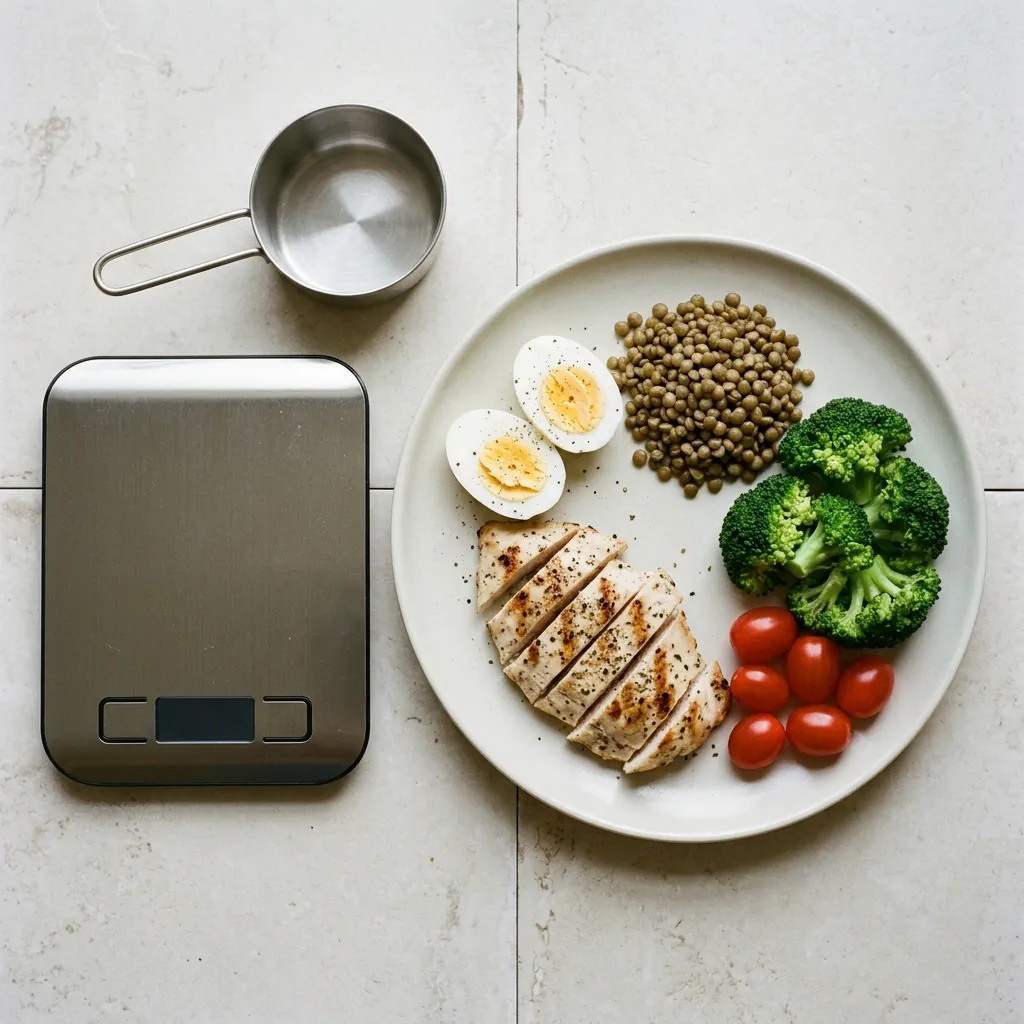
Use the Mifflin-St Jeor equation to estimate your resting metabolic rate, then apply an activity multiplier and subtract a moderate deficit. The 2013 AHA/ACC/TOS obesity guidelines recommend a deficit of 500–750 kcal per day for clinically meaningful weight loss (Source: Jensen et al., Obesity, 2014).
This equation, published in the American Journal of Clinical Nutrition in 1990, is the method the Academy of Nutrition and Dietetics recommends for estimating calorie needs when indirect calorimetry is unavailable (Source: AND Evidence Analysis Library, Adult Weight Management Guideline, 2014). No crash diet. No invented “menopause adjustment factor.” Just arithmetic and a sensible deficit.
Worked Example — Estimating Your Calorie Target
Take a 55-year-old woman who weighs 70 kg (154 lb) and stands 165 cm (5 ft 5 in) tall, with a lightly active lifestyle.
Step 1: Calculate BMR
The Mifflin-St Jeor formula for women:
BMR = (10 x weight in kg) + (6.25 x height in cm) – (5 x age) – 161
Plugging in the numbers:
- 10 x 70 = 700
- 6.25 x 165 = 1,031
- 5 x 55 = 275
BMR = 700 + 1,031 – 275 – 161 = 1,295 kcal/day
Step 2: Estimate TDEE
Multiply BMR by an activity factor. Lightly active (light exercise 1–3 days per week) uses 1.375.
TDEE = 1,295 x 1.375 = 1,781 kcal/day
Step 3: Apply the deficit
| Step | Value |
|---|---|
| BMR | 1,295 kcal/day |
| Activity factor (lightly active) | x 1.375 |
| TDEE | 1,781 kcal/day |
| Deficit applied (500 kcal) | -500 |
| Daily calorie target | ~1,280 kcal/day |
That target sits just below her BMR. Do not eat below your BMR for extended periods — that is where muscle loss accelerates and adherence collapses. For this woman, a deficit closer to 500 kcal (roughly 1,280–1,300 kcal per day) is workable but tight. Starting with a smaller deficit of 300–400 kcal (about 1,380–1,480 kcal per day) and adjusting after a few weeks is a reasonable alternative, especially if she is new to tracking.
You can also use the NIH Body Weight Planner for a more personalized projection that accounts for metabolic adaptation over time.
Protein and Fiber Targets for Menopause Weight Loss
Protein is the most protective nutrient for weight loss after menopause during a calorie deficit. Aim for 1.0–1.2 g per kilogram of body weight daily at baseline, and at least 1.2 g/kg if you strength train or do regular exercise (Source: Bauer et al., PROT-AGE, JAMDA, 2013; Erdelyi et al., Nutrients, 2024).
Split that across three to four meals, hitting 25–30 g per meal — the threshold that research links to better muscle protein synthesis in older adults (Source: Bauer et al., PROT-AGE, 2013). Fiber matters too: 25 g per day for women aged 31–50, dropping to 22 g per day at 51 and older (Source: Dietary Guidelines for Americans, 2020–2025).
A Mediterranean-style eating pattern — rich in vegetables, legumes, olive oil, fish, and whole grains — may improve cardiometabolic markers in menopausal women, though evidence remains limited and its effect on total body weight depends on maintaining a calorie deficit alongside it (Source: Goncalves et al., AIMS Public Health, 2024).
Quick Protein Reference Table
| Body weight | Daily protein (baseline, 1.0–1.2 g/kg) | Daily protein (active, 1.2+ g/kg) | Per-meal target (3–4 meals) |
|---|---|---|---|
| 55 kg (121 lb) | 55–66 g | 66+ g | 17–22 g |
| 70 kg (154 lb) | 70–84 g | 84+ g | 21–28 g |
| 85 kg (187 lb) | 85–102 g | 102+ g | 26–34 g |
If hitting those numbers feels difficult, a whey or plant-based protein powder blended into a smoothie or stirred into oatmeal closes the gap without adding a full meal.
Strength Training for Weight Loss After Menopause
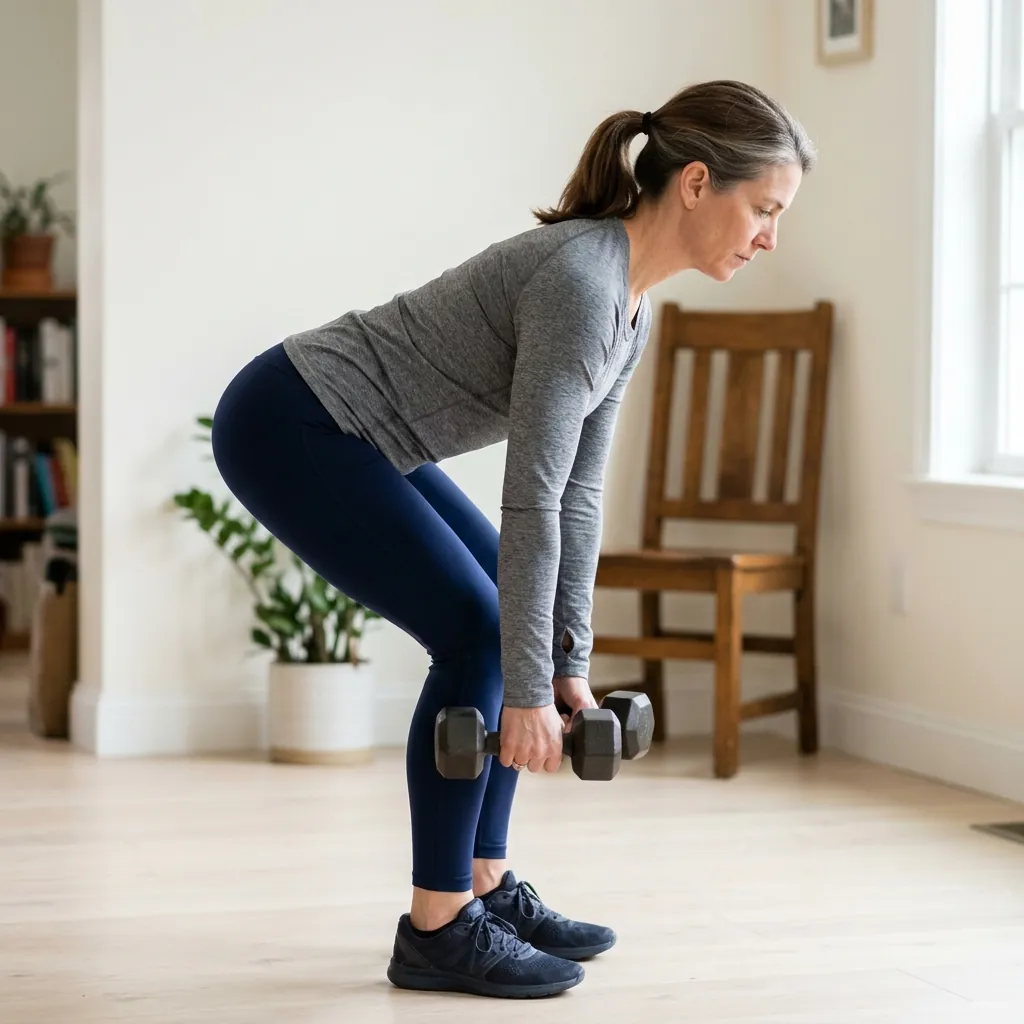
Strength training two to three times per week is the most effective tool for weight loss after menopause: it preserves muscle mass, supports metabolic rate, and protects bone density. Without it, a calorie deficit will cost you muscle — and postmenopausal women are already losing muscle faster than they were a decade earlier.
The U.S. Physical Activity Guidelines recommend muscle-strengthening activities on at least two days per week, hitting all major muscle groups (Source: HHS Physical Activity Guidelines, 2nd edition, 2018).
Focus on compound movements: squats, hinges (deadlift variations), presses, and rows. These hit the most muscle in the least time. If you are starting from zero or coming back after years off, bodyweight exercises or resistance bands are a legitimate entry point.
For home-based options, see fat loss exercises at home.
Cardio, Steps, and Daily Movement
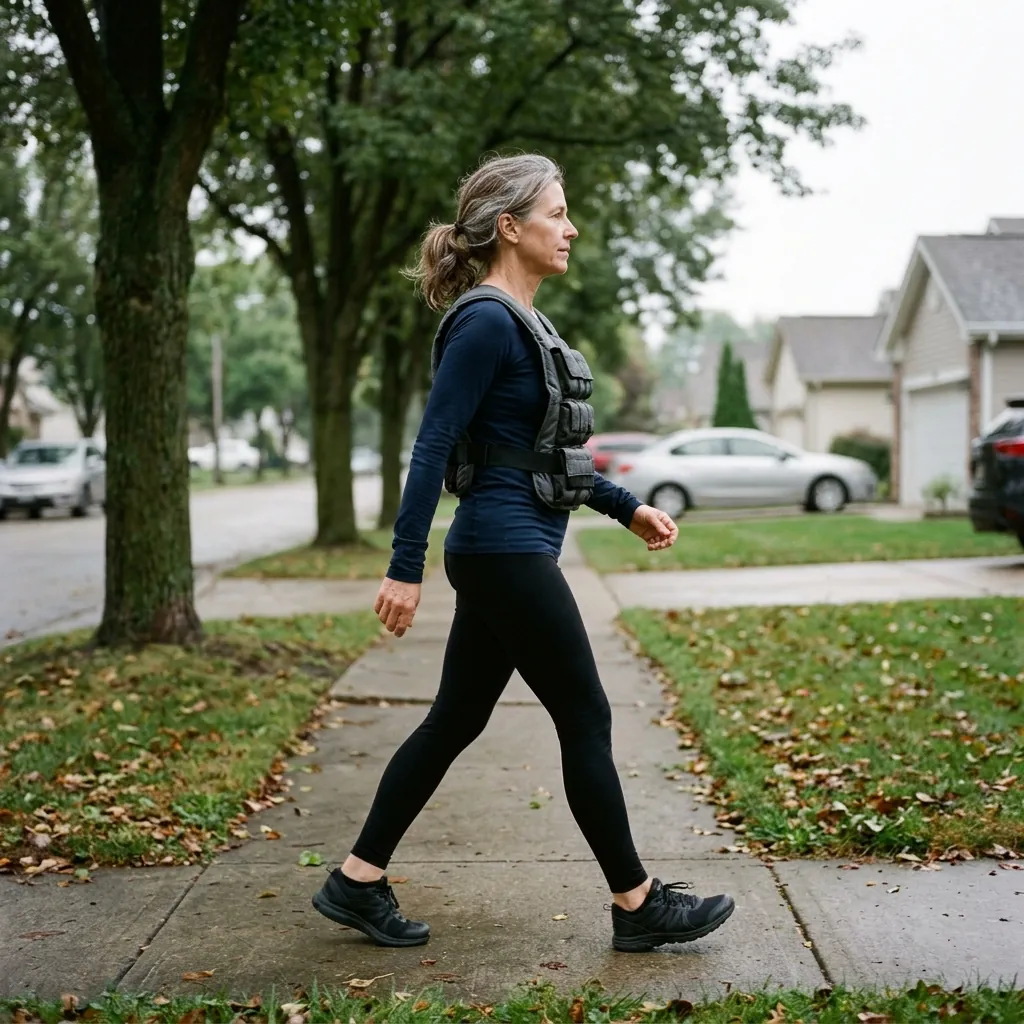
Aim for at least 150 minutes of moderate-intensity aerobic activity per week — a brisk walk, cycling, swimming, or anything that raises your heart rate without leaving you gasping. That target comes directly from the WHO’s 2020 physical activity guidelines and aligns with the HHS recommendations (Source: Bull et al., Br J Sports Med, 2020).
But structured cardio is only part of the picture. NEAT — non-exercise activity thermogenesis, which covers everything from walking to the store to fidgeting — often accounts for more daily calorie burn than a 30-minute gym session. Increasing your step count is one of the simplest ways to raise NEAT.
Two approaches that pair well with menopause weight loss:
- The Japanese walking method alternates pace intervals, which bumps calorie burn without high impact.
- A weighted vest for walking adds resistance to every step. Start light and build gradually; our weighted vest sizing chart shows how to pick a starting weight. Browse weighted vests on Amazon.
For readers interested in training by heart rate, our fat burning heart rate guide explains zone 2 and when it actually matters.
Sleep and Stress During Menopause
Poor sleep sabotages weight loss at any age, but menopause adds its own layer: hot flashes and night sweats can fragment sleep for years. Aim for 7 or more hours per night — the threshold the American Academy of Sleep Medicine identifies as necessary for optimal adult health (Source: Watson et al., JCSM, 2015).
Keep the bedroom between 60 and 67 degrees Fahrenheit (Source: Cleveland Clinic, 2026).
The calorie cost of lost sleep is measurable. A randomized crossover trial at Mayo Clinic found that healthy adults restricted to four hours of sleep ate an extra 308 calories per day compared to those sleeping nine hours (Source: Covassin et al., J Am Coll Cardiol, 2022). Over a week, that adds roughly 2,150 calories, enough to cancel a 300-calorie daily deficit.
Chronic stress compounds the problem. Elevated cortisol promotes visceral fat storage — the exact fat pattern menopause already encourages. You do not need a meditation retreat. Consistent sleep, daily movement, and a realistic pace of loss are the practical levers.
Weight Loss After Menopause: Does It Get Easier?
Not exactly. Once the menopause transition ends, estradiol levels drop to a low, stable baseline — a pattern confirmed by longitudinal hormone assays showing a further decrease from the final menstrual period to a nadir roughly two years later, after which levels remain low and stable (Source: Hall, Endocrinology and Metabolism Clinics of North America, 2015).
That stability replaces the unpredictable swings of perimenopause, which can make adherence to a plan more consistent. But the metabolic changes — lower muscle mass, reduced resting metabolic rate, and shifted fat distribution — do not reverse on their own.
The honest answer: weight loss after menopause is not easier, but it can feel less chaotic than during perimenopause. The strategies stay the same either way. Deficit, protein, strength training, sleep.
What About a Realistic Rate of Weight Loss?
Aim for 0.5–1 pound per week. The CDC’s general guidance is 1–2 pounds per week for the broader population (Source: CDC, Losing Weight, 2024), but for postmenopausal women, the lower half of that range is the smarter target.
Here is why: aggressive deficits accelerate lean mass loss. In a 20-week calorie-restricted program, postmenopausal women aged 50–70 lost an average of 32% of their total weight loss as lean mass, and within the study group higher protein intake correlated with less lean mass lost (Source: Bopp et al., J Am Diet Assoc, 2008).
Muscle is already under siege after menopause. A faster rate of loss makes that worse. Slower loss, combined with adequate protein and strength training, tilts the ratio toward fat loss and away from muscle loss.
This is where the post takes a clear position: faster is not better after menopause. Protect your muscle. The scale will follow.
Medical Options: HRT and Weight-Loss Medications
Neither hormone replacement therapy nor GLP-1 medications are standalone weight-loss solutions, and both require a doctor’s oversight. They can be part of the picture, but diet, exercise, and sleep remain the foundation.
Hormone replacement therapy (HRT) is prescribed to manage menopausal symptoms — hot flashes, sleep disruption, bone density loss — not to drive weight loss. A Cochrane review of 28 randomized trials (28,559 women) found no evidence that unopposed estrogen or combined estrogen-progestogen therapy affects body weight (Source: Kongnyuy et al., Cochrane Database Syst Rev, 2000). A more recent narrative review reached the same conclusion, noting that HRT’s effects on total body weight are “minimal and clinically insignificant,” though it may reduce visceral fat accumulation (Source: Younglove, Obesity Pillars, 2026). If symptom relief improves your sleep and energy enough to stay consistent with training and nutrition, that indirect benefit matters.
GLP-1 receptor agonists — semaglutide (Wegovy) and tirzepatide (Zepbound) — are FDA-approved for chronic weight management in adults with obesity or overweight plus a weight-related condition (Source: FDA, Wegovy approval 2021; Zepbound approval 2023). In the first head-to-head trial (SURMOUNT-5), tirzepatide produced 20.2% average body-weight loss over 72 weeks versus 13.7% with semaglutide (Source: Aronne et al., NEJM, 2025). These are real results, but they come with a muscle-loss concern, require ongoing use, and out-of-pocket costs remain high. These medications are not supplements you order online — they are prescription drugs that belong in a conversation with your doctor.
When to see a doctor: unintentional weight loss exceeding 5% of your body weight within 6 to 12 months warrants a medical evaluation (Source: Mayo Clinic, Unexplained Weight Loss). Also see your doctor for new or worsening symptoms (fatigue, hair loss, persistent cold intolerance — possible thyroid involvement), or difficulty losing weight despite consistent effort with the strategies above.
Frequently Asked Questions
How do I lose menopause belly fat?
Spot reduction is not possible. Visceral belly fat responds to the same strategy as overall fat loss: a moderate calorie deficit, adequate protein, and strength training. As total body fat drops, abdominal fat goes with it.
Does menopause weight gain go away on its own?
No. The metabolic shifts behind menopause weight gain — reduced muscle mass, lower resting calorie burn, and hormonal changes favoring visceral fat storage — persist after the transition ends (Source: Kapoor et al., Mayo Clinic Proceedings, 2017). Without sustained changes to diet and exercise, that weight stays. The body does not spontaneously reverse what years of declining estrogen set in motion.
How much weight do women typically gain during menopause?
On average, about 1.5 pounds per year through the 50s, according to a review in Mayo Clinic Proceedings. That figure reflects midlife aging broadly, not menopause alone — lifestyle, genetics, and activity level all contribute (Source: Kapoor et al., Mayo Clinic Proceedings, 2017).
Are there specific recipes for menopause weight loss?
No single recipe causes weight loss. What works is a pattern: high-protein meals (25–30 g per serving), fiber-rich vegetables and legumes, and a Mediterranean-style approach emphasizing whole foods over processed ones.
This article is for informational purposes only and is not a substitute for medical advice. Consult your doctor before starting any weight-loss program, especially if you have existing health conditions or are considering medications.
Sources
- U.S. Department of Agriculture and U.S. Department of Health and Human Services. Dietary Guidelines for Americans, 2020-2025. 9th edition. DietaryGuidelines.gov
- U.S. Department of Health and Human Services. Physical Activity Guidelines for Americans, 2nd edition. 2018. health.gov
- Cleveland Clinic. “Best Bedroom Temperature for Sleep.” 2026. Cleveland Clinic
- Centers for Disease Control and Prevention. “Losing Weight.” 2024. CDC
- Kongnyuy EJ, Norman RJ, Flight IH, Rees MC. “Oestrogen and progestogen hormone replacement therapy for peri-menopausal and post-menopausal women: weight and body fat distribution.” Cochrane Database Syst Rev. 2000. Cochrane
Key sources shown. Every other study is named inline where it is cited.