

TL;DR — What Causes Menopause Bloating and How Do You Stop It?
Menopause bloating is caused by estrogen and progesterone decline, which slows gut motility, increases water retention, and alters your gut microbiome. Relief comes from low-FODMAP adjustments, magnesium (200–350 mg), targeted probiotics, and regular movement. See a doctor if bloating is persistent, painful, or paired with unexplained weight loss.
Table of contents
Gymstips is reader-supported. When you buy through links on our site, we may earn an affiliate commission at no extra cost to you.
What Causes Bloating During Menopause?
Falling estrogen slows the muscular contractions (peristalsis) that move food and gas through your digestive tract. It also increases water retention and shifts the balance of your gut bacteria. The result: trapped gas, fluid buildup, and a distended abdomen that can start during perimenopause and persist well into postmenopause.
Here is what is actually happening:
- Estrogen and progesterone decline. Estrogen receptors line the entire GI tract. As levels drop, smooth muscle contractions weaken and transit time increases. A 2026 review in Frontiers in Endocrinology confirmed that menopause-associated hormone decline exerts “complex, context-dependent modulatory effects on GI function” through receptors in the gut wall, central nervous system, and enteric neurons (Source: Frontiers in Endocrinology, 2026).
- Slowed gut motility. Slower peristalsis means food sits longer in the intestines, producing more gas through bacterial fermentation. Progesterone, which relaxes smooth muscle, fluctuates wildly during perimenopause before bottoming out. That adds another layer of disruption.
- Water and gas retention. Hormonal shifts cause your body to hold more fluid, particularly around the abdomen. This is distinct from fat gain — it is temporary and fluctuates with your cycle (or what remains of it).
- Gut microbiome changes. Baker et al. documented the estrogen-gut microbiome axis in a landmark 2017 review, showing that declining estrogen reduces microbial diversity and increases intestinal permeability — findings that the 2026 Frontiers review confirmed and expanded on (Source: Baker et al., Maturitas, 2017; Frontiers in Endocrinology, 2026).
- Increased gut permeability. As estrogen drops, the intestinal barrier weakens. Larger food molecules cross into tissue they should not reach, triggering immune responses and gas production. This explains why foods you tolerated for decades can suddenly cause problems.
Perimenopause typically begins in the mid-40s, with menopause itself averaging at age 51 (Source: ACOG). Bloating often peaks during the perimenopausal years when hormone fluctuations are most erratic. A study presented at The Menopause Society’s 2025 Annual Meeting found that 77% of nearly 600 perimenopausal and menopausal women reported bloating, making it the single most common digestive complaint (Source: The Menopause Society, 2025). For the stage-by-stage timeline, see our guide on how long menopause lasts.
Menopause Bloating vs. Weight Gain — How to Tell the Difference
Bloating is temporary abdominal distension from trapped gas or fluid. Weight gain is a persistent increase in body fat. The fastest way to tell them apart: bloating fluctuates within hours or days; weight gain stays.
| Bloating | Weight Gain | |
|---|---|---|
| What it feels like | Tightness, fullness, visible swelling | Gradual increase in body size, clothes fitting tighter over weeks |
| Timing | Comes and goes within hours or days | Persistent, does not fluctuate day to day |
| What helps | Low-FODMAP diet, probiotics, movement, digestive enzymes | Caloric deficit, strength training, body recomposition |
| When to worry | Daily for 2+ weeks, pain, blood in stool | Rapid unexplained gain (5+ lbs in a month), joint pain |
They can absolutely co-occur. Many women in their late 40s and 50s deal with both simultaneously, which makes it harder to identify what is driving the discomfort. If your belly is consistently larger regardless of time of day or what you ate, that points more toward fat accumulation. For strategies targeting the fat side, see our guide on how to get rid of menopause belly.
How to Stop Menopause Bloating
The most effective bloating relief combines dietary changes (low-FODMAP adjustments, smaller meals, reduced sodium), consistent movement (30 minutes of daily walking or yoga), stress management, and adequate hydration. Supplements help, but they work best layered on top of these basics.

Here is what to prioritize, in order:
- Eat smaller, more frequent meals. Large meals overwhelm a sluggish digestive system. Four to five smaller meals spread the digestive workload and reduce post-meal distension.
- Try low-FODMAP swaps. See the mini-guide below. This is the single most impactful dietary change for functional bloating, and menopause makes certain FODMAP triggers worse.
- Hit 2+ liters of water daily. Counterintuitive, but adequate hydration actually reduces water retention. Your body holds fluid when it senses scarcity.
- Move for 30 minutes a day. Walking, swimming, yoga. All stimulate peristalsis mechanically. A post-meal 10-minute walk alone can cut bloating episodes noticeably.
- Cut sodium and carbonated drinks. Sodium drives water retention. Carbonation introduces gas directly into the GI tract.
- Manage stress. Chronic stress slows digestion. Even 10 minutes of diaphragmatic breathing or a short meditation session can help.
Start with FODMAP elimination before spending money on supplements. Most women who do this see meaningful improvement within two to four weeks. For a broader look at evidence-based approaches, see our post on natural menopause treatments.
A Low-FODMAP Mini-Guide for Menopause Bloating
Low-FODMAP eating removes fermentable carbohydrates — the sugars and fibers that gut bacteria feast on, producing gas in the process. During menopause, this matters more because declining estrogen increases gut permeability, making FODMAP triggers hit harder than they did a decade ago.

According to Monash University, the research group that developed the FODMAP approach, 3 out of 4 people with IBS see symptom improvement on a low-FODMAP diet (Source: Monash University).
Five FODMAP triggers that tend to worsen during menopause:
- Dairy (lactose). Many women report new dairy sensitivity in perimenopause. Whether that stems from increased gut permeability, microbiome shifts, or both, the practical fix is the same: try lactose-free alternatives for two weeks and see if bloating drops.
- Wheat and rye (fructans). Increased gut permeability means fructans provoke stronger inflammatory responses.
- Onions and garlic (fructans). Among the highest-FODMAP foods. Even small amounts can trigger bloating when the intestinal barrier is compromised.
- Legumes (GOS). Beans, lentils, and chickpeas are high in galacto-oligosaccharides. If they suddenly cause problems when they did not before, increased intestinal permeability is a likely factor.
- Apples and pears (excess fructose). Fructose malabsorption worsens as intestinal enzyme activity declines.
The protocol: eliminate high-FODMAP foods for two to six weeks, then reintroduce one category at a time over three days each. Track symptoms. You are looking for which specific triggers your body now reacts to — not committing to permanent restriction.
This is not a full menopause diet plan. For that, watch for our upcoming menopause diet plan post.
Foods That Make Menopause Bloating Worse
The worst offenders are cruciferous vegetables in large portions, dairy (if you have developed new intolerance), high-sodium processed foods, carbonated drinks, sugar alcohols, and excess caffeine. Cutting these before eliminating everything else often resolves a significant portion of bloating episodes.
The specific foods to watch:
- Cruciferous vegetables (broccoli, cauliflower, Brussels sprouts). High in raffinose, a sugar humans lack the enzyme to fully digest. Smaller portions cooked well are usually tolerable; large raw servings are not.
- Dairy. Not just milk — yogurt, soft cheese, and ice cream. If dairy was fine in your 30s but causes problems now, estrogen-related gut permeability changes are a likely reason. Baker et al.’s review of the estrogen-gut microbiome axis supports this: reduced estrogen impairs the intestinal barrier, making food sensitivities more pronounced (Source: Baker et al., Maturitas, 2017).
- High-sodium processed foods. Canned soups, deli meats, frozen meals. Sodium causes water retention that compounds gas-related bloating.
- Carbonated drinks. Including sparkling water. The CO2 has to go somewhere.
- Sugar alcohols (sorbitol, xylitol, mannitol). Found in “sugar-free” products. Poorly absorbed, heavily fermented by gut bacteria.
- Excess caffeine. Stimulates stomach acid production and can irritate an already-sensitive gut lining. One to two cups of coffee is usually fine; four is asking for trouble.
- Alcohol. Disrupts gut microbiome balance and increases intestinal permeability — two things already compromised during menopause.
Worth emphasizing: if foods you have eaten for decades suddenly cause bloating, that is not random. Estrogen decline increases gut permeability, which means larger food molecules cross the intestinal barrier and trigger immune responses. This is why so many women in their late 40s develop apparent dairy, gluten, or fructose sensitivities.
Supplements That Help With Menopause Bloating
Four supplements have reasonable evidence for menopause-related bloating: magnesium, enteric-coated peppermint oil capsules, a multi-strain probiotic, and ginger extract. Digestive enzyme supplements may also help if enzyme production has dropped with age. None of these replace dietary changes — think of them as the second line of defense.
| Supplement | Recommended Dose | Form | Evidence Summary |
|---|---|---|---|
| Magnesium | 200–350 mg/day | Glycinate or citrate | Supports muscle relaxation in the GI tract. The NIH sets the supplemental upper limit at 350 mg/day. Glycinate is gentler on the stomach; citrate has a mild laxative effect that helps if constipation accompanies bloating (Source: NIH ODS). |
| Peppermint oil | 180–200 mg, 2–3x daily | Enteric-coated capsules | A 2022 meta-analysis of 10 RCTs found peppermint oil superior to placebo for global IBS symptoms, with an NNT of 4. Enteric coating prevents heartburn (Source: Ingrosso et al., Alimentary Pharmacology & Therapeutics, 2022). |
| Probiotic | Per product label | Multi-strain with L. acidophilus and B. lactis | Helps restore microbial diversity disrupted by estrogen decline. Look for products with at least 10 billion CFU. |
| Ginger extract | 250–500 mg, 2x daily | Standardized extract | Supports gastric motility and reduces gas. A trial in functional dyspepsia used 1,080 mg daily (540 mg twice) for 8 weeks with good tolerability (Source: PMC, 2025). |
| Digestive enzymes | Per product label | Broad-spectrum (lipase, protease, amylase) | Compensates for age-related decline in digestive enzyme output. Most useful if bloating worsens after fatty meals. |
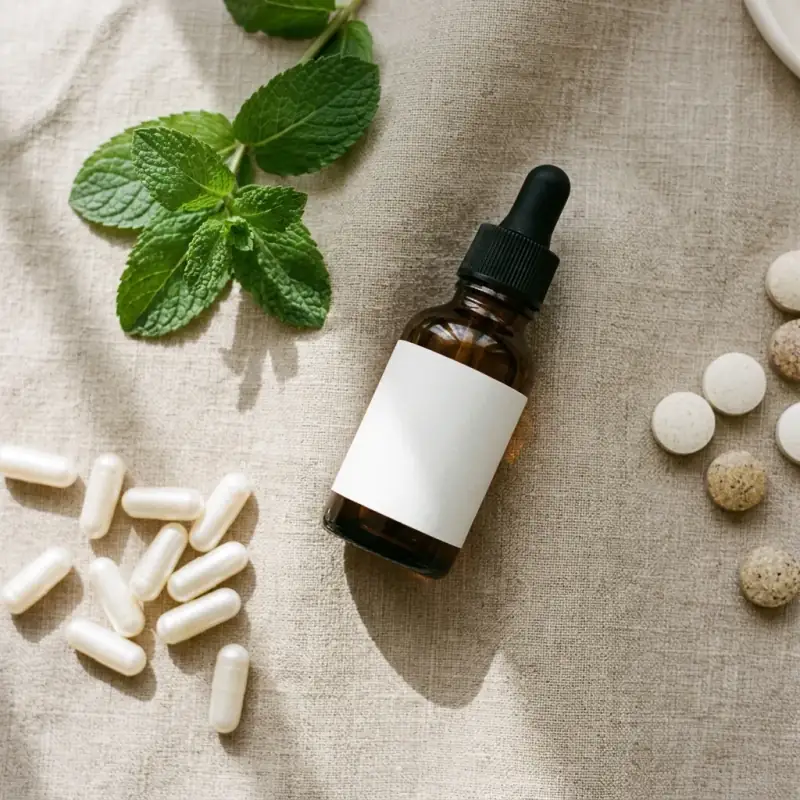
A magnesium glycinate supplement is a reasonable starting point — it addresses both the muscle-relaxation and constipation angles without the GI distress that cheaper magnesium oxide causes. For probiotic support, a multi-strain probiotic with L. acidophilus is a practical choice.
For a deeper look at supplements across all menopause symptoms, see our perimenopause supplements guide. Vitamin D, while not directly tied to bloating, supports overall gut health — more on that in our menopause vitamins post. And for a focused breakdown of probiotic strains and brands, our upcoming probiotics for menopause post will go deeper.
Does the Pelvic Floor Play a Role?
Yes. Weakened pelvic floor muscles during menopause can contribute to visible abdominal distension and the sensation of bloating, even when gas and fluid levels are normal.
Estrogen supports the connective tissue and muscle tone of the pelvic floor. As levels decline, these structures weaken, which can allow the lower abdomen to protrude forward. Pelvic floor muscles contain estrogen receptors, and postmenopausal women who use hormone therapy tend to have stronger pelvic floor muscles than those who do not (Source: UPMC, 2024). Targeted exercises like Kegels and diaphragmatic breathing can reduce both the visual distension and the bloating sensation. If pelvic floor dysfunction is severe, referral to a pelvic floor physiotherapist is worth discussing with your doctor.
When to See a Doctor About Menopause Bloating
See a doctor if bloating is persistent (daily for two or more weeks), accompanied by pelvic or abdominal pain, unexplained weight loss, blood in stool, or a change in bowel habits. These symptoms can signal ovarian cancer, IBS, or other conditions that mimic ordinary menopause bloating.
Red flags that warrant medical attention:
- Bloating that does not go away or happens most days for three weeks or more
- Pelvic or lower abdominal pain
- Feeling full quickly or loss of appetite
- Unexplained weight loss
- Blood in your stool or changes in bowel habits
- Needing to urinate more urgently or frequently
Persistent bloating is one of the main symptoms of ovarian cancer, according to the NHS (Source: NHS, 2024). That is not meant to alarm you — the vast majority of menopause bloating is benign. But these symptoms overlap significantly, and early detection matters. If bloating is new, persistent, and does not respond to dietary changes, ask your doctor about screening.
On HRT: hormone replacement therapy can reduce bloating by stabilizing estrogen, but it can also cause bloating as a side effect, particularly in the first three months. The progestogen component of HRT is most commonly responsible for this initial bloating, and symptoms generally settle within that window (Source: Leeds Teaching Hospitals NHS Trust). If HRT-related bloating persists past three months, discuss adjusting the formulation or delivery method with your doctor.
FAQ
How long does menopause bloating last?
Bloating typically peaks during perimenopause, when hormone fluctuations are most erratic, and eases one to two years after your final period as hormone levels stabilize. Duration varies considerably. Dietary and lifestyle changes can shorten the timeline.
Can HRT help with menopause bloating?
HRT can reduce bloating by stabilizing estrogen levels, but it can also cause bloating as a side effect — especially during the first three months. The progestogen component is usually responsible. Discuss timing and formulation with your doctor, since the delivery method (oral vs. transdermal) can affect GI side effects.
What does menopause bloating feel like?
Tightness and fullness in the abdomen, often with visible swelling that comes and goes throughout the day. It is different from the steady, gradual increase of weight gain. Many women describe it as looking “six months pregnant” by evening and relatively flat in the morning.
Does menopause bloating go away after menopause?
Usually, yes. Bloating improves significantly in postmenopause as hormones stabilize. Some women retain sensitivity to specific FODMAP triggers even after hormones level off, so the dietary adjustments in this guide may remain useful long-term.
How do you get rid of menopause belly bulge?
It depends on what is causing it. If the bulge fluctuates throughout the day, it is likely bloating — and the strategies in this post apply. If it is persistent and does not change with time of day or meals, it is more likely belly fat. For fat-specific strategies, see our guide on how to get rid of menopause belly.
This article is for informational purposes only and does not constitute medical advice. Consult your doctor before starting any new supplement, changing your diet significantly, or if you experience persistent bloating or other concerning symptoms. Always discuss HRT options with a qualified healthcare provider.
Sources
- NIH Office of Dietary Supplements, “Magnesium: Fact Sheet for Consumers”
- NHS, “Ovarian cancer: Symptoms” (2024)
- ACOG, “The Menopause Years”
- The Menopause Society, “Digestive Health Issues More Common During Perimenopause and Menopause” (2025)
- Monash University, “About FODMAPs and IBS”
Key sources shown. Every other study is named inline where it is cited.