By Claire Morgan
Gymnase Tips is reader-supported. When you buy through links on our site, we may earn an affiliate commission at no extra cost to you.

TL;DR — What Are the Best Natural Remedies for Hot Flashes?
The natural remedies for hot flashes with the strongest clinical evidence are cognitive behavioral therapy (CBT), clinical hypnosis, and soy isoflavones. Black cohosh and sage show moderate but mixed results. Evidence varies widely by remedy, so the comparison table below rates each one by research quality, dosage, and safety. Talk to your healthcare professional before starting any supplement.
Table of contents
Why Hot Flashes Happen (and Why Natural Options Matter)
Hot flashes happen when declining estrogen disrupts the brain’s thermoregulatory center, narrowing the temperature range your body tolerates before triggering a cooling response. That narrow zone means even small temperature shifts can set off sweating, flushing, and a rapid heartbeat. They are common. The Study of Women’s Health Across the Nation (SWAN) found that vasomotor symptoms last a median of 7.4 years, with some women experiencing them for over a decade (Source: JAMA Internal Medicine, 2015).
Many women seek non-hormonal options because of contraindications to hormone therapy, a history of hormone-sensitive cancer, or personal preference. If you want a broader overview, read our guide to natural menopause treatments.
Evidence-Rated Comparison Table
This table summarizes 12 remedies rated by clinical evidence strength, with dosages from published trials. Strong = recommended by The Menopause Society based on multiple RCTs with consistent positive results. Moderate = some RCTs with favorable but mixed results. Limited = early-stage, conflicting, or insufficient evidence.
| Remedy | Evidence Rating | Typical Dosage | Time to Effect | Key Risk / Interaction |
|---|---|---|---|---|
| CBT (hot-flash specific) | Strong | 4-6 sessions over 6-8 weeks | 6-9 weeks | None significant; requires trained therapist |
| Clinical hypnosis | Strong | 5 weekly sessions or self-guided audio daily | 5-6 weeks | None significant |
| Soy isoflavones | Moderate | 50-80 mg/day (food or supplement) | 4-12 weeks | Generally safe; caution with hormone-sensitive conditions |
| Black cohosh | Moderate | 20-40 mg standardized extract, 2x/day | 4-8 weeks | Rare liver toxicity reports; avoid with liver disease |
| Sage extract | Limited-Moderate | 300 mg/day | 4-8 weeks | Mild GI upset; avoid sage essential oil internally |
| Red clover | Limited | 40-80 mg isoflavones/day | 4-12 weeks | Generally well tolerated; limited long-term data |
| Valerian root | Limited | 225 mg, 3x/day | 4-8 weeks | Drowsiness; may interact with sedatives |
| Evening primrose oil | Limited | 500-2,000 mg/day | 6-8 weeks | May increase bleeding risk with anticoagulants |
| Vitamin E | Limited | 400 IU/day | 4 weeks | High doses linked to increased bleeding risk |
| Dong quai | Limited | Varies (typically in TCM formulas) | Unknown | Photosensitivity; interacts with blood thinners |
| Acupuncture | Limited | Varies by practitioner | 4-8 weeks | Minimal when done by licensed practitioner |
| Paced breathing | Limited | 6-8 breaths/min, 15 min, 2x/day | Immediate practice | None; but recent trials question effectiveness |
(Sources: The Menopause Society 2023 Position Statement; NCCIH; individual trials cited below)
Herbs and Supplements That Reduce Hot Flashes
Black cohosh, soy isoflavones, sage extract, and red clover have the most clinical data among herbal remedies for hot flashes. Evidence quality varies. The Menopause Society’s 2023 position statement does not recommend herbal supplements as first-line nonhormonal therapy (Source: Menopause, 2023). That said, some individual studies report meaningful relief. Here is what the research actually shows for each.
Black Cohosh
Black cohosh (Actaea racemosa) is the most studied herbal supplement for hot flashes, with decades of research and genuinely mixed results. A 2012 Cochrane review of 16 randomized trials (2,027 women) found insufficient evidence that black cohosh reduces hot flash frequency compared to placebo (Source: Cochrane Database of Systematic Reviews, 2012). However, a more recent meta-analysis by Sadahiro et al. of 22 trials (2,310 women) reported that black cohosh significantly improved hot flash symptoms, with a modest effect size of 0.315 (Source: Menopause, 2023).
The honest read: results depend heavily on which extract was tested and how the study was designed. The isopropanolic extract (sold as Remifemin) has the most consistent positive data.
Dosage: 20-40 mg standardized extract twice daily.
Safety: The NCCIH notes rare but documented cases of liver damage in people using black cohosh products, though causation remains uncertain. Avoid if you have liver disease. Stop use and see a doctor immediately if you develop dark urine, abdominal pain, or jaundice (Source: NCCIH, 2024).
Soy Isoflavones
Soy isoflavones are the best-studied dietary phytoestrogens for hot flash relief. A JAMA meta-analysis of 62 studies (6,653 women) found soy isoflavone supplementation was associated with 0.79 fewer hot flashes per day compared to placebo (Source: JAMA, 2016). The same review found the broader category of phytoestrogen supplementation was associated with 1.31 fewer hot flashes per day.
Food sources deliver isoflavones with fewer safety questions than isoflavone supplements. One cup of edamame is a rich source of isoflavones. Tofu, tempeh, and soy milk are other reliable sources.
Dosage: 50-80 mg isoflavones per day from food or supplements.
Safety: Generally well tolerated. Women with a history of hormone-sensitive cancers should discuss soy with their oncologist, though the American Cancer Society’s 2022 survivorship guideline states that moderate dietary soy intake does not appear to adversely affect breast cancer recurrence or survival (Source: CA: A Cancer Journal for Clinicians, 2022).
Sage Extract
Sage (Salvia officinalis) has a long traditional-use history for menopausal sweating, and a handful of clinical trials support it. A 2011 Swiss trial of 69 menopausal women found that 280 mg of sage extract daily for eight weeks reduced severe hot flashes by 79%. A 2020 trial of 66 women using 300 mg/day for three months also reported improvements in flushing, sleep, and mood (Source: Journal of Family Medicine and Primary Care, 2020).
The catch: a 2023 meta-analysis pooling four trials found no clear effect on hot flash severity, though it did suggest reduced frequency (Source: International Journal of Community Based Nursing and Midwifery, 2023). The positive single-trial results may not hold up at scale.
Dosage: 300 mg sage extract per day.
Safety: Mild GI upset is the most common side effect. Do not take sage essential oil internally. It contains thujone, which is toxic in concentrated form.
Red Clover
Red clover isoflavones have mixed evidence. A 2026 GRADE-assessed meta-analysis found a small-to-moderate reduction in hot flash frequency (SMD = -0.446) favoring red clover over placebo. Results across individual trials vary widely, with some showing meaningful relief at 80 mg/day over 12 weeks and others finding no clear benefit.
Dosage: 40-80 mg isoflavones per day (Promensil is one of the most-studied brands).
Safety: Generally well tolerated in studies lasting up to 12 months. Long-term safety data above 100 mg/day is lacking.
Evening Primrose Oil
Skip evening primrose oil unless you have tried the better-studied options first. The evidence is thin. A meta-analysis of four RCTs found no clear effect on hot flashes. It may help with night sweats specifically, though that finding needs replication.
Dosage used in studies: 500-2,000 mg/day.
Safety: May increase bleeding risk. Do not combine with blood-thinning medications without medical supervision.
Dong Quai
Dong quai (Angelica sinensis) is one of the most widely used herbs in traditional Chinese medicine, but TCM practitioners rarely use it alone for hot flashes. It typically appears in multi-herb formulas. The single Western RCT that tested dong quai by itself (71 women, 1997) found no benefit over placebo for hot flash frequency.
If you are interested in TCM approaches to hot flashes, a qualified TCM practitioner may use dong quai as part of a personalized herbal formula rather than as a standalone supplement.
Safety: Can cause photosensitivity. Interacts with blood thinners (Source: Memorial Sloan Kettering, current).
Other Supplements Worth Mentioning
Valerian root showed a 39% reduction in hot flash frequency over eight weeks in one small trial of 68 women (Source: Iranian Journal of Pharmaceutical Research, 2013). Evidence is limited to a few small studies, but side effects are minimal beyond drowsiness.
Vitamin E shows modest results in small trials. High doses carry bleeding risks, so stick to 400 IU/day or less.
Magnesium plays a role in temperature regulation and sleep quality during menopause. Rather than duplicating that discussion here, read our full guide to magnesium for menopause.
For a broader look at supplement options during this transition, see our perimenopause supplement roundup.
What Foods Help With Hot Flashes?
Phytoestrogen-rich foods show the most evidence for reducing hot flash frequency. Soy products, ground flaxseed, and lentils lead the list, with a Mediterranean-style eating pattern supporting overall symptom management.
No single fruit “stops” hot flashes (despite what you may have read). But a diet rich in berries, pomegranate, leafy greens, and whole grains provides antioxidants and plant compounds that support vascular health. The JAMA 2016 meta-analysis found the most benefit from dietary phytoestrogens rather than isolated supplements.
Practical food swaps that increase your phytoestrogen intake:
- Swap cow’s milk for soy milk in your morning coffee
- Add 2 tablespoons of ground flaxseed to oatmeal or yogurt
- Include edamame, tofu, or tempeh in at least 3 meals per week
- Snack on roasted chickpeas or lentil-based crackers
A 2021 trial published in Menopause (Barnard et al., 38 postmenopausal women) found that a low-fat vegan diet rich in soy reduced moderate-to-severe hot flashes by 84% over 12 weeks. That is a striking number, but the sample was small and participants also lost weight, which likely contributed (Source: Menopause, 2021).
What to Drink to Reduce Hot Flashes
Cold water is the simplest drink for immediate hot flash relief, while sage tea and soy milk may help reduce frequency over time. Keep a cold water bottle within reach, especially at night. Staying well-hydrated helps your body regulate temperature more efficiently.
Drinks that may help:
- Cold or iced water (immediate cooling)
- Sage tea, 1-3 cups daily (traditional use supported by small trials)
- Soy milk (delivers isoflavones with each serving)
- Green tea in moderate amounts (contains plant compounds, but watch the caffeine)
Drinks to limit or avoid:
- Coffee and caffeinated tea (caffeine is a common hot flash trigger)
- Alcohol (even one glass of wine can trigger a flash in sensitive women)
- Hot beverages during a flash
Lifestyle Changes That Cool Hot Flashes

Regular exercise, weight management, and practical environmental adjustments provide a foundation for hot flash reduction that costs nothing and carries no side effects. The Menopause Society’s 2023 position statement specifically supports weight loss as a helpful strategy (Source: Menopause, 2023).
Layer strategically. Wear moisture-wicking fabrics next to your skin and dress in removable layers. Keep your bedroom at 18-19 C (65-67 F).
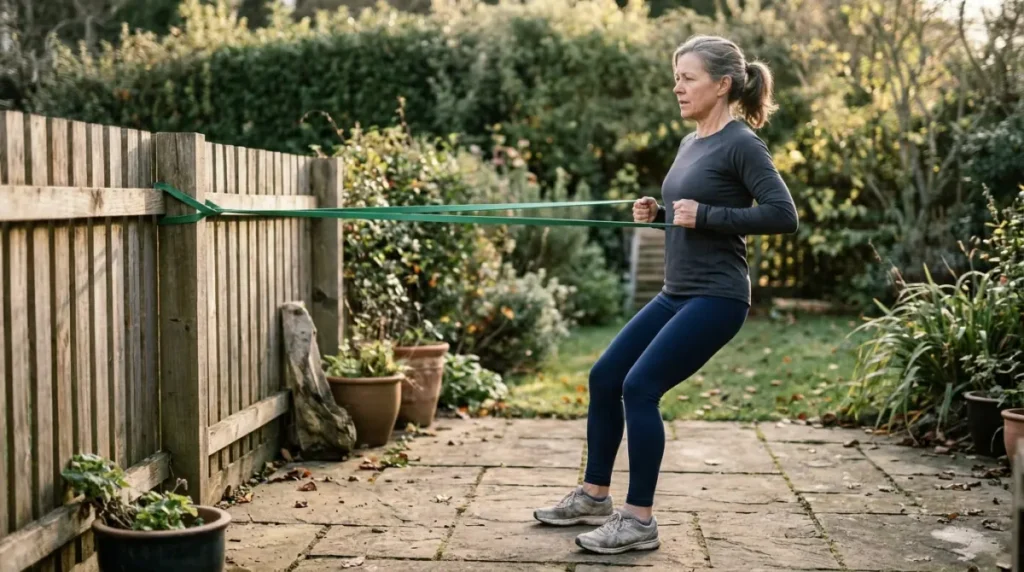
Exercise regularly, but time it right. Moderate aerobic exercise (brisk walking, swimming, cycling) for 150 minutes per week supports weight management and sleep quality. Some women find intense exercise can trigger a flash in the short term, so experiment with timing.
Manage your weight. Research consistently links higher body weight with more frequent hot flashes, and The Menopause Society recommends weight management as part of a symptom-reduction strategy (Source: Menopause, 2023).
Try paced breathing with realistic expectations. The technique involves slow, deep diaphragmatic breathing at 6-8 breaths per minute for 15 minutes, twice daily. Early small studies suggested a significant benefit, but a larger controlled trial by Sood et al. found paced breathing was no more effective than usual breathing. The Menopause Society no longer recommends it based on current evidence. It is free and safe, though. If you find it calming, there is no reason to stop.
Mind-Body Approaches With Clinical Evidence
Cognitive behavioral therapy (CBT) designed for hot flashes reduced the problem rating of hot flashes by 46% in the MENOS 1 trial and 46% in the MENOS 4 trial (Source: The Lancet Oncology, 2012; Psycho-Oncology, 2020). That makes it one of the strongest non-pharmaceutical options available.
CBT for Hot Flashes
This is a structured program, not generic talk therapy. Hot-flash-specific CBT typically runs 4-6 sessions over 6-8 weeks. It teaches you to reframe the stress response to hot flashes, adjust behaviors that worsen symptoms, and build coping strategies that reduce distress. The MENOS trials showed that while CBT did not always reduce the number of hot flashes, it significantly reduced how problematic they felt. Better sleep and less anxiety around flashes. Daily functioning improves.
The Menopause Society recommends CBT as a first-line nonhormonal therapy. Ask your doctor for a referral, or look for therapists trained in CBT for menopause.
Clinical Hypnosis
Clinical hypnosis is another option The Menopause Society recommends. A 2012 Baylor University trial of 187 postmenopausal women found that five weekly sessions of hypnotic relaxation therapy reduced hot flashes by up to 80% (Source: Menopause, 2012). A larger 2025 study published in JAMA Network Open (250 women) found that self-guided hypnosis audio reduced hot flashes by 53.4% after six weeks, and 60.9% at three months (Source: JAMA Network Open, 2025).
That second study matters. Self-guided audio recordings make hypnosis accessible without repeated clinic visits.
Acupuncture
Acupuncture has mixed evidence. Some women report meaningful relief, but controlled trials consistently struggle to separate real acupuncture from sham (placebo) acupuncture. The Menopause Society does not recommend it based on current evidence. If you want to try it, choose a licensed practitioner and give it 8-10 sessions before judging results.
Track Your Triggers — A 2-Week Journal Method

Tracking your hot flash triggers for two weeks can reveal personal patterns that generic advice misses. Eliminating your top triggers often reduces flash frequency more than any single supplement.
Use this format daily for 14 days:
| Date | Time | Possible Trigger | Severity (1-5) | Duration (min) |
|---|---|---|---|---|
| Nov 7 | 2:15 PM | Coffee after lunch | 3 | 4 |
| Nov 7 | 11:30 PM | Wine at dinner | 4 | 6 |
| Nov 8 | 7:00 AM | Hot shower | 2 | 3 |
Common triggers to watch for: caffeine, alcohol, spicy food, hot drinks, stress or anxiety, warm rooms, tight or synthetic clothing, sugar-heavy meals.
How to use your data:
- Track consistently for 14 days. Record every hot flash, even mild ones.
- After two weeks, identify your top 2-3 most frequent triggers.
- Eliminate those triggers for the next two weeks.
- Compare your hot flash frequency and severity before and after.
This method takes effort, but it gives you something no supplement can: personalized data about your own body. Many women find that trigger avoidance alone reduces their hot flash frequency meaningfully.
When Natural Remedies Are Not Enough
See your healthcare professional if hot flashes disrupt your sleep more than three nights a week, continue after 12 weeks of consistent natural remedy use, or interfere with daily activities. These are signs that you may need a different approach.
Your doctor may discuss prescription nonhormonal options. Fezolinetant (Veozah), FDA-approved in May 2023, is the first NK3 receptor antagonist specifically designed for moderate-to-severe vasomotor symptoms (Source: FDA, 2023). SSRIs, SNRIs, and gabapentin are also evidence-based prescription alternatives that The Menopause Society recommends.
Hormone therapy remains the most effective treatment for vasomotor symptoms. If you do not have contraindications, it is worth a conversation with your provider.
For broader context on managing menopause without hormones, revisit our guide to natural menopause treatments.
This article provides general educational information and does not replace individual medical advice, diagnosis or treatment. Speak with a qualified healthcare professional about your symptoms and circumstances.
FAQ
What Is the Best Natural Remedy for Hot Flashes?
There is no single best remedy for everyone. The strongest clinical evidence supports CBT and clinical hypnosis for reducing hot flash distress, while soy isoflavones have the most data among dietary approaches. The Menopause Society recommends CBT and clinical hypnosis as first-line nonhormonal therapies based on multiple randomized controlled trials (Source: Menopause, 2023). Your best option depends on your preferences, health history, and what your healthcare professional advises.
Which Herbs Are Proven to Reduce Hot Flashes?
“Proven” is a strong word in herbal medicine. Black cohosh has the most research, with a 2023 meta-analysis showing modest improvements, though an earlier Cochrane review found insufficient evidence. Sage extract shows promising results in individual trials but mixed results when pooled. Red clover has a small-to-moderate effect in meta-analyses. Soy isoflavones (a food-based phytoestrogen) have the most consistent positive data. None match prescription treatments in effectiveness.
Do Phytoestrogens Really Help With Hot Flashes?
Yes, moderately. A JAMA meta-analysis of 62 studies found soy isoflavone supplementation reduced hot flash frequency by about 0.79 flashes per day compared to placebo, while the broader category of phytoestrogen supplementation was associated with 1.31 fewer flashes per day (Source: JAMA, 2016). Food-based phytoestrogens from soy, flax, and lentils are generally preferred over concentrated supplements because they deliver isoflavones alongside fiber, protein, and other nutrients with a better-understood safety profile.
What Foods Should You Avoid if You Have Hot Flashes?
The most common dietary triggers are caffeine, alcohol, spicy foods, hot beverages, and high-sugar meals. Caffeine and alcohol are common triggers. Start with the two-week trigger journal above to identify which foods affect you personally. Triggers vary between individuals.
How Long Do Hot Flashes Last, and Can Natural Remedies Shorten Them?
Hot flashes last a median of 7.4 years according to the SWAN study, though women who experience them earlier in perimenopause may have symptoms for over a decade (Source: JAMA Internal Medicine, 2015). Natural remedies can reduce the frequency and severity of individual hot flashes, but there is no evidence that they shorten the total duration of the vasomotor symptom phase. The goal is fewer, milder flashes rather than ending them sooner.
Sources
- NCCIH: Menopausal Symptoms In Depth
- FDA Approves Novel Drug to Treat Hot Flashes Caused by Menopause (2023)
- The Menopause Society 2023 Nonhormone Therapy Position Statement
- SWAN Study: Duration of Menopausal Vasomotor Symptoms (JAMA Internal Medicine, 2015)
- JAMA 2016: Plant-Based Therapies and Menopausal Symptoms Meta-Analysis
Key sources shown. Every other study is named inline where it is cited.