
Last updated: June 2026 — written by the Gymnase Tips training team.
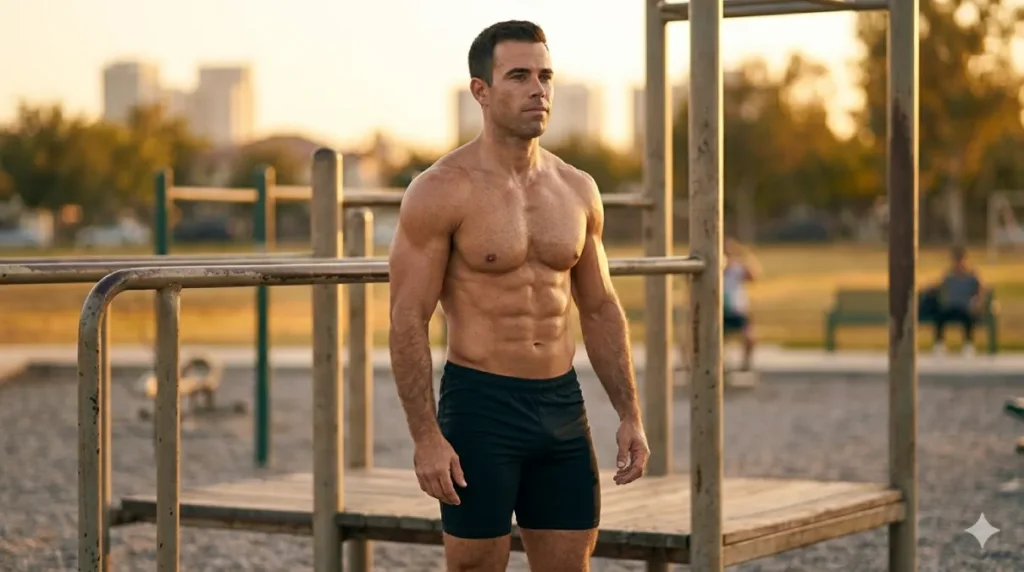
Street workout is bar-and-bodyweight training built around pull-ups, dips, muscle-ups, levers, and dynamic skills — performed at outdoor calisthenics parks, playgrounds, or anywhere you can find a sturdy bar. It builds elite relative strength, athletic mobility, and a physique that’s lean and powerful rather than bulky. The 12-week plan below takes a complete beginner from their first pull-up to advanced moves like the muscle-up and human flag progressions.
This guide covers what street workout actually is (and how it differs from gym calisthenics), the 6 foundational moves, the 12-week beginner-to-advanced progression, the equipment you need (almost nothing), and how to keep progressing once the basics are owned.
What is street workout?
Street workout is the outdoor cousin of calisthenics. It originated in urban parks across Eastern Europe, the U.S., and Russia in the 2000s, codified by groups like Bar-Barians and Bartendaz. The defining traits:
- Bars only — pull-up bars, dip bars, parallettes
- Bodyweight — no added weights at the foundational level
- Static + dynamic — strength holds (front lever, planche) plus dynamic moves (muscle-up, kipping)
- Skill-driven — every level unlocks new moves rather than just adding weight
The 6 foundational street workout moves
- Pull-up — the entry-level test. See how to do a proper pull-up.
- Dip — parallel bar dip, builds chest and tricep strength
- Push-up — universal upper-body baseline
- Hanging knee raise / leg raise — core fundamental
- Australian pull-up (inverted row) — horizontal pulling
- Muscle-up — graduation move from beginner to intermediate
The 12-week beginner-to-advanced plan
Phase 1 (Weeks 1–4): Build base strength
Goal: 8 strict pull-ups, 15 dips, 30 push-ups
- Mon: Pull-up negatives 4×5 + push-ups 4×max + plank 3×60s
- Wed: Australian rows 4×12 + dips (assisted if needed) 4×8 + leg raises 4×10
- Fri: Full body — pull-ups, push-ups, squats, planks (4 rounds)
- Sat: Skill practice — 20 min handstand and L-sit work
Phase 2 (Weeks 5–8): Add volume + skills
Goal: 12 pull-ups, 25 dips, 50 push-ups, working towards muscle-up
- Mon: Pull-ups 5×max + chin-ups 4×8 + leg raises 4×12
- Wed: Dips 5×max + push-up variations 4×15 + L-sit holds 4×20s
- Fri: Explosive pulls (high pull-ups + chest-to-bar) 5×5 + dips 4×10
- Sat: Muscle-up progression: bar transitions + jumping muscle-ups
Phase 3 (Weeks 9–12): Skills + first muscle-up
Goal: 1+ strict muscle-up, beginning of human flag and front lever progressions
- Mon: Strict pull-ups 5×max + weighted pull-ups (small backpack) 3×6
- Wed: Muscle-up attempts + assisted progressions, 20 min
- Fri: Front lever tucked progression 4×15s + hanging leg raises 4×12
- Sat: Free skill day — handstand walk, human flag isometrics, parkour-adjacent
What equipment you need
- A pull-up bar — public park or $25 doorframe bar
- Parallel bars or dip station — most calisthenics parks have these
- Resistance bands — for assisted pull-ups and muscle-up scaling ($15)
- Optional: gymnastic rings — once intermediate ($30 set)
- Optional: chalk — grip support in humid conditions
Where to go next
After the 12-week base, branch into:
- Static holds: front lever, back lever, planche, human flag
- Dynamic moves: archer pull-ups, one-arm pull-up progression, 360 muscle-up
- Skill combinations: bar flow routines mixing static and dynamic
For deeper exercise variation, see our 18 pull-up variations and calisthenics back workout.
FAQ
What’s the difference between street workout and calisthenics?
Calisthenics is the broader category of bodyweight training. Street workout specifically refers to the bar-focused, outdoor, skill-driven subset. All street workout is calisthenics; not all calisthenics is street workout.
Can I do street workout at home?
Yes — a doorframe pull-up bar covers most upper-body work. For dips, you can use the back of two chairs or buy a $40 dip station. For full progressions, public calisthenics parks remain ideal.
How long until I can do a muscle-up?
Average: 6–9 months from first pull-up. Faster if you already have 12+ pull-ups when you start training muscle-up specifically. The key prerequisites are 10 strict pull-ups, 15 dips, and explosive pulling power.
Do I need to be lean to do street workout?
Lower body weight makes pulling movements easier — every pound matters in calisthenics. Most serious street workout athletes are 10–15% body fat. See our how to become lean guide for the body composition path.
Will street workout build muscle?
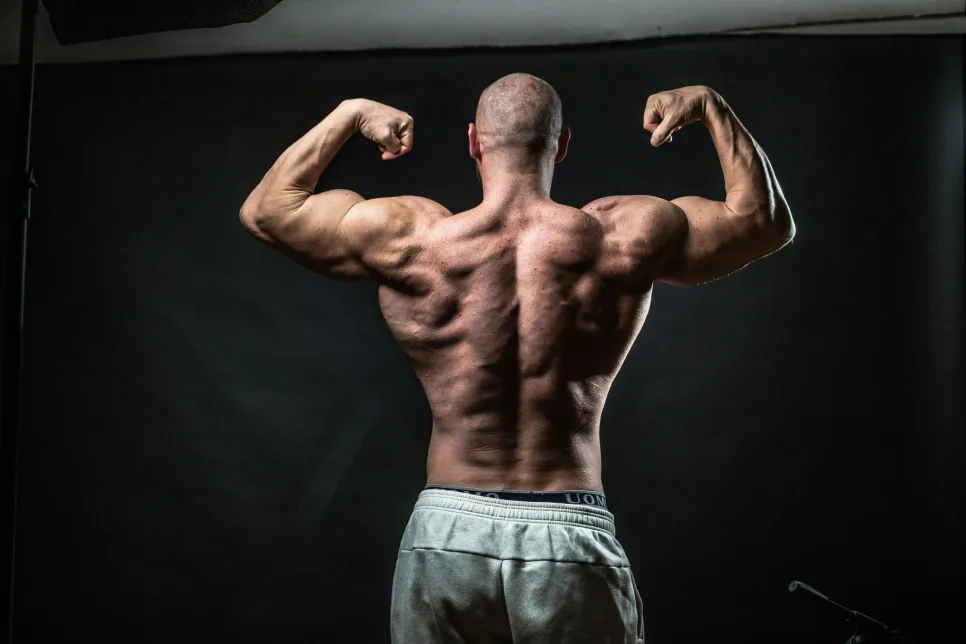
Yes — though more lean and athletic than bodybuilder size. The combination of high-intensity pulls, dips, and skills produces dense, defined musculature. Our build muscle without weights guide goes deeper.
The bottom line: street workout is the most accessible path to elite-level relative strength — pull-up bars are everywhere, the moves are infinite, and the learning never plateaus. Run the 12-week plan, hit your first muscle-up, then enter the lifelong skill ladder of static holds and dynamics. For broader calisthenics context, see our beginner calisthenics routine and calisthenics vs weights comparison.