
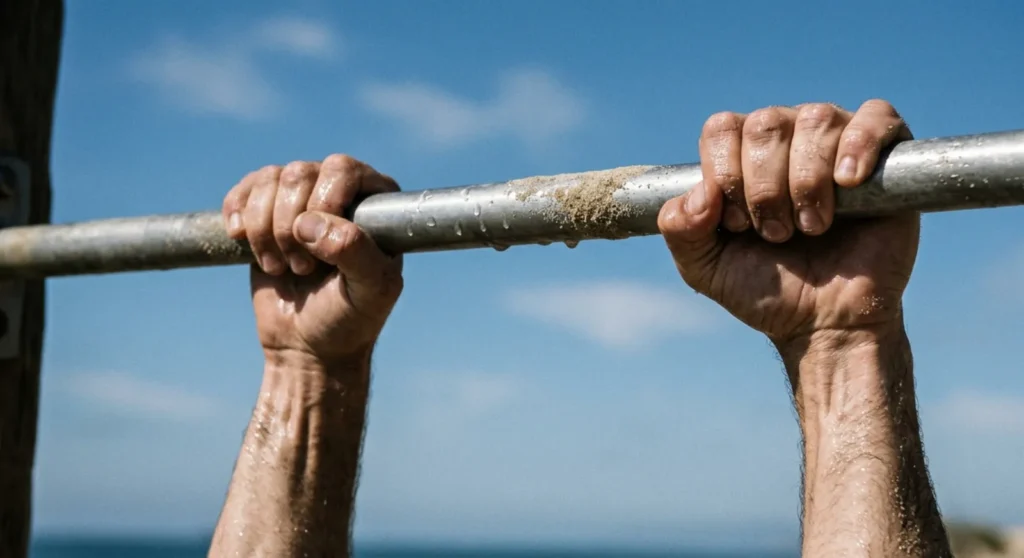
Last updated: May 2026 — written by James Nolan, Gymnase Tips senior trainer. Plan structure based on Naval Special Warfare’s published guidance; not an official NSW document.
A Navy SEAL training program PDF is a structured, downloadable preparation plan modeled on the Naval Special Warfare (NSW) candidate fitness recommendations and the BUD/S preparatory training guidance issued to selected candidates before they ship to Coronado. The most useful version is a 12-week plan that progresses across the five Physical Screening Test (PST) events — 500-yard swim, 2-minute push-ups, 2-minute sit-ups, max pull-ups, and 1.5-mile run — while integrating the bodyweight strength and water-confidence work BUD/S candidates actually do. This page provides a free, no-signup PDF and walks through how to use it, plus the PST score targets, prerequisites, and common mistakes that derail prep cycles.
PST Score Standards (Quick Reference)
| Event | Minimum to qualify | Competitive target |
|---|---|---|
| 500-yard swim (CSS) | 12:30 | 8:30 or faster |
| Push-ups (2 min) | 50 | 80+ |
| Sit-ups (2 min) | 50 | 80+ |
| Pull-ups | 10 | 15+ |
| 1.5-mile run | 10:30 | 9:30 or faster |
Meeting the minimums won’t get you a BUD/S contract — they’re the floor for taking the test, not for being competitive. Recruiters consistently note that candidates who hit the competitive targets have substantially higher BUD/S completion rates.
What’s Inside the Navy SEAL Training Program PDF
The plan is built around Naval Special Warfare’s published PST guidance and the structure used in NSW’s official PT pyramid. It contains:
- A 12-week schedule organized into three 4-week phases (base, build, peak)
- Weekly run intervals progressing from 1.5 miles to 4 miles, with target paces
- Swim progressions from CSS (combat sidestroke) drills up to a 500-yard timed test
- Calisthenics blocks targeting the 2-minute push-up and sit-up events plus max-effort pull-up sets
- One long-effort PT day per week (rucks, ladder workouts, and “Murph”-style sessions)
- A final PST mock test on Day 84 to validate readiness
- A printable single-page weekly tracker for log-keeping
Download the Free Navy SEAL Training Program PDF
Navy SEAL 12-Week BUD/S Prep Plan
PST progression · Swim · Run · Calisthenics · Mock test schedule
Download the PDF →Prerequisites Before You Start
This plan assumes a baseline level of fitness. If you can’t hit all of these on day one, run an on-ramp first — starting this plan from below the prereq line invites injury and stalled progress.
- 1.5-mile run in under 13 minutes
- Swim 200 yards continuously (any stroke)
- 30 strict push-ups in 2 minutes
- 5 strict pull-ups
- Regular pool access (at least 2 sessions per week)
- Cleared by a healthcare provider if you have any cardiovascular or musculoskeletal history
If you fall short on any prerequisite, the 8-week military calisthenics plan is the right on-ramp for the calisthenics events, and our military calisthenics workout guide covers broader military-style baseline conditioning.
Pre-Session Warm-Up
Every session in the plan opens with the same 5-minute sequence:
- 3 to 5 minutes of light cardio (jog in place, jumping jacks, or 200m easy swim if pool day)
- 10 arm circles each direction
- 10 leg swings each leg (front-to-back, side-to-side)
- 10 bodyweight squats and 10 push-ups at moderate pace
- 5 scapular pulls (pull-up days only)
Skip this on the day you actually mock-test — you want fresh data on what the warmth-up-included sessions produced.
12-Week Structure Explained
Phase 1 — Base (Weeks 1 to 4)
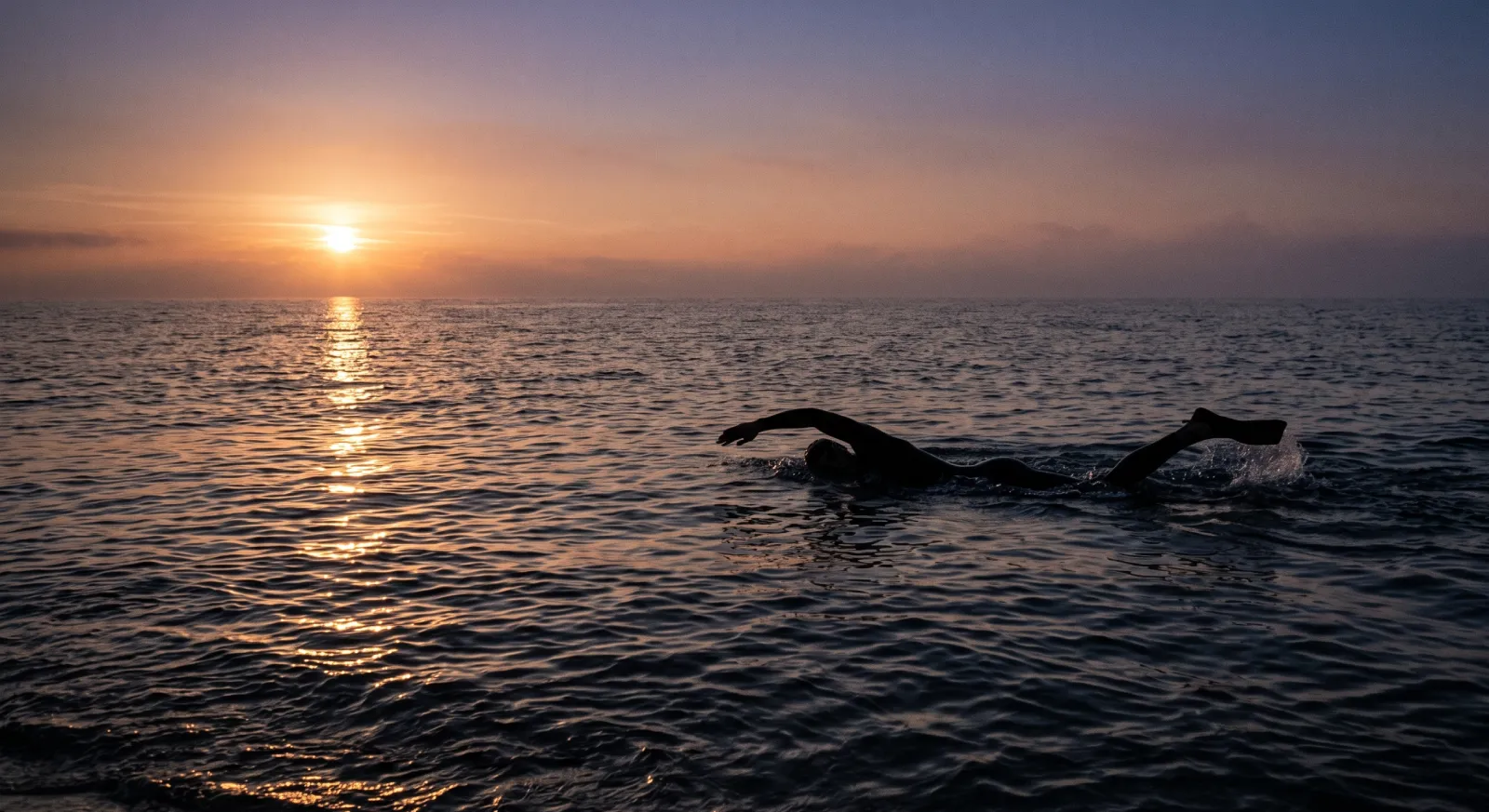
The base phase rebuilds aerobic capacity and introduces volume to the calisthenics events. Run progression goes from 1.5 miles at conversational pace to 3 miles at race pace by week 4. Swim work focuses on CSS technique drills — the BUD/S official combat stroke — for distances of 200 to 500 yards. Push-ups and sit-ups are programmed in pyramids (1-2-3-4-5-4-3-2-1) to build endurance without burnout. Pull-ups stay submaximal — 4 sets at 60% of max — because grease-the-groove volume produces faster gains than max-effort work for most candidates.
Phase 1 weekly volume: 4 runs (10 to 15 miles total), 2 swims (1,500 to 2,500 yards total), 4 calisthenics sessions, 1 long-effort PT day.
Phase 2 — Build (Weeks 5 to 8)
Volume climbs sharply. Long runs reach 5 miles; intervals introduce 800m repeats. Swim distances extend to 1,000 yards. Calisthenics shift from pyramids to time-based work matching the actual PST format (2-minute push-up sets, 2-minute sit-up sets). One day per week becomes a “long effort” — typically a 4-mile run plus 100 push-ups, 200 sit-ups, 20 pull-ups, modeled on the SEAL/SWCC PT structure.
Phase 2 weekly volume: 4 runs (15 to 20 miles total, including 1 interval session), 3 swims (3,000 to 4,000 yards total), 4 calisthenics sessions, 1 long-effort PT day.
Phase 3 — Peak (Weeks 9 to 12)
Specificity peaks. Every Saturday is a partial PST simulation. Run intervals shift to 400m at 5K race pace. Swims include a weekly timed 500-yard CSS effort. Pull-ups switch to max-effort testing every other session. Week 12 ends with a full PST mock test under exam conditions: same rest intervals, same event order, same standards. If you’re hitting competitive scores (8:30 swim, 80+ push-ups, 80+ sit-ups, 15+ pull-ups, sub-9:30 1.5-mile run) by the mock, you are BUD/S-ready.
Phase 3 weekly volume: 4 runs (12 to 18 miles total, intervals + tempo), 3 swims (2,500 to 3,500 yards total, including timed efforts), 3 calisthenics sessions (max-effort biased), 1 PST simulation day. Volume drops slightly to support peak performance.
How to Use the Plan
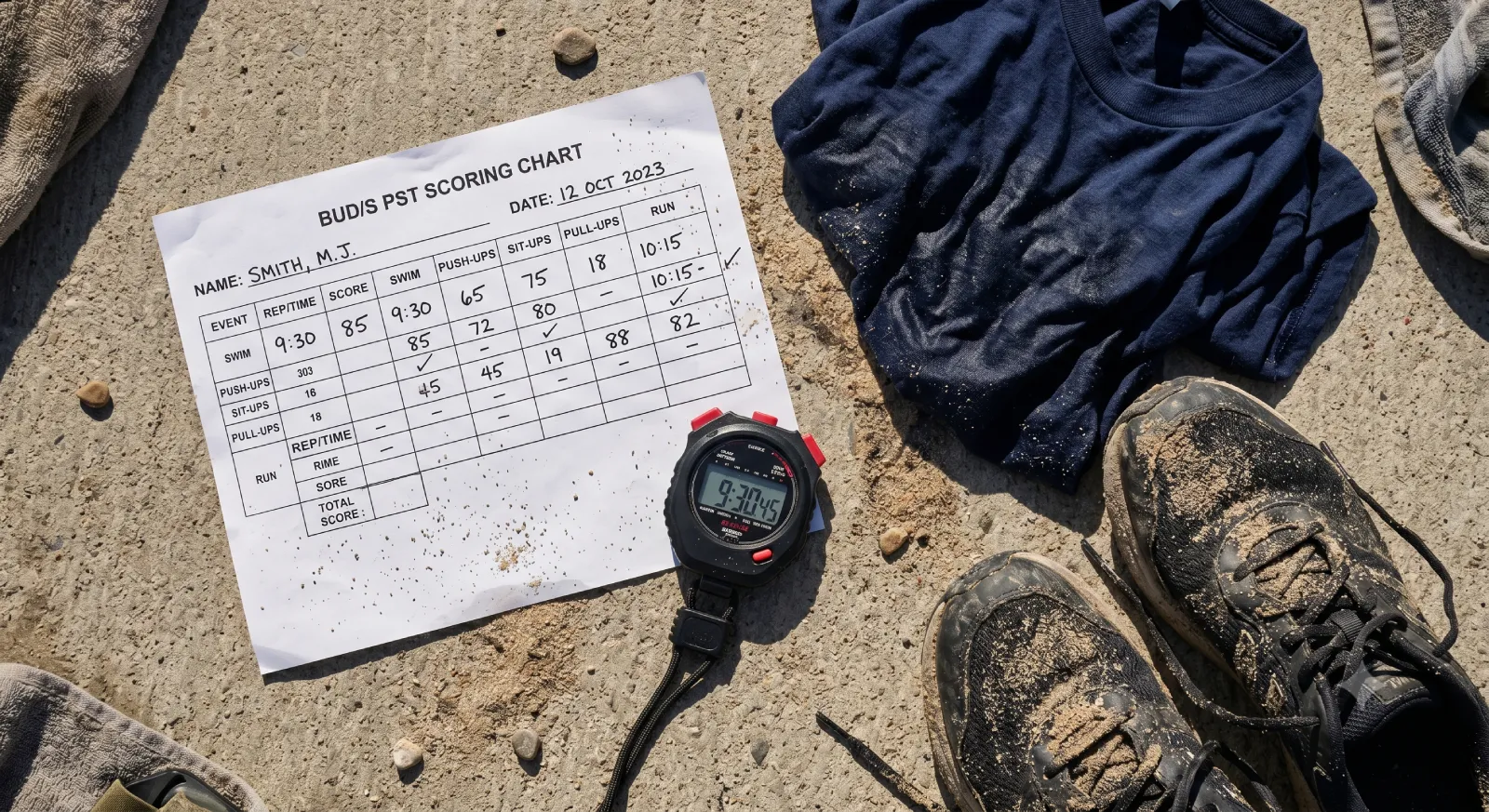
Print the weekly tracker page from the PDF, fill it in by hand each session, and keep the binder in your gym bag. Three rules govern execution:
- Don’t skip the swim. The 500-yard CSS is the single hardest PST event for most candidates. Twice-weekly pool work is non-negotiable.
- Don’t max-out daily. Submaximal volume on push-ups, sit-ups, and pull-ups beats max-effort attempts for the first 8 weeks. Test only on scheduled test days.
- Don’t add unprogrammed lifting. The plan accounts for total stress; bolting on a heavy back day on top of a 5-mile run day will only delay recovery.
5 Common Mistakes That Derail BUD/S Prep
- Skipping the swim. The most common reason candidates fail the PST. Land athletes routinely underestimate how technical and aerobically demanding CSS is.
- Training to failure every session. The calisthenics events reward muscular endurance, not peak strength. High-volume submaximal work produces faster PST gains than grinding to failure.
- Adding heavy lifting. Heavy squats and deadlifts on top of the running and swimming volume produces over-training, not extra performance. The plan is calibrated; respect that.
- Ignoring recovery. 7 to 9 hours of sleep, adequate protein, and at least one full rest day per week aren’t optional. Recovery is where the adaptation happens.
- Mock-testing too often. The PST mock at Day 84 is the validation. Running PST simulations every week burns nervous system capacity without adding fitness.
For full PST scoring tables and minimum vs competitive standards, see our Navy SEAL physical requirements & PST standards guide. For the bodyweight-strength foundation underneath this plan, the Navy SEAL calisthenics workout covers exercise-by-exercise standards.
Navy SEAL Training Program FAQ
Is this the official Navy SEAL training program?
No — Naval Special Warfare publishes guidance for prospective candidates, not a single official 12-week plan. This PDF synthesizes that guidance (the NSW PT pyramid, BUD/S preparatory references, and the published PST standards) into a structured 12-week schedule. It is what an experienced strength coach would write for a candidate based on the public NSW recommendations.
How fit do I need to be to start this plan?
You should already be able to run 1.5 miles in under 13 minutes, swim 200 yards continuously (any stroke), do at least 30 push-ups and 5 strict pull-ups before week 1. If you’re below those numbers, spend 4 to 8 weeks on a base-building plan first — our 8-week military calisthenics plan works well as an on-ramp.
Can I do this without pool access?
Honestly, no. The 500-yard CSS swim is roughly one-third of the PST and impossible to fake. If you cannot get pool access, this plan is not the right fit — focus on land events with our military calisthenics workout guide until pool access is available.
How does this compare to other special operations prep?
Navy SEAL prep is the most water-heavy. Army Special Forces (Green Beret) prep emphasizes rucking and land navigation. Both require the same baseline calisthenics fitness; the divergence is in the dominant cardio mode (water vs land-with-load).
What if I’m injured during the plan?
Stop the affected modality and consult a healthcare provider. Mild soreness is normal; sharp pain, joint pain, or any movement-limiting injury means the plan pauses. Pushing through injuries during BUD/S prep is the most common reason candidates ship to Coronado below their potential — or get medically dropped early.
Bottom Line
The Navy SEAL training program PDF is a 12-week, three-phase progression that takes a moderately fit candidate from baseline PST scores to BUD/S-competitive numbers — provided they have pool access, hit the prerequisites, and follow the volume/recovery rules. Print it, log every session, mock-test on Day 84, and adjust based on weakest event. For the broader military fitness ecosystem these plans live inside, see our military calisthenics workout guide, 28-day military workout, and Army PRT drills.



Pingback: Navy SEAL Calisthenics Workout: The Real BUD/S Training Plan